Bullet chess is a chaotic, adrenaline-fueled variant where time is as valuable as material. For players looking to climb the rating ladder, understanding where and why games are lost is crucial. Are you losing because of opening traps, middlegame tactical blunders, or endgame technique?
To answer this, we analyzed a massive dataset of Lichess bullet games, mapped to Chess.com ratings (from 800 to 1500), using Stockfish 17 engine evaluations to pinpoint exactly when and how decisive mistakes occur. This guide serves as a roadmap for improvement, breaking down the anatomy of a bullet chess loss at each rating band and providing actionable advice to help you climb to the next level.
The Anatomy of a Bullet Game
Before diving into specific rating bands, it is helpful to understand the overall landscape of bullet chess. Unlike classical chess, where games often reach deep endgames, bullet games are frequently decided much earlier.
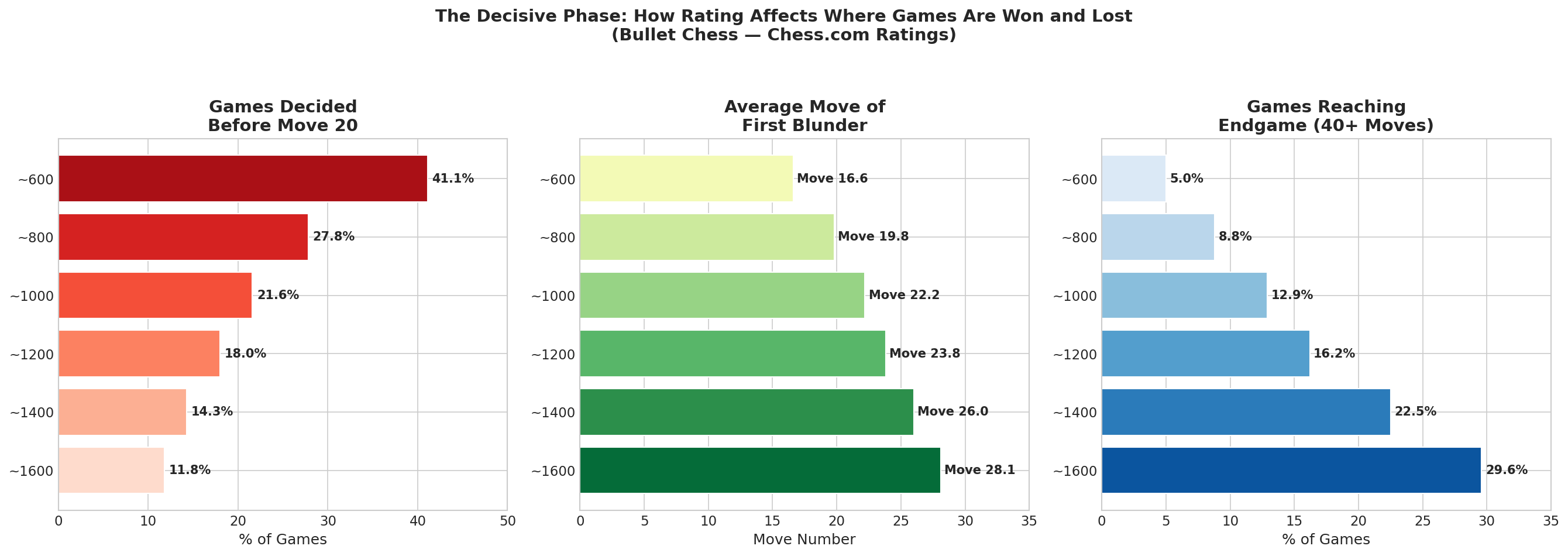
As the data shows, the nature of the game shifts dramatically as players improve. At the ~800 level, nearly 28% of games are decided before move 20. By the time players reach ~1400, this drops to 14.3%, and games are much more likely to reach the endgame. The average move of the first major blunder also gets pushed deeper into the game, from move 19.8 at ~800 to move 26.0 at ~1400.
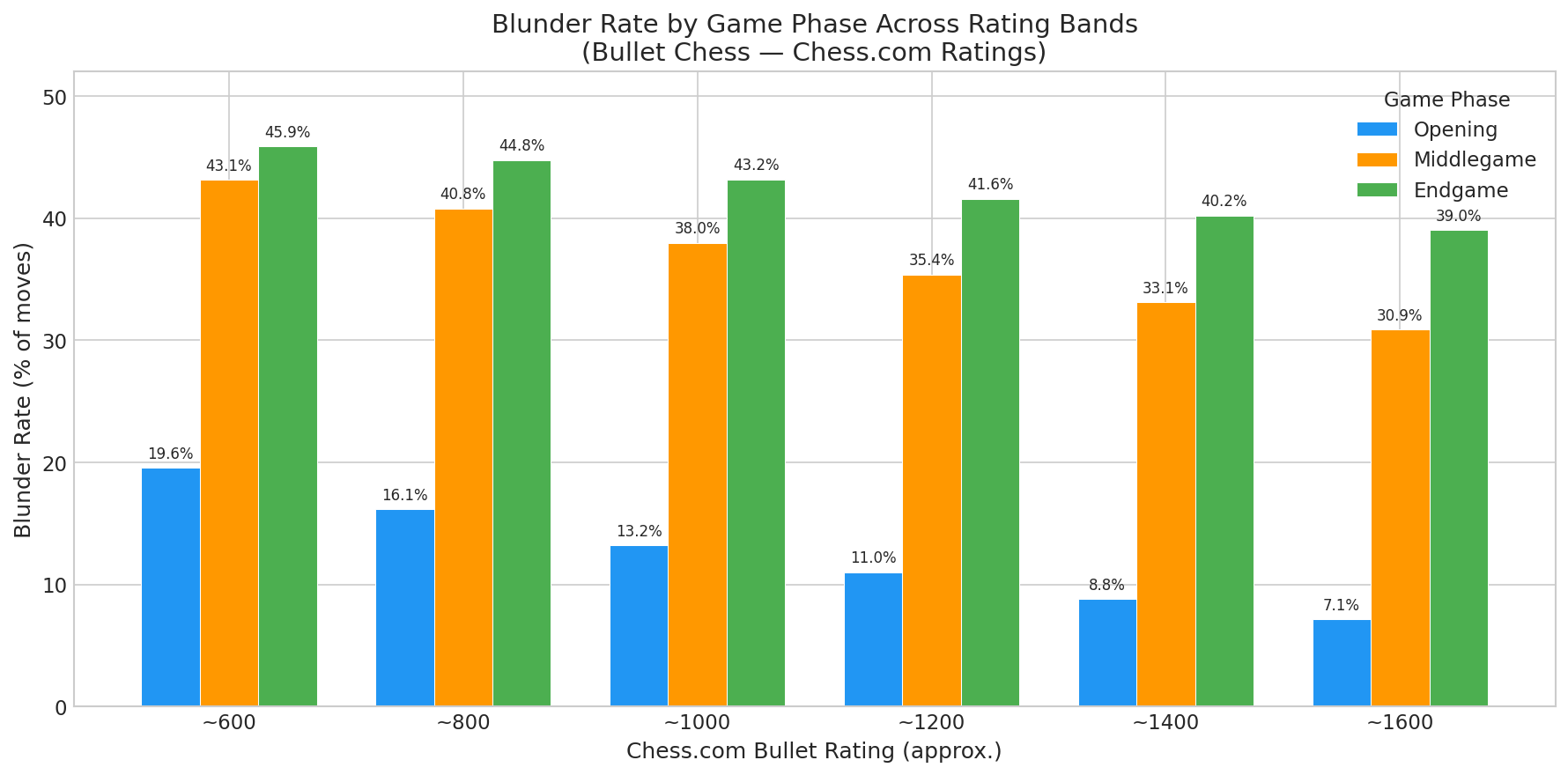
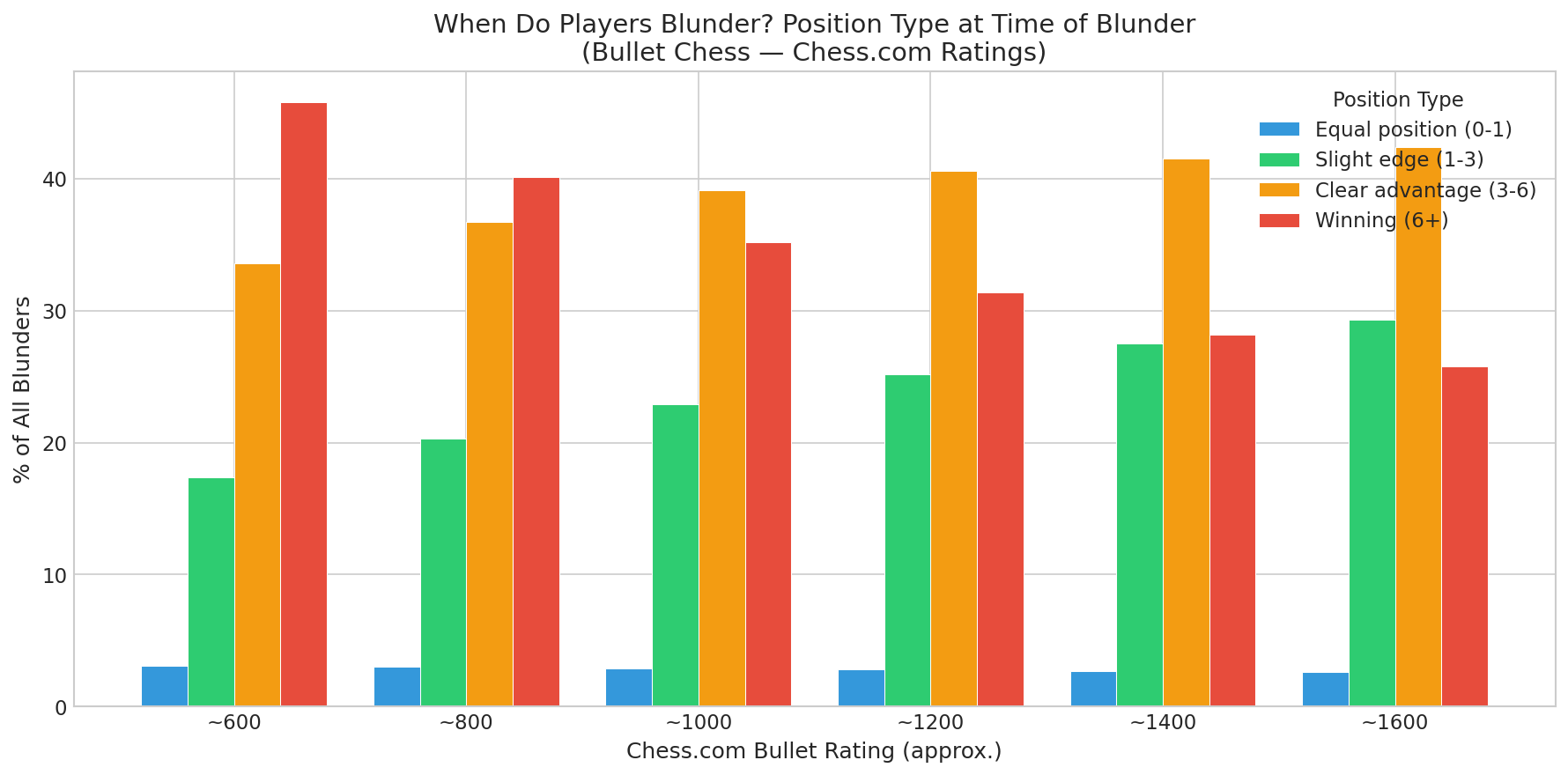
Across all ratings, the endgame has the highest blunder rate per move, simply because time is running out and positions are often complex. However, the decisive blunders—the ones that swing the evaluation from equal to lost—often happen much earlier in lower-rated games.
Rating Band Analysis & Actionable Advice
The 800 Level (Chess.com 725–920)
At the 800 level, bullet chess is a tactical minefield. Games are frequently decided by massive material swings early in the game.
The Data:
- First Blunder Timing: The average first blunder occurs on move 19.8.
- Opening Blunders: 16.1% of opening moves are blunders (eval drop of 300+ centipawns).
- Game Length: 27.8% of games end before move 20.
- Material Conversion: Being up a full rook (+5-6 pawns) only converts to a win 70.3% of the time.
Where Games Are Lost: Players at this level frequently fall for opening traps or hang pieces outright in the early middlegame. The focus is often on one-move threats, leading to tunnel vision.
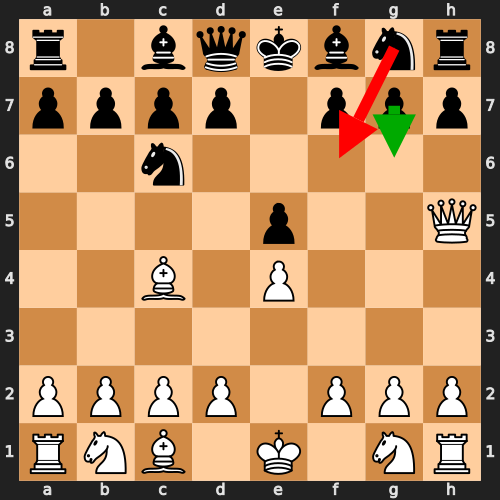 Example: Ignoring a direct mate threat (Scholar's Mate pattern) is a common early-game disaster.
Actionable Advice for 800s:
- Play Solid Openings: Avoid trappy, dubious openings. Focus on controlling the center, developing pieces, and castling early.
- Check for Hanging Pieces: Before every move, do a quick scan: "Is my piece safe? Is my opponent's piece unprotected?"
- Don't Resign Too Early: The data shows that even when down a full rook, 800-level players still lose or draw nearly 30% of the time. Keep fighting; your opponent is likely to blunder back.
The 1000 Level (Chess.com 920–1115)
As players approach the 1000 mark, outright piece hangs become slightly less common, but simple tactical oversights (forks, pins, skewers) dominate the middlegame.
The Data:
- First Blunder Timing: Pushed back to move 22.2.
- Middlegame Blunders: The middlegame blunder rate is 38.0%.
- Time Forfeits: 30.3% of games end in a time forfeit.
Where Games Are Lost: The middlegame is the primary battleground here. Players have learned basic development but struggle with board vision when the position becomes complicated. Time pressure also starts to become a significant factor, leading to rushed, blundering moves.
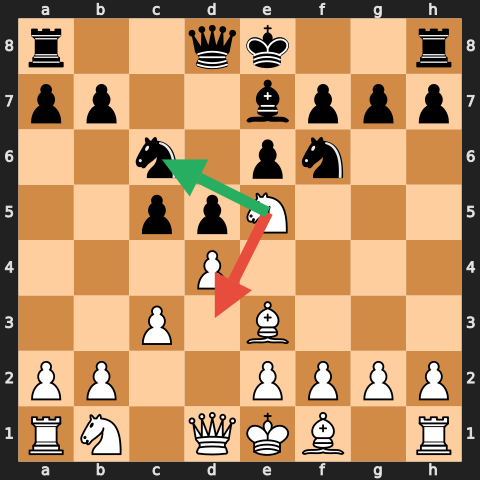 Example: Missing a simple tactical sequence, such as a discovered attack or a fork, often decides the game at this level.
Actionable Advice for 1000s:
- Tactics, Tactics, Tactics: Drill basic tactical motifs (pins, forks, skewers) until they become second nature. You need to spot them instantly in bullet.
- Manage Your Clock: Do not spend 15 seconds on a single move in the opening. Play practical, "good enough" moves to keep a time advantage.
- Simplify When Ahead: If you win a piece, trade down. The data shows that material advantage conversion improves significantly if you can reach a simplified endgame.
The 1200 Level (Chess.com 1115–1305)
At 1200, players have a decent grasp of tactics and openings. The differentiator here is often speed of execution and avoiding catastrophic blunders in equal or slightly worse positions.
The Data:
- First Blunder Timing: Move 23.8.
- Blunder Taxonomy: 40.6% of blunders occur when the player is already at a clear advantage (3-6 pawns), indicating a struggle to convert winning positions smoothly.
- Endgame Blunders: The endgame blunder rate remains high at 41.6%.
Where Games Are Lost: Games are often lost due to a lack of endgame knowledge or blundering under severe time pressure while trying to convert a winning position. Stalemate tricks and back-rank mates are common.
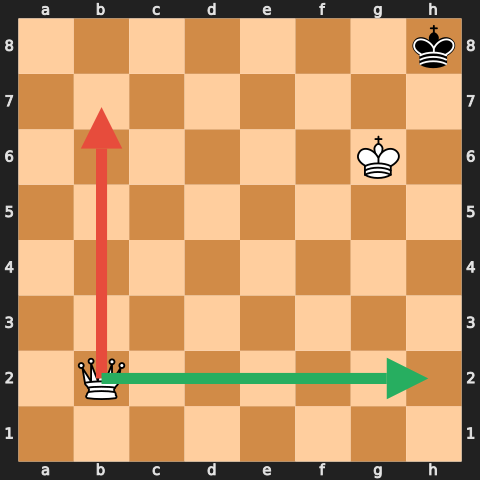 Example: Rushing in a completely winning endgame and delivering a stalemate is a painful but frequent occurrence.
Actionable Advice for 1200s:
- Learn Basic Endgames: You must know how to checkmate with a Queen or a Rook instantly, without thinking. Practice these until you can do them in under 5 seconds.
- Beware the Back Rank: Always ensure your King has a flight square (luft) before launching an all-out attack in the middlegame.
- Stay Calm When Winning: The data shows a high rate of blunders when players have a clear advantage. Don't relax; focus on safe, solid conversion rather than flashy finishes.
The 1400 Level (Chess.com 1305–1510)
Players at 1400 are competent bullet players. They rarely hang pieces outright and know their openings well. The game shifts toward positional understanding, speed, and endgame technique.
The Data:
- First Blunder Timing: Move 26.0.
- Game Length: 22.5% of games now reach the endgame (40+ moves).
- Material Conversion: Being up a minor piece (+3-4 pawns) converts to a win 68.7% of the time.
Where Games Are Lost: At this level, games are often decided by subtle positional mistakes that compound over time, or by poor endgame technique when the clock is ticking down.
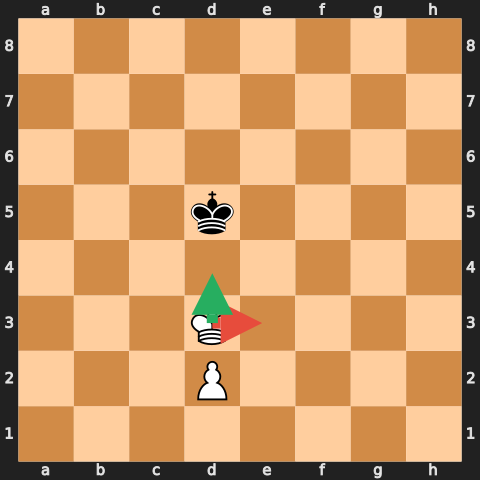 Example: Misunderstanding key endgame concepts, like the opposition in a King and Pawn endgame, can turn a win into a draw or a loss.
Actionable Advice for 1400s:
- Study Pawn Endgames: Understanding concepts like the opposition, key squares, and triangulation will win you countless games that reach the endgame.
- Pre-move Safely: Use pre-moves for obvious recaptures or forced moves, but be wary of pre-moving into tactical traps.
- Play for the Initiative: In bullet, having the initiative (being the one making threats) is often worth a pawn. Keep your opponent reacting to your moves to drain their clock.
Conclusion
Improving in bullet chess requires a targeted approach based on your current rating.
- At 800, focus on board vision and stopping one-move blunders.
- At 1000, drill basic tactics and manage your clock.
- At 1200, learn essential checkmates and avoid throwing away winning positions.
- At 1400, refine your endgame technique and play for the initiative.
By understanding where players at your level typically lose, you can adjust your training and gameplay to exploit those weaknesses and climb the rating ladder.
Data and Methodology
This analysis is based on a dataset of Lichess bullet games, with ratings mapped to approximate Chess.com equivalents. Engine evaluations (Stockfish 17) were used to determine centipawn loss (CPL) and classify blunders (CPL drop ≥ 300).
Underlying Data Files:
View full data →lichess_band chesscom_band phase avg_cpl blunder_pct mistake_pct inaccuracy_pct sample_moves 700-900 445–725 opening 197.5 19.57 17.01 14.71 2513055 700-900 445–725 middlegame 529.6 43.15 5.06 1.5 3276179 700-900 445–725 endgame 686.5 45.89 1.54 0.66 1295246 900-1100 725–920 opening 164.9 16.15 19.03 16.77 2565446 900-1100 725–920 middlegame 461.1 40.79 6.63 2.11 3656537
View full data →lichess_band chesscom_band move_bucket side pct_of_games sample_games 700-900 445–725 1-10 black 21.9 35998 700-900 445–725 11-20 black 23.2 38117 700-900 445–725 21-30 black 9.7 15911 700-900 445–725 31-40 black 4.3 7012 700-900 445–725 41+ black 3.6 5888
View full data →lichess_band chesscom_band pct_under_20 pct_under_30 pct_under_40 pct_reaching_40plus pct_reaching_60plus decisive_avg_moves draw_avg_moves normal_termination_pct time_forfeit_pct sample_games 700-900 445–725 41.1 82.5 95.0 5.0 0.6 21.7 40.9 34.4 65.6 34669 900-1100 725–920 27.8 71.2 91.2 8.8 1.0 25.0 43.9 39.0 61.0 41074 1100-1300 920–1115 21.6 61.0 87.1 12.9 1.5 27.4 45.8 41.6 58.3 45388 1300-1500 1115–1305 18.0 53.9 83.8 16.2 1.6 29.0 47.2 42.6 57.3 47397 1500-1800 1305–1510 14.3 44.9 77.5 22.5 2.0 31.2 49.0 43.6 56.3 49779
View full data →lichess_band chesscom_band phase avg_eval_absolute 700-900 445–725 opening 1.35 700-900 445–725 middlegame 4.17 700-900 445–725 endgame 6.39 900-1100 725–920 opening 1.07 900-1100 725–920 middlegame 3.43
View full data →lichess_band chesscom_band avg_first_blunder_move games_with_blunder_pct avg_blunders_per_game sample_games 700-900 445–725 16.6 70.9 13.63 30549 900-1100 725–920 19.8 72.8 15.19 37053 1100-1300 920–1115 22.2 73.7 16.13 41465 1300-1500 1115–1305 23.8 73.5 16.63 43745 1500-1800 1305–1510 26.0 74.2 17.71 46852
Chess Coach, April 15, 2026