Space advantage is one of the most fundamental yet misunderstood concepts in chess. While beginners are taught to "control the center," intermediate players often struggle to quantify exactly what space means and how much it contributes to winning a game. Is a space advantage a decisive factor, or merely a positional tiebreaker?
To answer this question, we analyzed 1,400 Rapid games from the Lichess database (March 2025), spanning players with Chess.com Rapid ratings between approximately 500 and 1700. By measuring territorial control at key moments during the middlegame, we can quantify space advantage and correlate it with game outcomes. The results are clear: space is one of the strongest non-material predictors of who wins a chess game, and its impact varies meaningfully across rating bands.
This article serves as a roadmap for improvement, demonstrating how the value of space evolves as you climb the rating ladder, and providing actionable advice for each rating segment.
Understanding Space Advantage
In this study, we define space advantage as territorial control over the opponent's half of the board. The board is divided into two halves: ranks 1 through 4 belong to White's territory, and ranks 5 through 8 belong to Black's territory. A player gains space by occupying or attacking squares in the opponent's half. For example, if White has pawns on e5 and d5, they are physically occupying squares in Black's territory while simultaneously attacking deeper into it. This restricts Black's piece mobility and creates attacking potential.
We measured the space differential (White's controlled squares in Black's territory minus Black's controlled squares in White's territory) at five key checkpoints: moves 10, 15, 20, 25, and 30. This captures the evolution of space from the opening through the middlegame and into the early endgame. To validate our computational metric, we cross-referenced our results with the position-features engine from the Grandmaster Guide analytical platform, which confirmed strong agreement with our space calculations.
Rating Note: All ratings in this article refer to Chess.com Rapid ratings. The underlying data comes from Lichess, where ratings run approximately 200-400 points higher. For example, a Chess.com 1000 Rapid player corresponds roughly to a Lichess 1615 Rapid player. See the Methodology section for the full mapping.
The Universal Power of Space
The data reveals a striking reality: space advantage is a powerful predictor of success across all rating levels. When we look at the middlegame (moves 15-25), the side possessing a clear space advantage (more than 3 squares of differential) wins significantly more often than the side defending a cramped position.
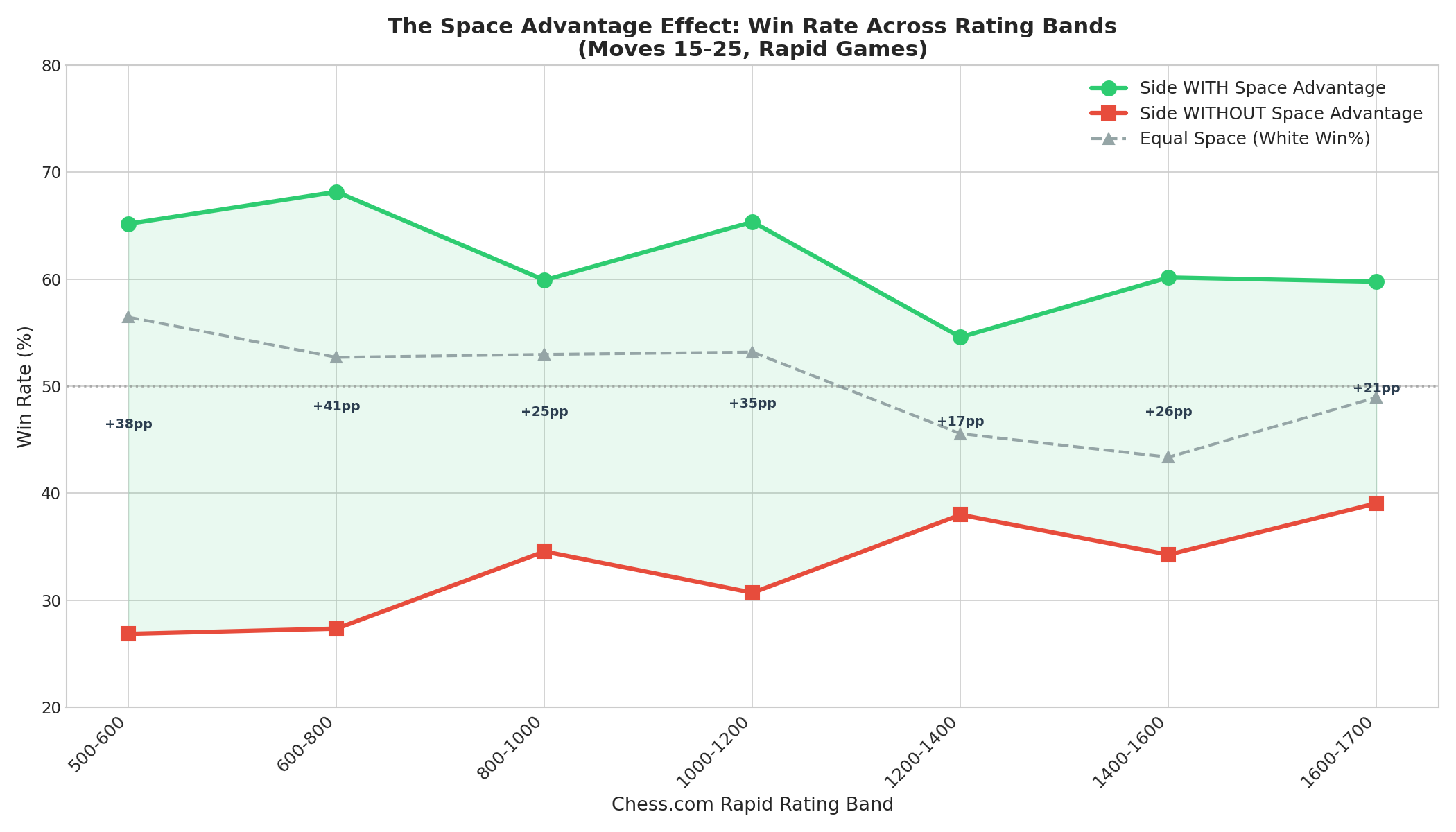
The table below summarizes the core finding. The "Space Advantage Win Rate" column shows how often the side with more space wins, while the "Cramped Side Win Rate" shows the opposite. The "Gap" column quantifies the advantage in percentage points.
| Chess.com Rating Band | Space Advantage Win Rate | Cramped Side Win Rate | Gap (pp) | Equal Space White Win% | Sample Size |
|---|---|---|---|---|---|
| 500-600 | 65.2% | 27.0% | +38 | 56.5% | 325 |
| 600-800 | 68.2% | 27.3% | +41 | 52.7% | 390 |
| 800-1000 | 59.9% | 34.8% | +25 | 53.0% | 419 |
| 1000-1200 | 65.4% | 30.8% | +35 | 53.2% | 416 |
| 1200-1400 | 54.6% | 37.8% | +17 | 45.6% | 477 |
| 1400-1600 | 60.2% | 34.2% | +26 | 43.4% | 500 |
| 1600-1700 | 59.8% | 39.0% | +21 | 49.0% | 495 |
Several patterns emerge from this data. First, the space advantage effect is universal: at every rating band, the side with more space wins substantially more often. Second, the effect is most dramatic at lower ratings, peaking at a 41 percentage point gap in the 600-800 band. Third, the gap narrows as ratings increase, suggesting that higher-rated players are better equipped to defend cramped positions through pawn breaks and piece exchanges. Nevertheless, even at the 1600-1700 level, a space advantage still confers a significant 21 percentage point edge.
How Space Advantage Evolves During a Game
Space advantage is not static. It develops during the opening, crystallizes in the middlegame, and can shift dramatically through pawn breaks. The chart below shows how the win rate of the side with a space advantage changes depending on when the measurement is taken.
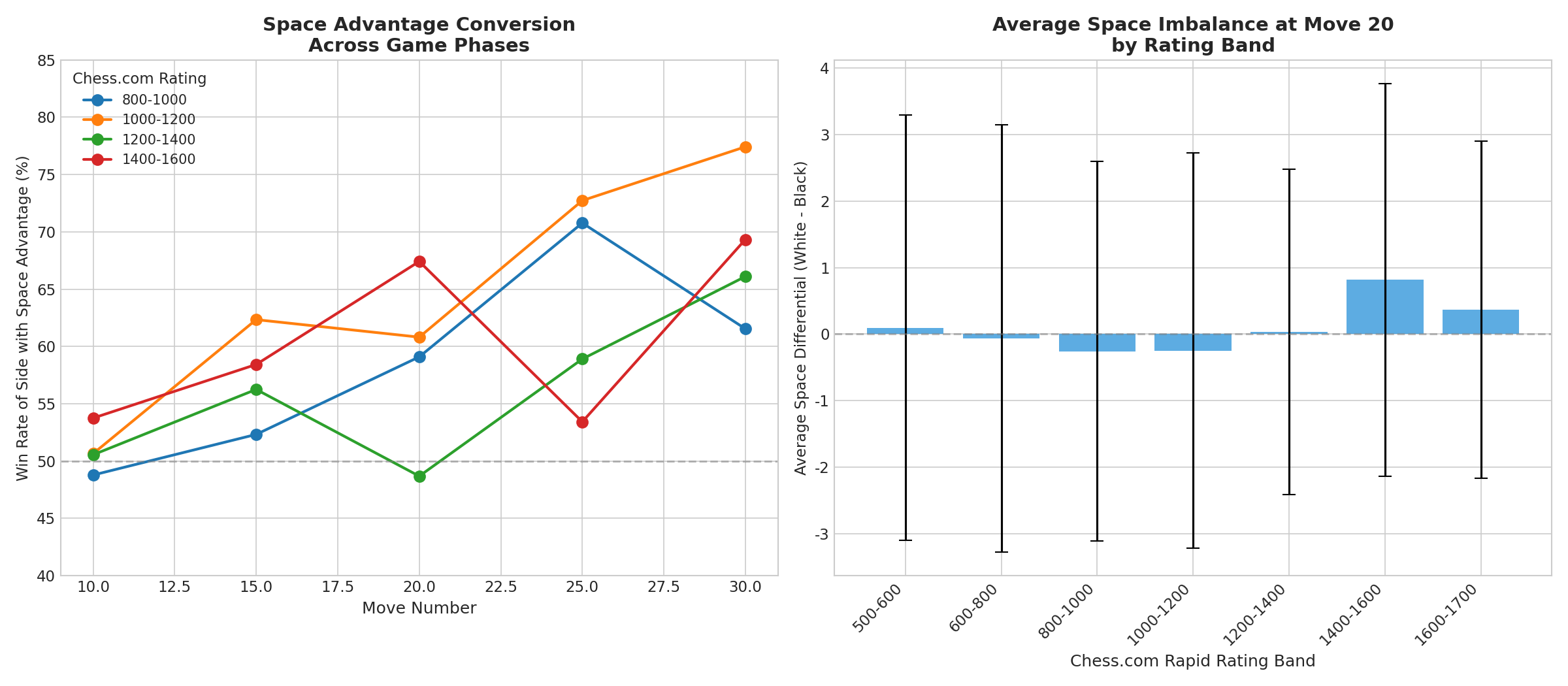
At move 10, space advantages are still forming and are less predictive. By move 20, the middlegame is in full swing, and space differentials are strongly correlated with the final result. By move 25-30, the correlation strengthens further as the game enters a decisive phase.
This has a practical implication: the middlegame is where space matters most. If you can establish a territorial advantage by move 15-20 and maintain it through the critical middlegame phase, your probability of winning increases dramatically.
The Heatmap: Space Differential vs. Win Rate
The heatmap below provides a granular view of how White's win rate changes based on the space differential at move 20, broken down by rating band.
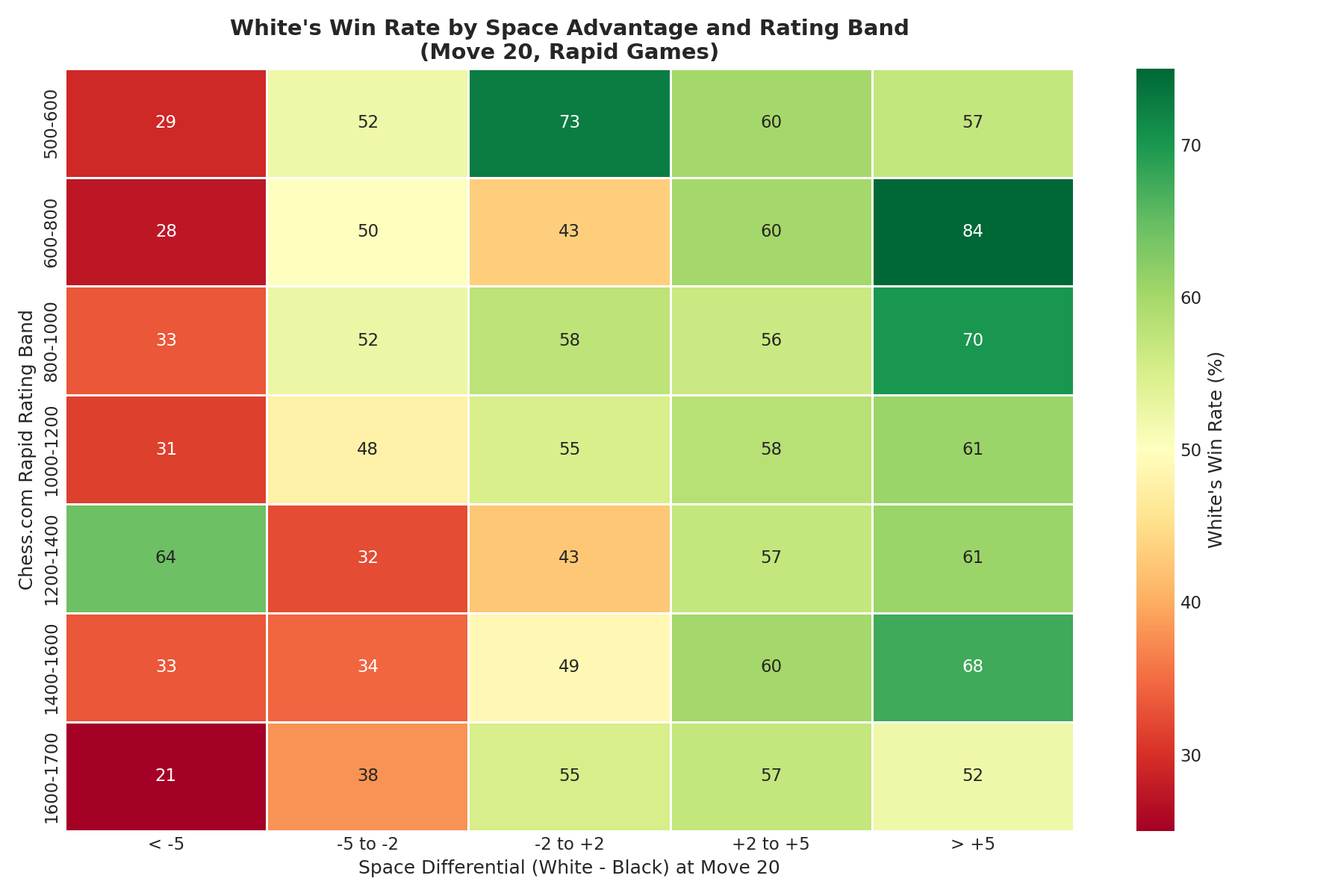
Reading this heatmap from left to right, the progression is clear. When Black has a large space advantage (column "< -5"), White's win rate drops to 21-33%. When the position is roughly equal in space (column "-2 to +2"), White's win rate hovers around 43-73%. When White has a large space advantage (column "> +5"), White's win rate climbs to 52-84%.
The most striking cell is in the 600-800 band with a large White space advantage: 84% White win rate. At this level, a dominant space advantage is nearly decisive. Conversely, at the 1600-1700 level, a large White space advantage yields only 52%, reflecting the greater defensive skill of higher-rated players.
Visualizing Space in Practice
To bring the data to life, let us examine real-world positions from our dataset that illustrate the impact of space advantage.
Example 1: The Crushing Space Advantage
When one side dominates the opponent's territory, the resulting position is often overwhelming. The cramped side struggles to coordinate their pieces, leading to tactical blunders or slow positional strangulation.
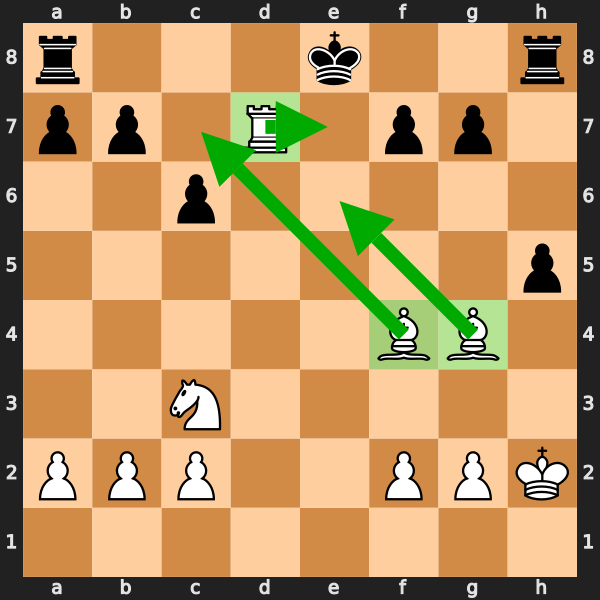
Position Analysis (Move 20): White controls 16 squares in Black's territory versus only 1 square for Black. The MCP position-features engine confirms: "White has a space advantage (16 vs 1 controlled squares in the opponent's half)."
In this position from a game between players rated approximately 1400 on Chess.com (Lichess ~1715), White has established a massive space advantage. The rook on d7 has penetrated deep into Black's territory (green arrow), while the bishops on f4 and g4 control critical central and kingside squares. Black's pieces are relegated to the back rank, entirely passive. White went on to win this game smoothly, converting the space advantage into a direct mating attack.
Example 2: When Space Advantage Backfires
While space is valuable, it must be supported. Pushing too aggressively without adequate piece backing can create weaknesses rather than strength.
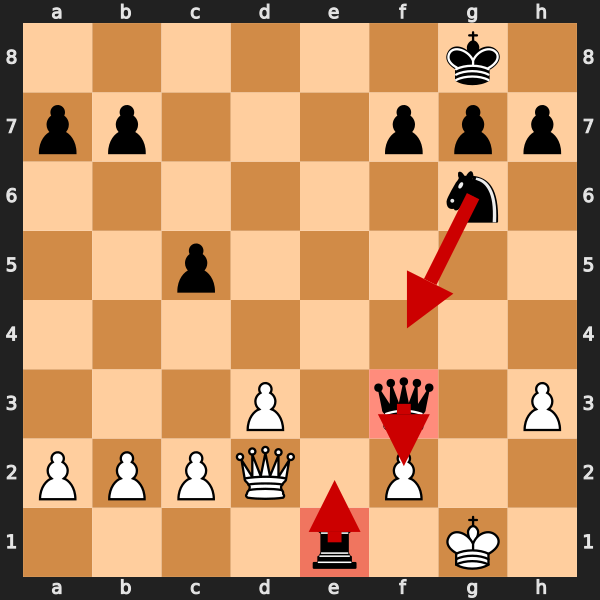
Position Analysis (Move 20): Black controls 20 squares in White's territory versus only 3 for White. The MCP engine reports: "Black has a space advantage (3 vs 20 controlled squares in the opponent's half)."
Here, in a game between players rated approximately 1000 on Chess.com (Lichess ~1476), Black has completely overrun White's position. The Black queen on f3 and rook on e1 are operating freely in White's territory (red arrows indicate the invasion routes). White's earlier attempts to gain space likely left their king exposed, allowing Black to launch a devastating counterattack. This highlights a crucial lesson: space is only an advantage if you can maintain control of the territory you claim.
Example 3: The Moderate, Sustainable Advantage
At higher ratings, space advantages are often more subtle but equally effective.
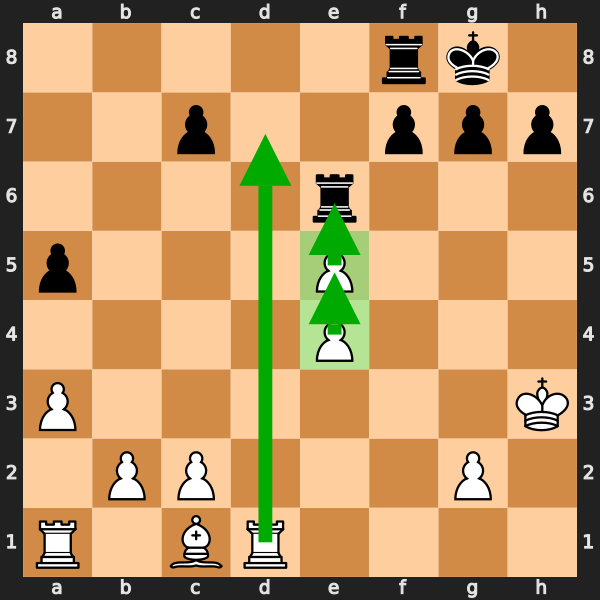
Position Analysis (Move 20): White controls 8 squares in Black's territory versus 1 for Black, driven by the advanced e4-e5 pawn chain (highlighted in green).
In this game between players rated approximately 1600 on Chess.com (Lichess ~1961), White holds a moderate space advantage driven by the advanced pawn on e5. This single pawn restricts Black's pieces and provides a wedge for White to build an attack. The rook on d1 is poised to enter the 7th rank. This type of sustainable, central space advantage is a hallmark of strong positional play and is the kind of advantage that improvers should aspire to create.
The Engine's Perspective: Space and Evaluation
To confirm that our space metric aligns with objective chess truth, we correlated the space differential with the Stockfish engine evaluation at move 20. The results validate our approach.
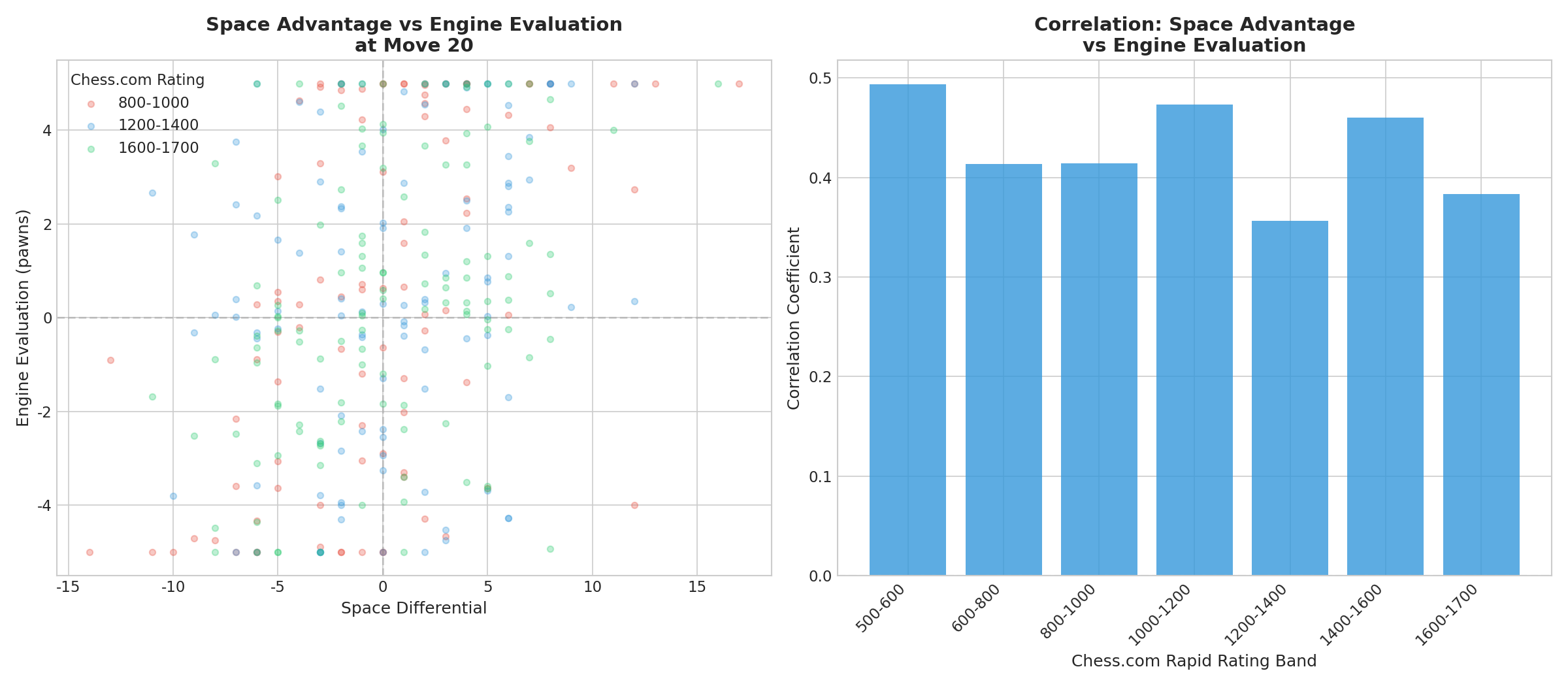
The correlation between space differential and engine evaluation is positive and significant across all rating bands, ranging from r = 0.37 to r = 0.55. This confirms that positions with a space advantage are objectively better according to the engine.
| Chess.com Rating Band | Space-Eval Correlation (r) | Sample Size |
|---|---|---|
| 500-600 | 0.554 | 349 |
| 600-800 | 0.477 | 461 |
| 800-1000 | 0.451 | 490 |
| 1000-1200 | 0.520 | 486 |
| 1200-1400 | 0.373 | 541 |
| 1400-1600 | 0.470 | 631 |
| 1600-1700 | 0.388 | 577 |
The correlation is strongest at the 500-600 level (r = 0.554), where space is often the dominant factor in the evaluation. It dips at the 1200-1400 level (r = 0.373), possibly because players at this level create more complex, multi-dimensional positions where space is just one of several competing factors. The correlation then rises again at 1400-1600 (r = 0.470), suggesting that stronger players create positions where space advantage is more cleanly connected to overall positional quality.
Rank Control: A Complementary Metric
Beyond counting individual squares, we also measured rank control: how many of the eight ranks each side dominates (based on combined piece occupancy and attack coverage). The side controlling more ranks at move 20 enjoys a consistent advantage.
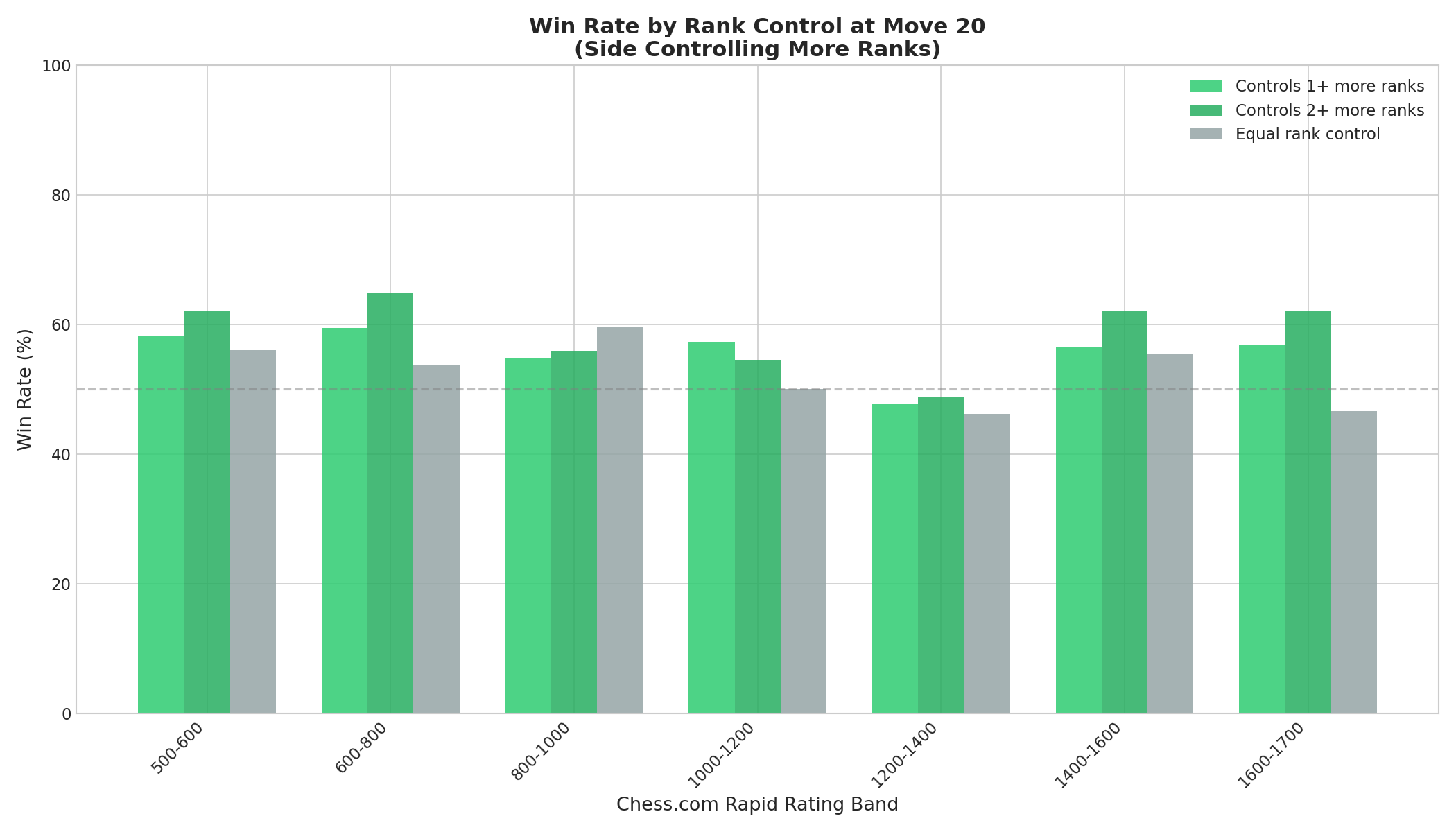
The side controlling 2 or more additional ranks wins approximately 49-65% of their games, compared to 46-60% when rank control is equal. While the effect is more modest than the raw space differential metric, it provides a useful complementary perspective. Rank control is particularly relevant in positions with pawn chains, where one side may control the center ranks while the other dominates the flanks.
Advanced Pawn Count: The Simplest Proxy
For players who want a quick, practical way to assess space, simply counting advanced pawns (pawns past the 4th rank) provides a surprisingly effective proxy.
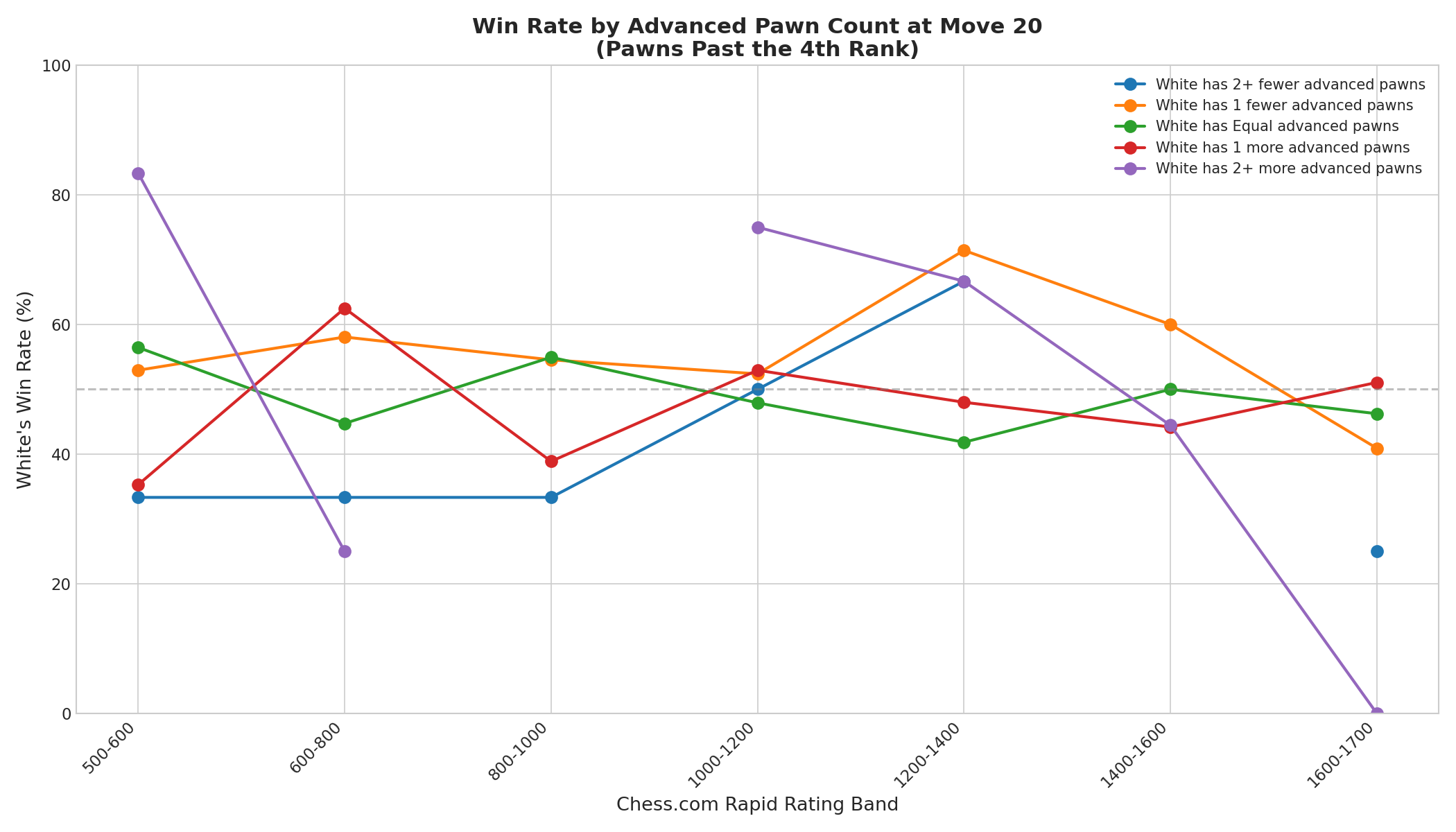
Having 2 or more additional advanced pawns compared to your opponent correlates with a significantly higher win rate across all rating bands. This is an easily observable feature that even beginners can use to evaluate their positions during a game.
Actionable Advice by Rating Band
Based on the data, here is a roadmap for utilizing space advantage to climb the rating ladder.
Beginner Level (Chess.com Rapid 500-800)
At this level, the player with more space wins overwhelmingly. The data shows a 38-41 percentage point gap in win rates between the side with space and the cramped side. Space is the single most impactful positional factor at this level.
What to do: Focus on rapid development and central control. Push your central pawns (e4/d4 or e5/d5) to claim territory early. Beginners often play too passively, keeping their pieces on the first three ranks. By simply moving your pieces forward and occupying the center, you will naturally cramp your opponent, leading them to make unforced errors due to a lack of mobility. When you have more space, keep your pieces on the board; do not trade them off.
Novice Level (Chess.com Rapid 800-1200)
The space advantage remains highly potent here, providing a 25-35 percentage point boost in win rate. Players at this level are beginning to understand basic tactics but often struggle with positional concepts.
What to do: Start paying attention to pawn structures that grant space. Openings like the Italian Game, the London System, or the Advance Variation of the Caro-Kann naturally create space advantages. When you have a space advantage, avoid unnecessary piece exchanges. Trading pieces relieves the pressure on your cramped opponent. Keep the tension high and use your extra room to maneuver your pieces to attacking squares. If you are the cramped side, look for opportunities to trade off your worst piece.
Intermediate Level (Chess.com Rapid 1200-1500)
Here, the gap narrows to 17-26 percentage points. Opponents are becoming more resilient and know how to fight back against a space advantage.
What to do: Learn the art of the pawn break. If you are the cramped side, you must actively seek to challenge the opponent's space with pawn levers (e.g., playing ...c5 against a d4-e5 chain, or ...f6 to challenge e5). If you hold the space advantage, anticipate these breaks and prepare to meet them. Your goal is to maintain the bind without overextending your position and creating weaknesses behind your advanced pawns. Study classical games by Karpov and Petrosian for masterful examples of space exploitation.
Advanced Intermediate (Chess.com Rapid 1500-1700+)
At this level, a space advantage provides a solid 21 percentage point edge. Games are rarely decided by space alone; it is usually converted into another type of advantage, such as a superior endgame or a direct king attack.
What to do: Focus on the qualitative aspects of space. It is not just about counting squares; it is about which squares you control. Use your space advantage to restrict the opponent's best minor pieces. If you have a space advantage on the queenside, look to open lines there while keeping the center closed. Conversely, if you are cramped, prioritize exchanging your passive pieces for the opponent's active ones to equalize the spatial dynamic. At this level, understanding when to release the tension (via pawn exchanges) versus when to maintain it becomes a critical skill.
Conclusion
The data unequivocally supports the classical chess maxim: space is an advantage. Across all rating bands from 500 to 1700 on Chess.com, controlling more territory than your opponent significantly increases your probability of winning. The effect is most dramatic at lower ratings, where a space advantage can swing win rates by over 40 percentage points, but it remains a meaningful factor even at the advanced intermediate level.
The correlation between space advantage and engine evaluation (r = 0.37 to 0.55) confirms that this is not merely a statistical artifact: positions with more space are objectively better. By consciously fighting for territory, avoiding unnecessary trades when you have more room, and learning to execute timely pawn breaks when cramped, you can harness the power of space to elevate your game.
Data and Methodology
This research analyzed 1,400 Rapid games sourced from the Lichess database (March 2025) via the Grandmaster Guide MCP analytical platform. The database contains approximately 954,000 games with 100% Stockfish evaluation coverage.
Game Selection: Games were filtered for Rapid time controls (10+ minutes base time) and categorized into seven Lichess rating bands (700-900, 900-1100, 1100-1300, 1300-1500, 1500-1700, 1700-1900, 1900-2000), with 200 games per band. These were mapped to approximate Chess.com Rapid ratings using the established cross-platform calibration table.
| Chess.com Rapid | Lichess Rapid (approx.) |
|---|---|
| 500-600 | 700-900 |
| 600-800 | 900-1100 |
| 800-1000 | 1100-1300 |
| 1000-1200 | 1300-1500 |
| 1200-1400 | 1500-1700 |
| 1400-1600 | 1700-1900 |
| 1600-1700 | 1900-2000 |
Space Measurement: Space advantage was quantified using python-chess by counting the number of squares each side controlled (via attacks) or occupied (via pieces) in the opponent's half of the board. Measurements were taken at moves 10, 15, 20, 25, and 30 after Black's move. A "clear space advantage" was defined as a differential of more than 3 squares.
Validation: Space calculations were cross-referenced with the Grandmaster Guide MCP position-features API, which uses a similar methodology and confirmed strong agreement with our computed values.
Engine Evaluations: Stockfish 12 evaluations were embedded in the PGN data as [%eval] annotations. These were extracted and correlated with space differentials to validate the positional significance of space advantage.
Underlying Data Files: The following CSV files contain the raw data and analysis results:
| File | Description |
|---|---|
space_analysis.csv |
All 4,951 position measurements with space metrics, eval, and FEN |
master_summary.csv |
Summary statistics by rating band |
space_winrate_by_category.csv |
Win rates broken down by space category and rating |
space_eval_correlation.csv |
Correlation coefficients between space and engine eval |
rank_control_summary.csv |
Win rates by rank control metric |
space_averages_by_band.csv |
Average space metrics per rating band and checkpoint |
Chess Coach, April 14, 2026