A Data-Driven Guide to Blunders in Rapid Chess (Chess.com 500–1800)
If you are an intermediate chess player, you have likely felt the sting of the "single-blunder loss." You play a brilliant opening, navigate a complex middlegame, and then—disaster strikes. You hang a piece, miss a tactic, and the game slips away. It is easy to conclude that you are just "one blunder away" from a higher rating.
However, a deep dive into hundreds of thousands of Rapid games reveals a surprising truth: the single-blunder game is largely a myth. At the 800 Chess.com rating level, games are rarely decided by a solitary mistake. Instead, they are characterized by an avalanche of errors from both sides.
This article serves as a roadmap for improvement, analyzing the anatomy of blunders across rating bands (from 500 to 1800 Chess.com Rapid) and providing actionable advice to help you climb the rating ladder.
The Reality of the "One Blunder" Game
When we analyze the distribution of blunders (defined by Stockfish 17 as a move resulting in a centipawn loss of 300 or more), the data paints a stark picture. We looked specifically at the percentage of games where exactly one blunder occurred throughout the entire game.
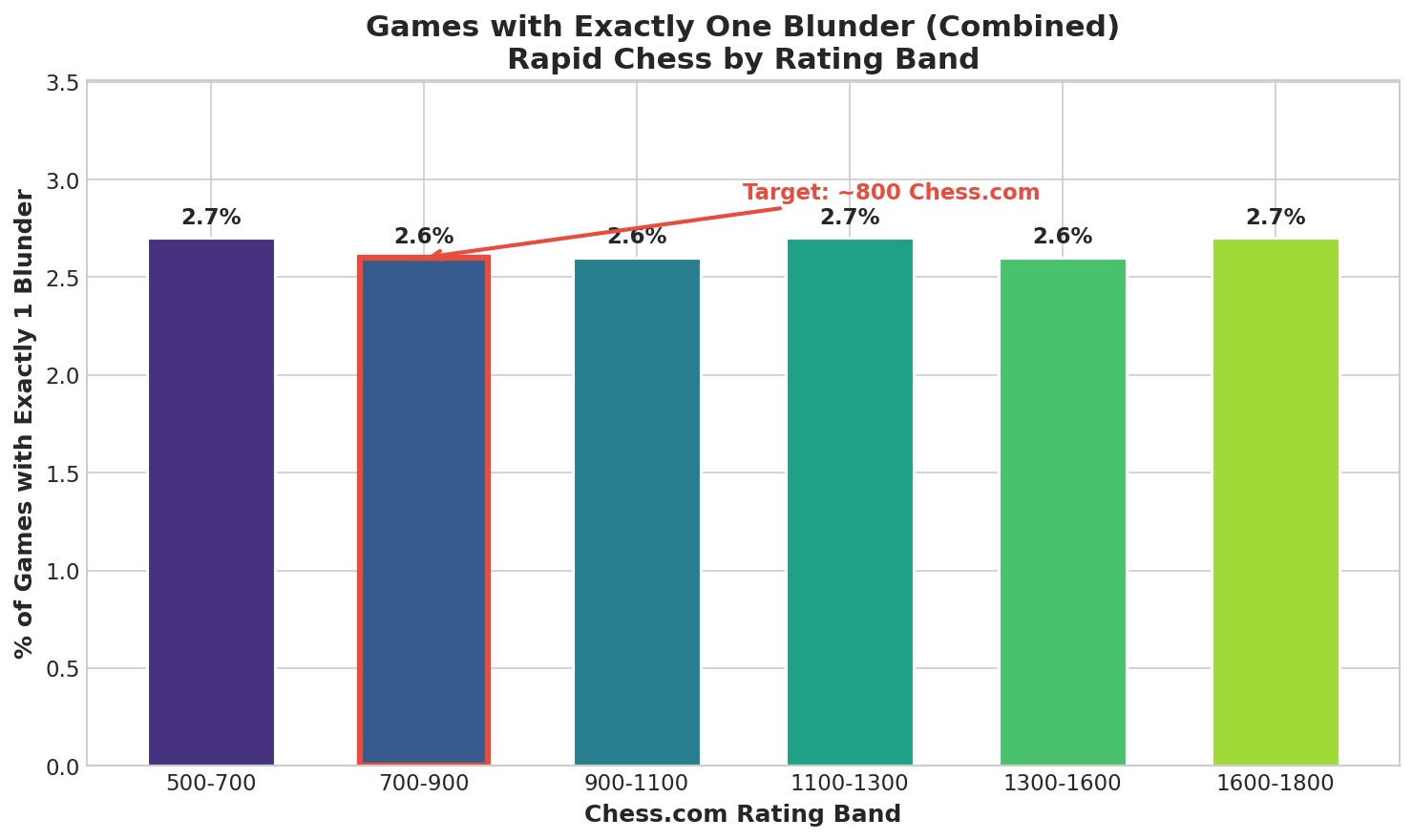
The consistency across rating bands is remarkable. Whether you are rated 500 or 1800 on Chess.com, the percentage of games containing exactly one blunder hovers around 2.6% to 2.7%.
If single-blunder games are so rare, what is actually happening on the board? The answer lies in the extremes. As the chart below illustrates, the vast majority of games at the 800 level feature either zero blunders (often due to quick tactical oversights ending the game early) or, much more commonly, five or more blunders.
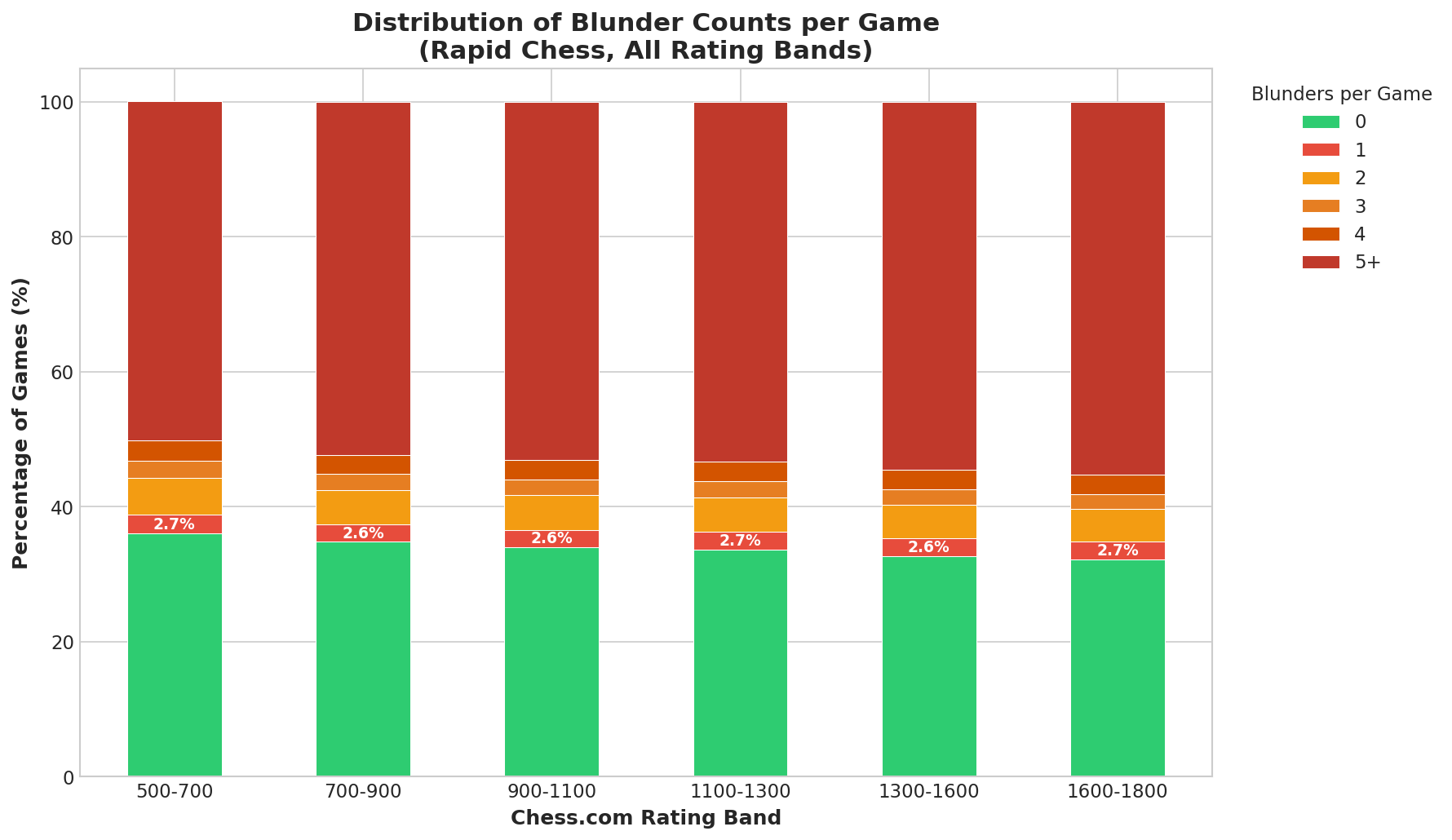
At the 700–900 Chess.com rating band, over 52% of games feature five or more blunders combined. This means that when you make a catastrophic error, your opponent is highly likely to return the favor. The player who wins is not necessarily the one who avoids blundering entirely, but rather the one who makes the second-to-last blunder.
When Do Blunders Happen?
Understanding when blunders occur is crucial for targeted improvement. The data shows a clear correlation between rating and the timing of the first major mistake.
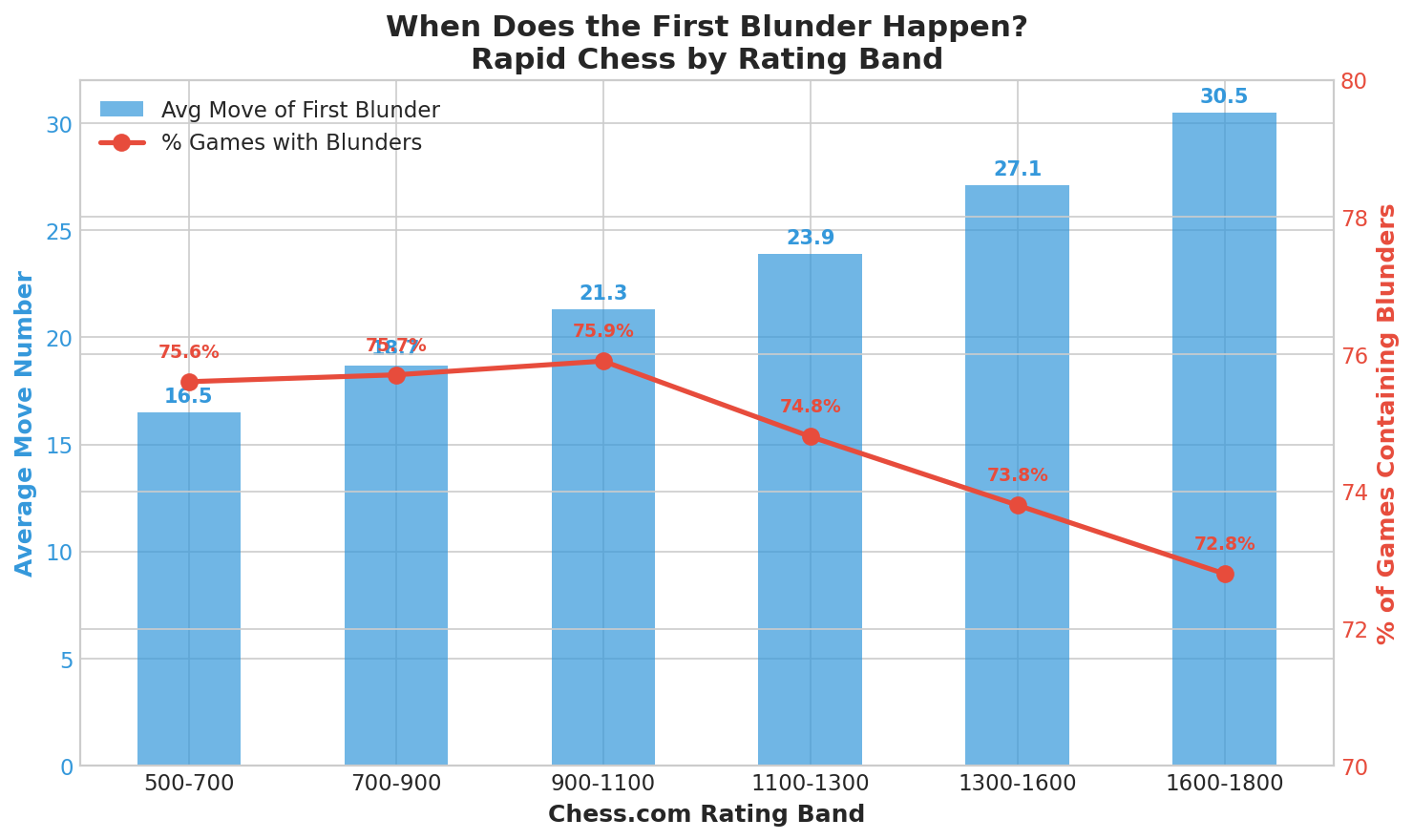
At the 500–700 level, the first blunder occurs, on average, around move 16. By the time a player reaches 1600–1800, they have pushed that average back to move 30. This indicates that lower-rated games are often decided in the opening or early middlegame, while higher-rated players can navigate standard positions safely and only crack under the complexity of the late middlegame or endgame.
We can see this progression even more clearly in the blunder timing heatmap:
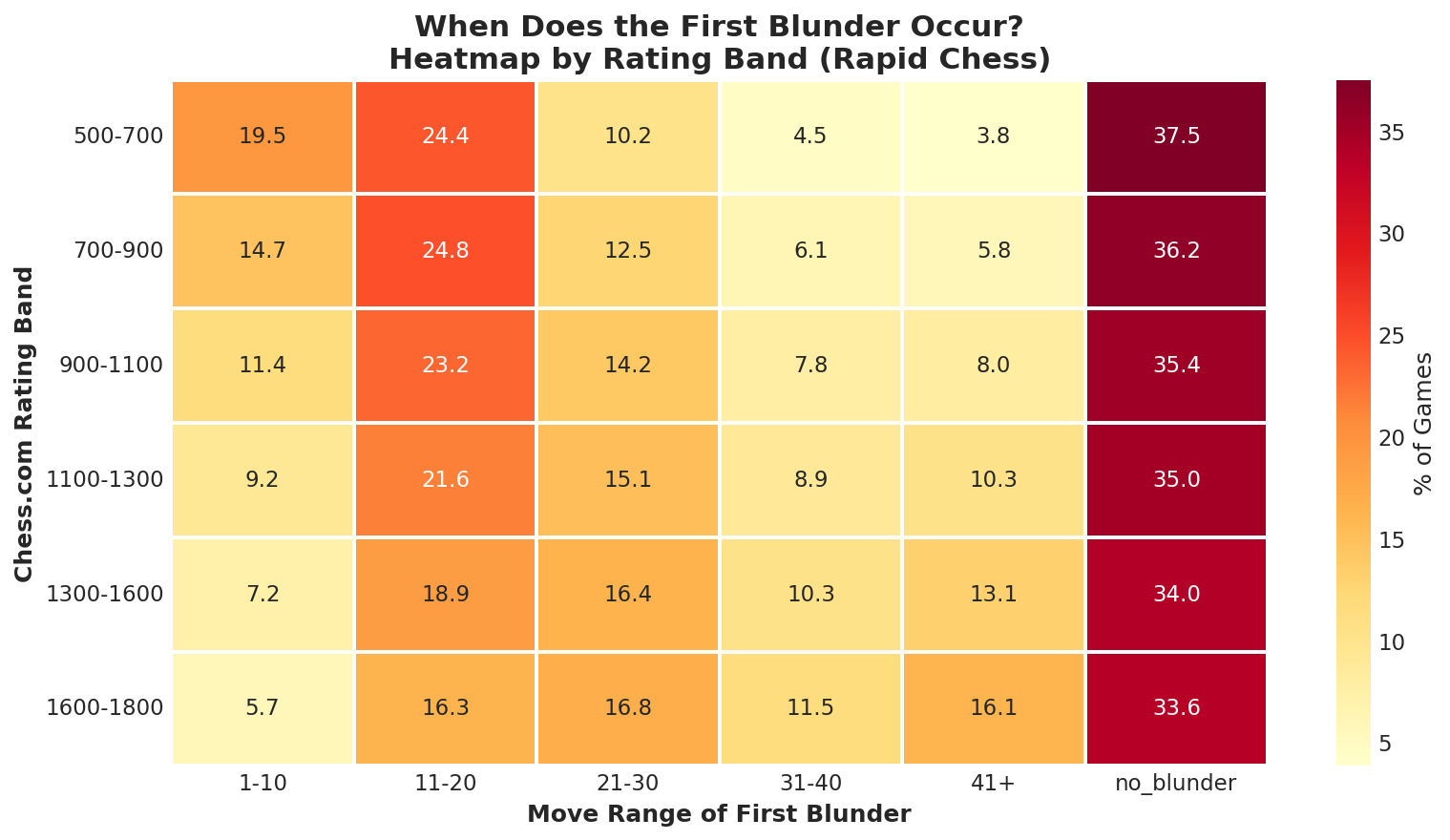
For an 800-rated player, the danger zone is moves 11 through 20. This is typically when opening preparation ends and players must formulate their own plans. Without a clear strategy, pieces are left undefended, and tactical opportunities are missed.
The Anatomy of an 800-Rated Blunder
Not all blunders are created equal. To understand why players at the 800 level struggle, we must look at the evaluation of the position at the moment the blunder is made.

Surprisingly, the most common time to blunder at the 800 level is when you are already winning. Over 40% of blunders in the 700–900 Chess.com band occur in positions where the player has a decisive advantage (an evaluation of +6 or higher).
This phenomenon highlights a critical psychological hurdle: complacency. When players achieve a winning position, they often relax their calculation and stop looking for their opponent's threats.
Visualizing the Errors
Let us look at some common examples of blunders that plague the 800-rating bracket.
1. The Complacent Queen (Blundering While Winning)
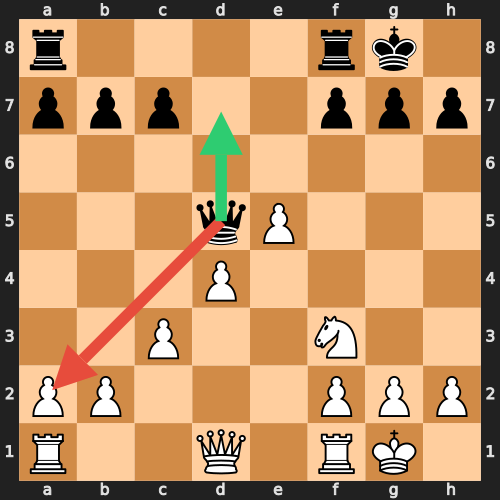
In this position, Black is completely winning. However, instead of consolidating the advantage or improving piece activity (such as playing ...Qd7), Black gets greedy and grabs a pawn with ...Qxa2. This allows White back into the game or drops material to a simple tactic.
2. Ignoring the Threat (Opening Blunder)
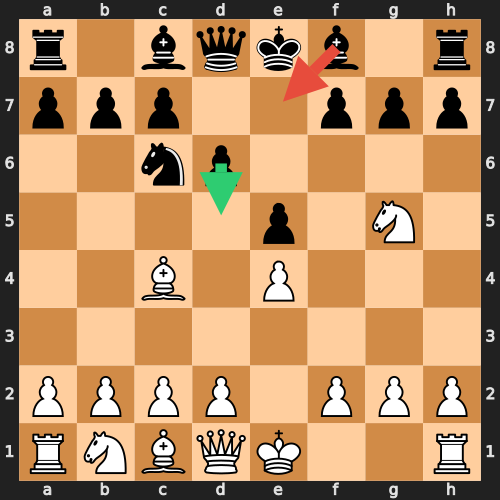
Here, White has played Ng5, creating a clear and immediate threat against the f7 pawn (the classic Fried Liver setup). Black, focused entirely on their own development, plays ...Be7, completely ignoring the threat. The correct response, ...d5, is missed because the player is not asking, "What does my opponent want?"
3. The Undefended Piece (Middlegame Blunder)
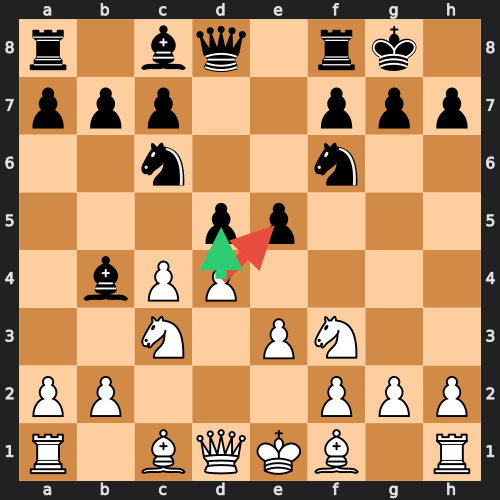
This is perhaps the most common tactical error at the 800 level. A piece is left hanging, or a capture is initiated without calculating the recaptures. Here, capturing the pawn on e5 loses material immediately.
Roadmap to Improvement: Actionable Advice by Rating Band
Based on the data, here is a targeted guide to climbing the rating ladder.
500–900 Chess.com: The Survival Phase
At this level, games are chaotic. Over 50% of games feature 5+ blunders, and the first major error happens before move 19.
- Actionable Advice: Focus entirely on board vision. Before every move, ask yourself two questions: "Is the piece I am moving safe?" and "Did my opponent's last move attack anything?" Do not worry about deep strategic plans; simply stop giving away free pieces.
- The Goal: Push your first blunder past move 20.
900–1300 Chess.com: The Consolidation Phase
Players here are surviving the opening but falling apart in the early middlegame (moves 20–25). They also struggle heavily with complacency, blundering frequently in winning positions.
- Actionable Advice: Practice "advantage conversion." When you win a piece, your primary goal should be to trade down into a simple endgame and restrict your opponent's counterplay. Do not go pawn-hunting when you are up a full Knight.
- The Goal: Reduce your average blunders per game from ~19 to under 15.
1300–1600 Chess.com: The Strategic Phase
The first blunder is now pushed to move 27. Players are tactically sharper but struggle when the position becomes complex or closed.
- Actionable Advice: Improve your positional understanding. Learn how to formulate plans when there are no immediate tactical shots. Study pawn structures, weak squares, and piece activity.
- The Goal: Increase your percentage of blunder-free games.
1600–1800 Chess.com: The Refinement Phase
At this level, the average centipawn loss drops significantly, and the first blunder does not occur until move 30. Games are longer and more grinding.
- Actionable Advice: Focus on endgame technique and deep calculation. Blunders here are rarely one-move piece hangs; they are miscalculations in complex variations or fundamental misunderstandings of endgame principles.
- The Goal: Master theoretical endgames to convert slight advantages without blundering.
Conclusion
The data is clear: you are not stuck at your rating because of a single, unlucky blunder in an otherwise perfect game. You are stuck because of a consistent pattern of errors, often occurring in the transition from the opening to the middlegame, or when complacency sets in during a winning position.
By understanding these patterns and focusing your training on board vision, threat awareness, and advantage conversion, you can stop the avalanche of blunders and start climbing the ranks.
Data and Methodology
This analysis was conducted using a dataset of Rapid chess games sourced from the Lichess database via the grandmaster-guide MCP server. The data was filtered for games containing Stockfish 17 evaluations to accurately measure centipawn loss and blunder rates.
Note on Ratings: The raw data was collected using Lichess rating bands. For the purpose of this article, these bands were mapped to their approximate Chess.com Rapid equivalents (e.g., Lichess 1035 ≈ Chess.com 800) to provide actionable insights for Chess.com users.
Underlying Data Files:
View full data →lichess_band chesscom_band pct_single_blunder single_blunder_games total_games 1100-1300 900-1100 2.6 4198 158895 1300-1500 1100-1300 2.7 4249 155151 1500-1800 1300-1600 2.6 3871 147088 1800-2000 1600-1800 2.7 4496 167419 700-900 500-700 2.7 4466 164236
View full data →lichess_band chesscom_band side pct_single_blunder single_blunder_games total_games 1100-1300 900-1100 white 7.4 11727 158895 1100-1300 900-1100 black 7.7 12265 158895 1300-1500 1100-1300 white 7.5 11638 155151 1300-1500 1100-1300 black 7.8 12143 155151 1500-1800 1300-1600 white 7.3 10747 147088
View full data →lichess_band chesscom_band scenario white_win_pct draw_pct black_win_pct sample_games 700-900 500-700 black_blundered_only 21.1 4.1 74.8 2664 700-900 500-700 both_blundered 60.8 5.1 34.1 100262 700-900 500-700 neither_blundered 18.6 3.7 77.7 34863 700-900 500-700 white_blundered_only 65.3 2.5 32.1 1991 900-1100 700-900 black_blundered_only 21 3 75.9 2582
View full data →lichess_band chesscom_band avg_first_blunder_move games_with_blunder_pct avg_blunders_per_game sample_games 700-900 500-700 16.5 75.6 18.93 40335 900-1100 700-900 18.7 75.7 19.32 34058 1100-1300 900-1100 21.3 75.9 19.46 28546 1300-1500 1100-1300 23.9 74.8 19.07 24070 1500-1800 1300-1600 27.1 73.8 18.33 19083
View full data →lichess_band chesscom_band avg_cpl blunder_rate mistake_rate inaccuracy_rate sample_games 700-900 500-700 183.1 18.93 3.91 2.92 40335 900-1100 700-900 178.7 19.32 4.77 3.5 34058 1100-1300 900-1100 173.9 19.46 5.81 4.14 28546 1300-1500 1100-1300 166.7 19.07 6.74 4.65 24070 1500-1800 1300-1600 157.8 18.33 7.98 5.42 19083
View full data →lichess_band chesscom_band position_type blunder_pct avg_cpl sample_blunders 700-900 500-700 Clear advantage (3-6) 33.6 914 841002 700-900 500-700 Equal position (0-1) 3.1 501 77206 700-900 500-700 Slight edge (1-3) 17.4 489 435735 700-900 500-700 Winning (6+) 45.8 1698 1145979 900-1100 700-900 Clear advantage (3-6) 36.7 910 933884
View full data →lichess_band chesscom_band pct_under_20 pct_under_30 pct_reaching_40 pct_reaching_60 decisive_avg_moves sample_games 700-900 500-700 40.2 63.6 20.7 5.4 25.3 49133 900-1100 700-900 34.8 59.9 22.7 6 27.3 41879 1100-1300 900-1100 29.4 55.9 24.7 6.5 29.1 35587 1300-1500 1100-1300 25.4 52.2 26.9 7.6 30.6 29959 1500-1800 1300-1600 20.8 47.3 30.3 8.1 32.5 23297
View full data →lichess_band chesscom_band move_bucket side pct_of_games sample_games 700-900 500-700 1-10 black 21.9 35998 700-900 500-700 11-20 black 23.2 38117 700-900 500-700 21-30 black 9.7 15911 700-900 500-700 31-40 black 4.3 7012 700-900 500-700 41+ black 3.6 5888
View full data →lichess_band chesscom_band blunder_bucket side game_pct game_count 700-900 500-700 0 black 37.3 61310 700-900 500-700 1 black 8.2 13512 700-900 500-700 2 black 5.2 8487 700-900 500-700 3 black 4.1 6713 700-900 500-700 4 black 3.6 5908
Chess Coach
April 14, 2026