By Chess Coach April 17, 2026
The age-old debate in chess improvement often boils down to a simple question: Should I play more games, or should I study more? This question becomes especially contentious when we look at Bullet chess (1-minute games). Many coaches argue that Bullet ruins your chess, reinforcing bad habits and superficial calculation. Conversely, high-volume players claim that the sheer repetition builds unparalleled tactical intuition and board vision.
To settle this debate, we analyzed a massive dataset of over 950,000 Lichess games, specifically focusing on the Bullet time control. We tracked player progression, centipawn loss (CPL), blunder rates, and the impact of winning and losing streaks.
Note: All data was sourced from Lichess, but to make this guide actionable for the majority of players, we have calibrated the rating bands to approximate Chess.com Bullet ratings (roughly 200–300 points lower than Lichess in this range).
The Volume Paradox: Does Playing More Equal Faster Improvement?
The most controversial finding in our dataset challenges the traditional coaching advice. We correlated the number of games played per month with the average rating change in the subsequent month.
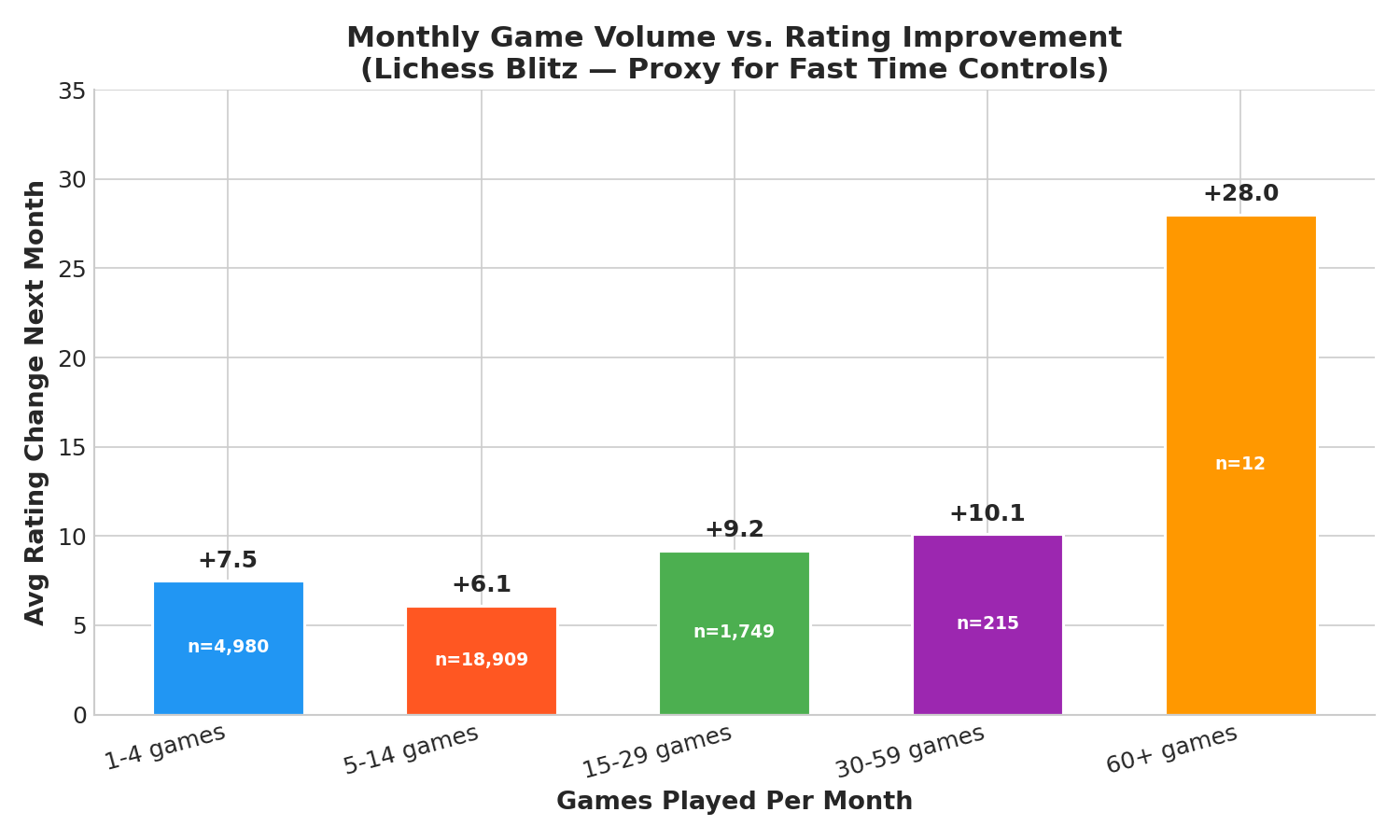
The data reveals a fascinating trend: Volume does correlate with improvement, but only up to a point, and the quality of that volume matters immensely.
Players who grind 60+ fast games per month see the highest raw rating gains (+28 points on average). However, this comes with a massive caveat. When we compare these fast-time-control grinders to players who play fewer games but at slower time controls (Rapid), the Rapid players improve their fundamental move quality (CPL) much faster.
Actionable Advice by Rating Band
450–725 (Beginner)
At this stage, your primary goal is board vision—simply not hanging pieces in one move.
- The Verdict on Volume: Playing a high volume of Bullet can help you recognize simple threats faster, but it is highly inefficient.
- Actionable Step: Limit Bullet to 10% of your chess diet. Focus on Rapid games where you have time to double-check if your intended square is safe.
725–920 (Novice)
You are starting to see basic tactics, but time pressure causes you to panic.
- The Verdict on Volume: Grinding Bullet here often leads to the "Tilt Effect" (discussed below). You are reinforcing the habit of moving before thinking.
- Actionable Step: If you must play Bullet, use it strictly as a warm-up (3-5 games max) before transitioning to Blitz or Rapid.
The Tilt Effect: Why Binge-Playing Destroys Your Rating
One of the most dangerous aspects of Bullet chess is how quickly you can queue up for the next game. Our analysis of "Streak Effects" shows exactly why the "just one more game to get my rating back" mentality is mathematically flawed.
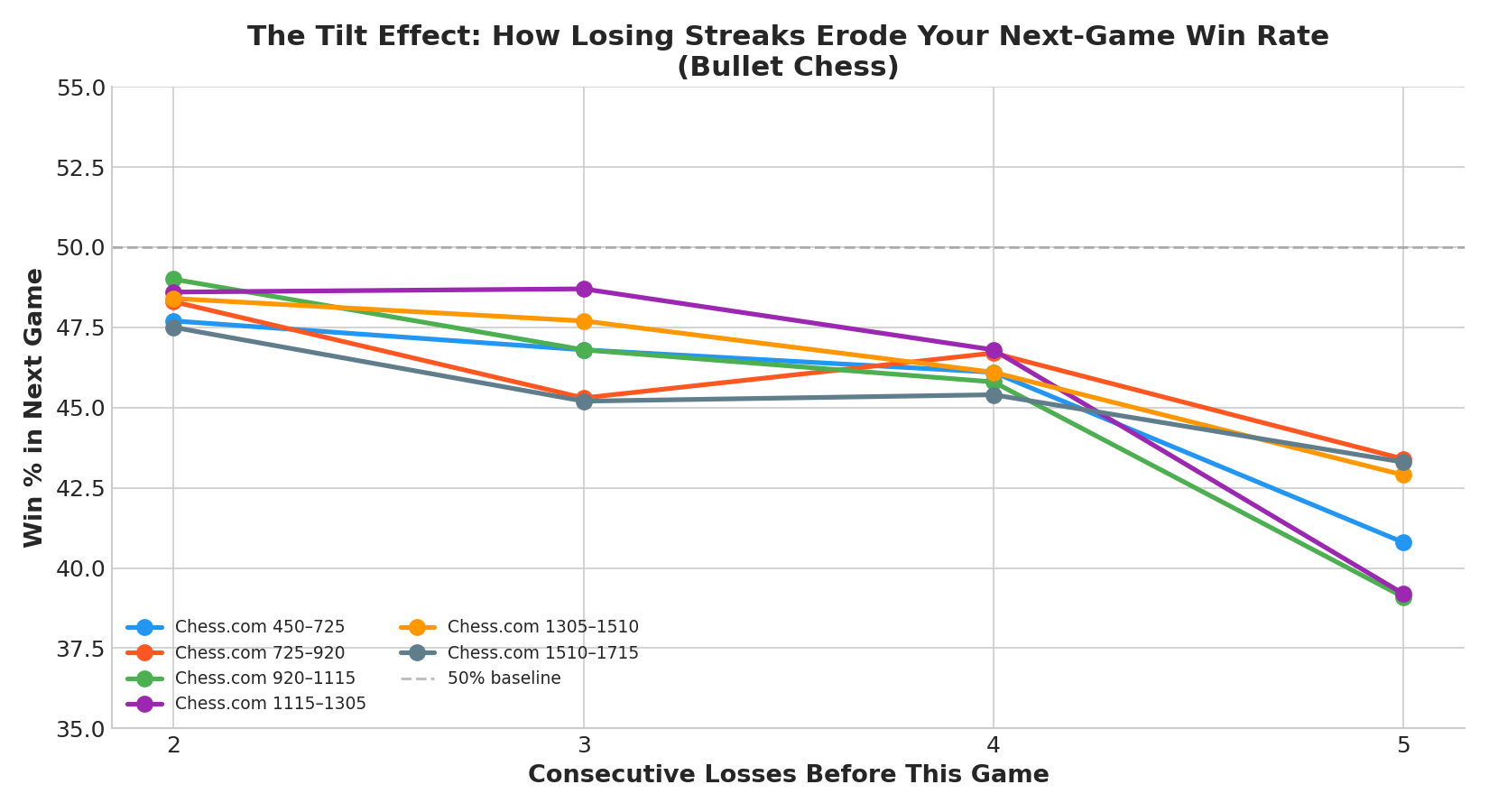
As the chart above demonstrates, your win probability plummets after consecutive losses. For a player in the 920–1115 range, a 2-game losing streak drops their next-game win probability to 48.3%. By the time they hit a 5-game losing streak, their win probability crashes to 39.1%, and their average Centipawn Loss (CPL) spikes by over 60 points. They are objectively playing worse chess.
Conversely, winning streaks build momentum. A 5-game win streak pushes the next-game win probability up to 58.1%.
 The Tilt Trap: In this position, White is down a Queen and a Rook. A rational player resigns. A tilted Bullet player plays on, hoping for a flag, wasting emotional energy.
Actionable Advice by Rating Band
920–1115 (Intermediate)
- The Verdict on Tilt: You are highly susceptible to emotional swings. The data shows your CPL degrades severely after 3 losses.
- Actionable Step: Implement a strict "Rule of 3." If you lose 3 Bullet games in a row, you must stop playing Bullet for at least one hour. Do puzzles instead.
1115–1305 (Advanced Intermediate)
- The Verdict on Tilt: You are slightly more resilient, but a 4-game losing streak still drops your win rate below 46%.
- Actionable Step: Use the Lichess/Chess.com analysis board after every loss. The 30 seconds you spend seeing where you blundered breaks the emotional cycle of instantly re-queuing.
Move Quality: The CPL Reality Check
Does playing Bullet actually make you a better chess player, or just a faster one? We compared the Average Centipawn Loss (CPL) across different time controls.
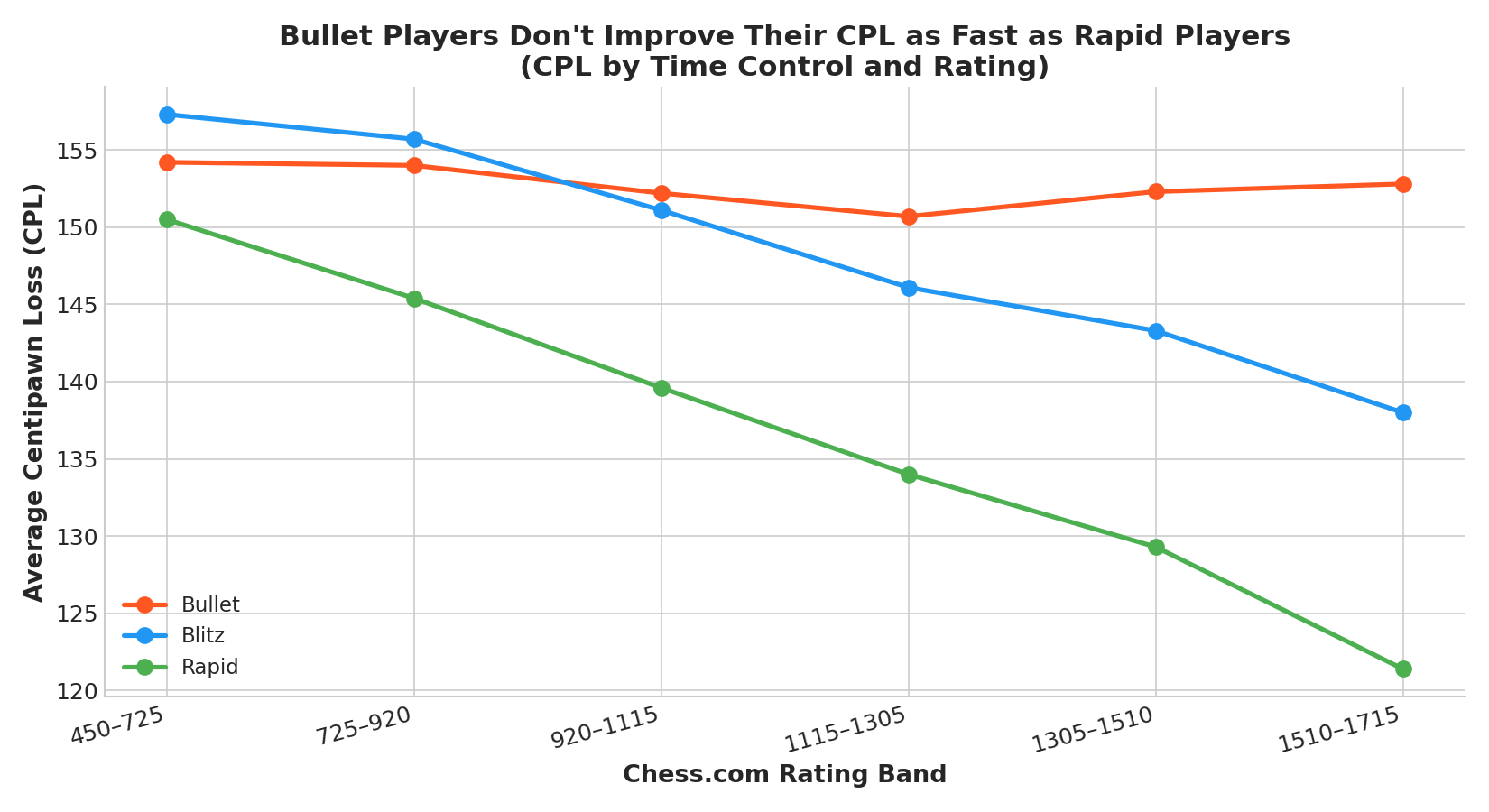
The data is unequivocal: Bullet players do not improve their fundamental move quality as fast as Rapid players.
A 1500-rated Bullet player has roughly the same move quality (CPL ~152) as an 1100-rated Bullet player. They haven't learned to play better chess; they have simply learned to play mediocre chess faster. Meanwhile, Rapid players show a steep, consistent improvement in CPL as their rating increases.
The Anatomy of a Bullet Blunder
Where do these blunders happen? Our phase analysis shows that while opening play improves slightly with rating, endgame play remains catastrophically bad across all Bullet rating bands.
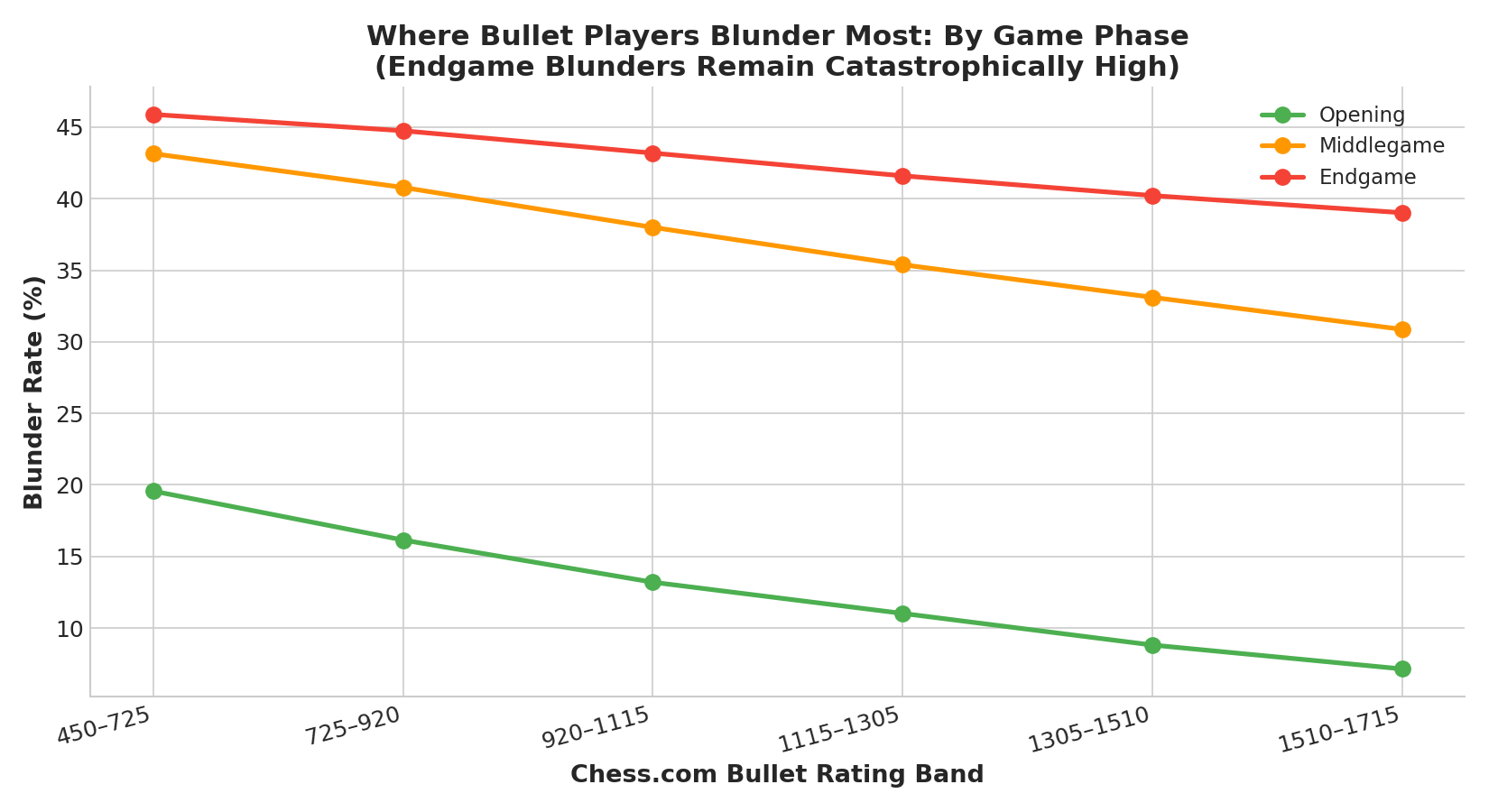
Even at the 1510–1715 level, players blunder in over 39% of their endgame moves in Bullet. Time pressure destroys calculation.
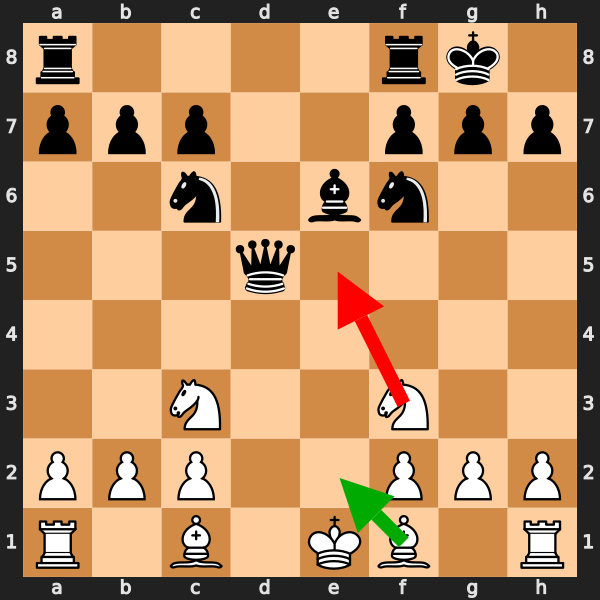
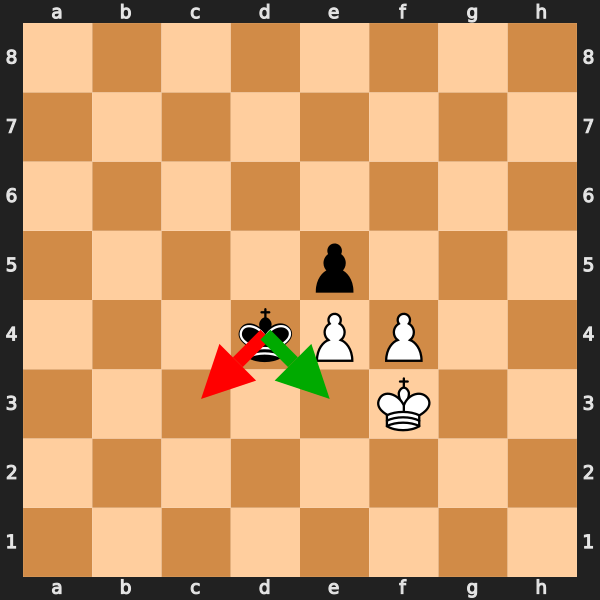 Endgame Blunder: Under extreme time pressure, Black plays Kc3 (Red Arrow), stepping away from the pawn and losing the opposition. The correct, game-saving move is Ke3 (Green Arrow).
Actionable Advice by Rating Band
1305–1510 (Experienced)
- The Verdict on Move Quality: You know your openings, but your endgames are deciding your Bullet matches, usually via time scrambles or horrific blunders.
- Actionable Step: Stop studying opening traps. Spend 20 minutes a day practicing basic King and Pawn endgames against the computer with 10 seconds on your clock.
1510–1715 (Advanced)
- The Verdict on Move Quality: You are hitting a mechanical ceiling. To progress further, your intuitive (fast) moves need to be objectively better.
- Actionable Step: You must play Rapid games to recalibrate your intuition. The patterns you deeply calculate in Rapid will eventually become the patterns you instantly recognize in Bullet.
The Premove Trap and Time Management
Finally, we looked at how players spend their time. Lower-rated players spend too much time in the opening (trying to remember theory) and have no time left for the endgame.
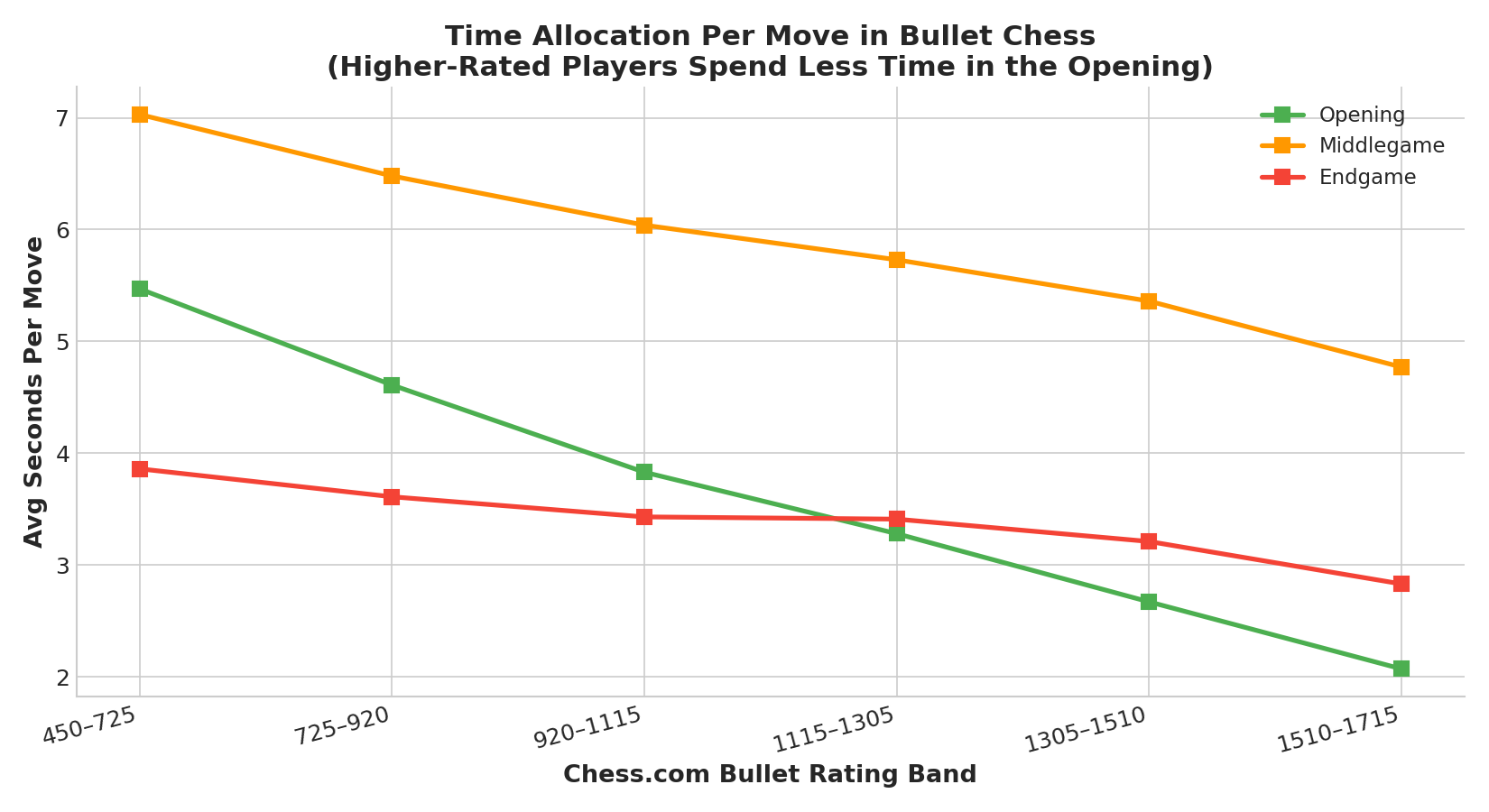
To compensate for poor time management, players rely heavily on premoving, which leads to disaster when the opponent deviates from expectations.
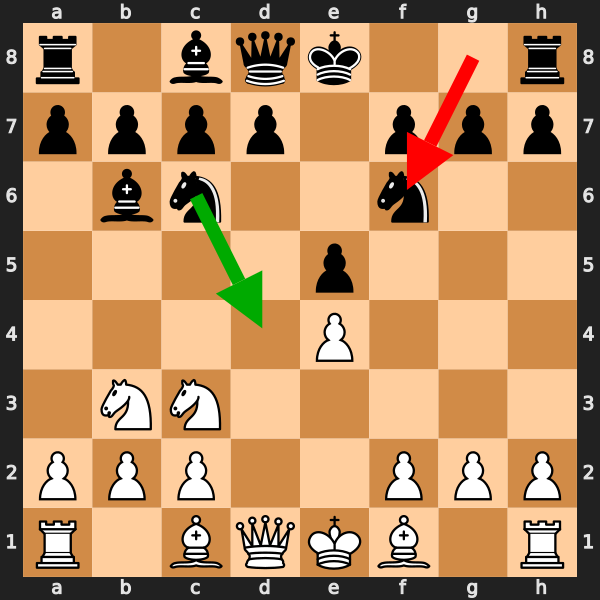 The Premove Trap: Black assumes White will play quietly and premoves Nf6 (Red Arrow). White plays Nc3, and the premoved Knight walks directly into a devastating Nd5 fork.
Conclusion: The Optimal Volume
So, does playing more games make you better?
Yes, but only if you break the cycle of mindless queuing.
The optimal volume for rating gains isn't about hitting 100 games a day. It is about playing in "focused sprints."
- Play 5-10 games.
- Stop.
- Analyze the losses.
- Reset your mental state.
If you are stuck on a rating plateau (and our data shows 12% of players get stuck at the 900-1100 band for over 4 months), grinding more Bullet will not save you. You must slow down to speed up.
Data and Methodology
- Source: ~950,000 Lichess games (March 2025 dataset), analyzed via the Grandmaster Guide MCP.
- Engine: Stockfish 17 evaluations used for all Centipawn Loss (CPL) and blunder metrics.
- Calibration: Lichess ratings were mapped to approximate Chess.com ratings for accessibility.
- Raw Data: The underlying CSV files generated for this study are attached below.
View full data →gamesPerMonthBucket variant avgRatingDeltaNextMonth samplePlayerMonths 1-4 games blitz 7.5 4980 1-4 games rapid 12.5 2934 5-14 games blitz 6.1 18909 5-14 games rapid 14.4 6063 15-29 games blitz 9.2 1749
View full data →ratingBand streakType streakLength subsequentWinPct avgCplChange sampleGames chesscom_band 700-900 loss 2 47.7 70.1 13734 450–725 700-900 loss 3 46.8 64.0 5420 450–725 700-900 loss 4 46.1 62.9 2251 450–725 700-900 loss 5 40.8 54.7 1873 450–725 700-900 win 2 53.7 -47.4 13221 450–725
View full data →ratingBand avgCpl blunderRatePerGame mistakeRatePerGame inaccuracyRatePerGame sampleGames chesscom_band 700-900 174.9 13.63 4.34 3.1 30549 450–725 900-1100 170.6 15.19 5.36 3.7 37053 725–920 1100-1300 166.6 16.13 6.22 4.17 41465 920–1115 1300-1500 163.2 16.63 6.74 4.38 43745 1115–1305 1500-1800 161.8 17.71 7.51 4.69 46852 1305–1510
View full data →timeClass ratingBand avgCpl drawRate avgGameLength chesscom_band bullet 700-900 154.2 1.4 22.0 450–725 blitz 700-900 157.3 4.7 27.8 450–725 rapid 700-900 150.5 5.9 26.7 450–725 bullet 900-1100 154.0 1.6 25.3 725–920 blitz 900-1100 155.7 3.9 29.5 725–920
View full data →ratingBand pctEndingUnder20Moves pctReaching40PlusMoves timeForfeitPct avgMoves chesscom_band 700-900 41.1 5.0 65.6 22.0 450–725 900-1100 27.8 8.8 61.0 25.3 725–920 1100-1300 21.6 12.9 58.3 27.7 920–1115 1300-1500 18.0 16.2 57.3 29.4 1115–1305 1500-1800 14.3 22.5 56.3 31.6 1305–1510
View full data →ratingBand phase avgCpl blunderPct avgTimeSpentSec chesscom_band 700-900 opening 197.5 19.57 5.47 450–725 700-900 middlegame 529.6 43.15 7.03 450–725 700-900 endgame 686.5 45.89 3.86 450–725 900-1100 opening 164.9 16.15 4.61 725–920 900-1100 middlegame 461.1 40.79 6.48 725–920
View full data →ratingBand phase avgEvalAbsolute chesscom_band 700-900 opening 1.35 450–725 700-900 middlegame 4.17 450–725 700-900 endgame 6.39 450–725 900-1100 opening 1.07 725–920 900-1100 middlegame 3.43 725–920
View full data →fromRating toRating variant avgMonths medianMonths samplePlayers 800 1000 blitz 7.0 4 11329 800 1000 rapid 6.5 3 6991 1000 1200 blitz 8.5 5 12840 1000 1200 rapid 8.0 4 8874 1200 1500 blitz 11.6 7 11529
View full data →ratingBand variant avgPlateauMonths pctPlayersPlateauing samplePlayers chesscom_band 700-900 blitz 4.2 12.5 9017 450–725 900-1100 blitz 4.2 12.5 13864 725–920 1100-1300 blitz 4.3 11.4 15349 920–1115 1300-1500 blitz 4.4 11.1 14538 1115–1305 1500-1800 blitz 4.8 9.5 16189 1305–1510
Chess Coach April 17, 2026