A Data-Driven Guide for Chess.com 800-1500 Players
Every chess player knows the feeling: you win a pawn in the opening, carefully trade down into an endgame, and expect a smooth victory. Yet, somehow, your opponent's pieces suddenly swarm your king, your extra pawn becomes irrelevant, and you find yourself staring at a checkmate screen. You had the material advantage, so why did you lose?
This article explores the statistical reality of material advantage in Rapid chess. By analyzing over 150,000 Rapid games across various rating bands, we can quantify exactly how often material advantages fail to convert into wins. More importantly, we can identify the specific scenarios where piece activity trumps piece count, providing a roadmap for improvement for players rated between 800 and 1500 on Chess.com.
The Illusion of the Extra Pawn
The most common material advantage in chess is being up a single pawn. At the grandmaster level, a clean extra pawn is often enough to force a resignation. However, at the amateur level, the data tells a very different story.
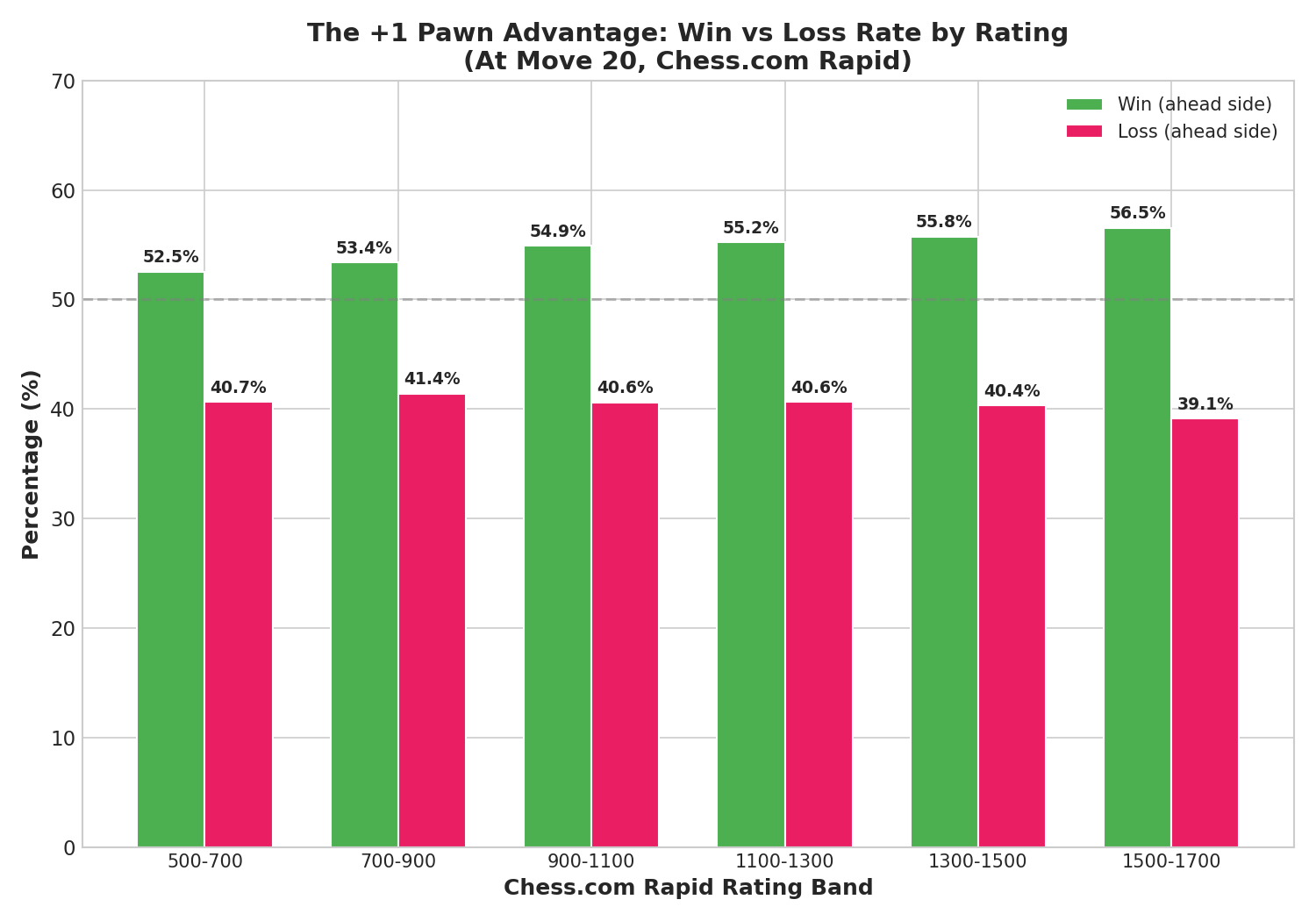
As the chart above illustrates, a +1 pawn advantage at move 20 is barely better than a coin flip for players rated 500-700 on Chess.com (approximately 700-900 on Lichess). The materially ahead player wins only 52.5% of the time, while losing 40.7% of the time. Even as players improve to the 1500-1700 Chess.com range, the win rate for a one-pawn advantage only climbs to 56.5%.
This statistical reality highlights a crucial lesson: a single pawn advantage is not a reliable predictor of victory at the amateur level. Players often expend immense effort and compromise their position to win a pawn, only to find that the resulting lack of piece coordination or king safety costs them the game.
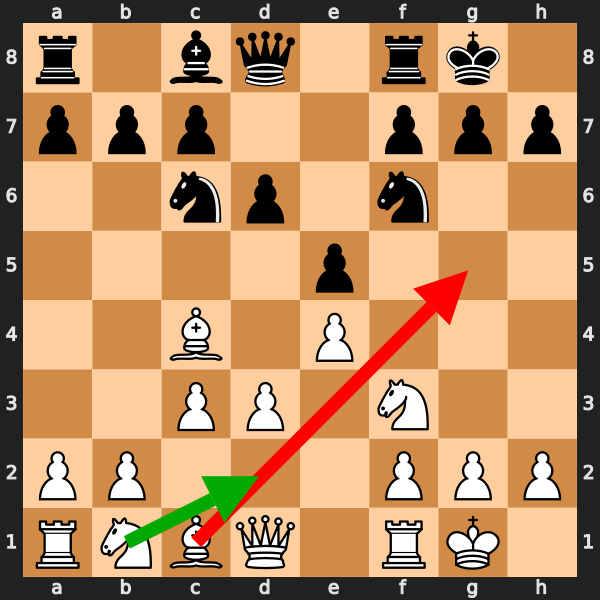
In the position above, White is up a pawn but has doubled pawns and a passive bishop. The engine evaluates the position as equal (0.00) despite the material advantage. White's attempt to play actively with Bg5 (red arrow) is a mistake, allowing Black counterplay. The correct approach is the patient Nbd2 (green arrow), prioritizing development and coordination over immediate aggression.
The Leakage: How Often Does Material Advantage Lose?
If a pawn advantage is unreliable, what about larger material advantages? Surely being up a full piece or a rook guarantees a win? The data reveals a surprising amount of "leakage"—games where the materially ahead player still manages to lose.
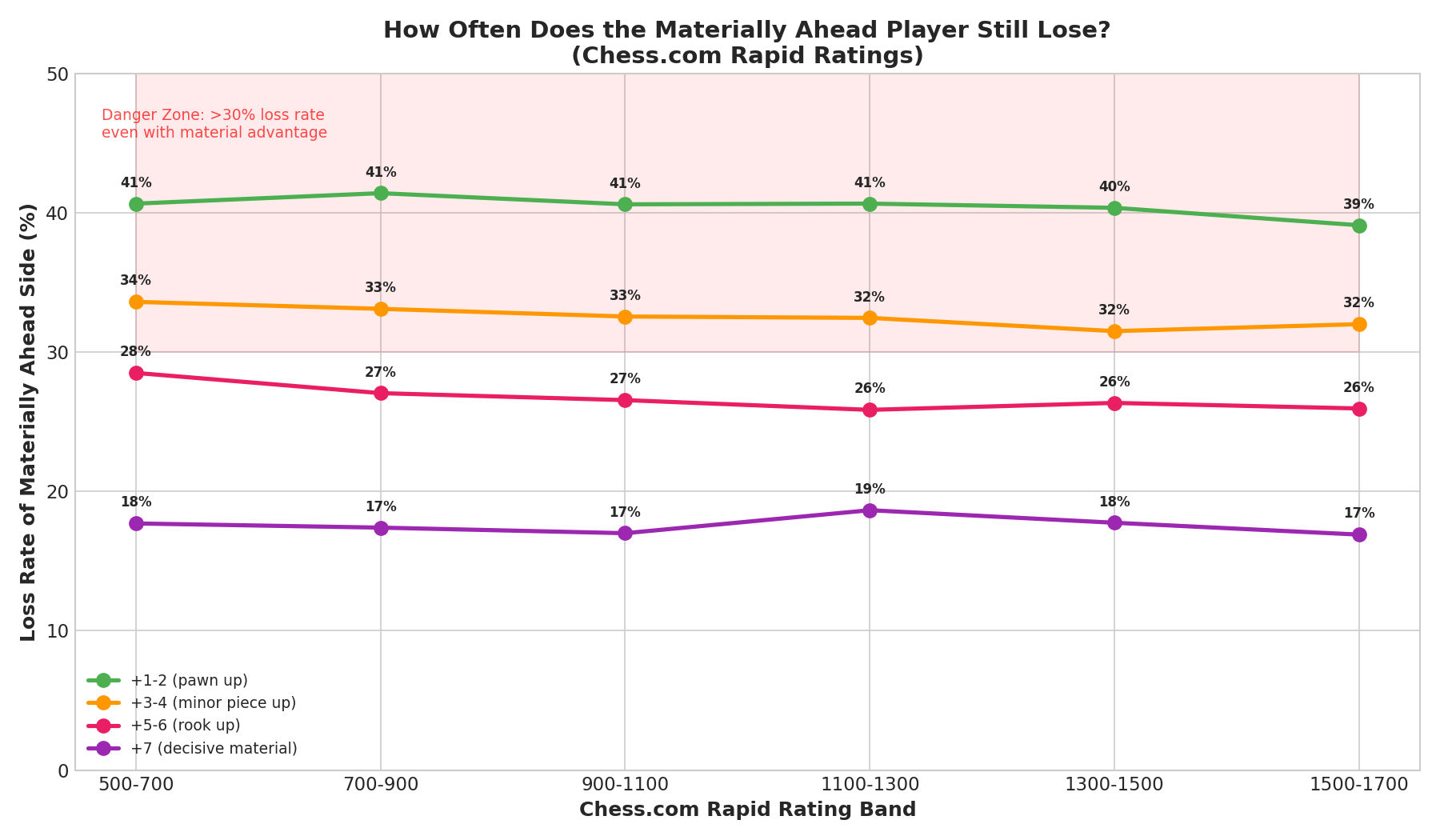
The leakage chart demonstrates that even significant material advantages do not guarantee success. Across all rating bands from 500 to 1700 Chess.com:
- Being up a minor piece (+3-4 points) still results in a loss roughly 32-34% of the time.
- Being up a full rook (+5-6 points) results in a loss 26-28% of the time.
- Even with a decisive material advantage (+7 points or more), players still lose 17-19% of their games.
This persistent loss rate across all material buckets indicates that amateur games are frequently decided by factors other than raw piece count. Tactical blunders, king safety, and piece activity play a massive role in determining the outcome.
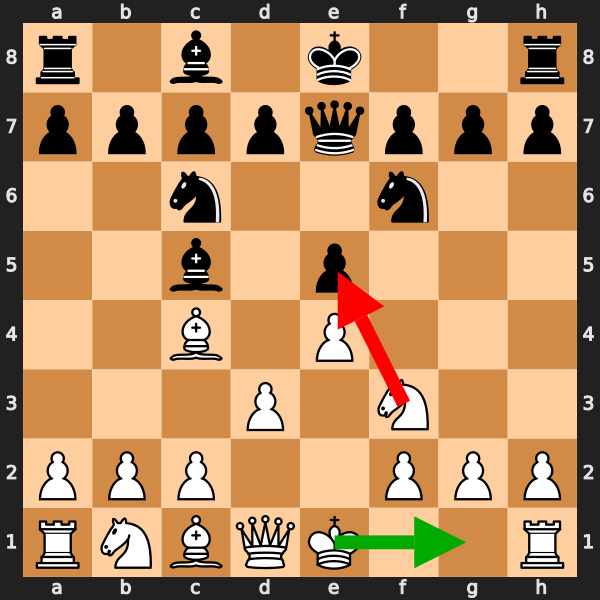
Consider the position above. White has the opportunity to grab a pawn with Nxe5 (red arrow), winning material. However, this greedy move opens the center while White's king is still uncastled, allowing Black to launch a devastating attack. The engine correctly identifies that White should prioritize king safety by castling (green arrow) rather than grabbing the pawn.
Engine Evaluation vs. Material Count
To understand why material advantages fail, we must look at how chess engines evaluate positions. Engines consider material, but they also heavily weight piece activity, king safety, and pawn structure. By comparing the average absolute engine evaluation across different game phases, we can see how lopsided positions become as the game progresses.
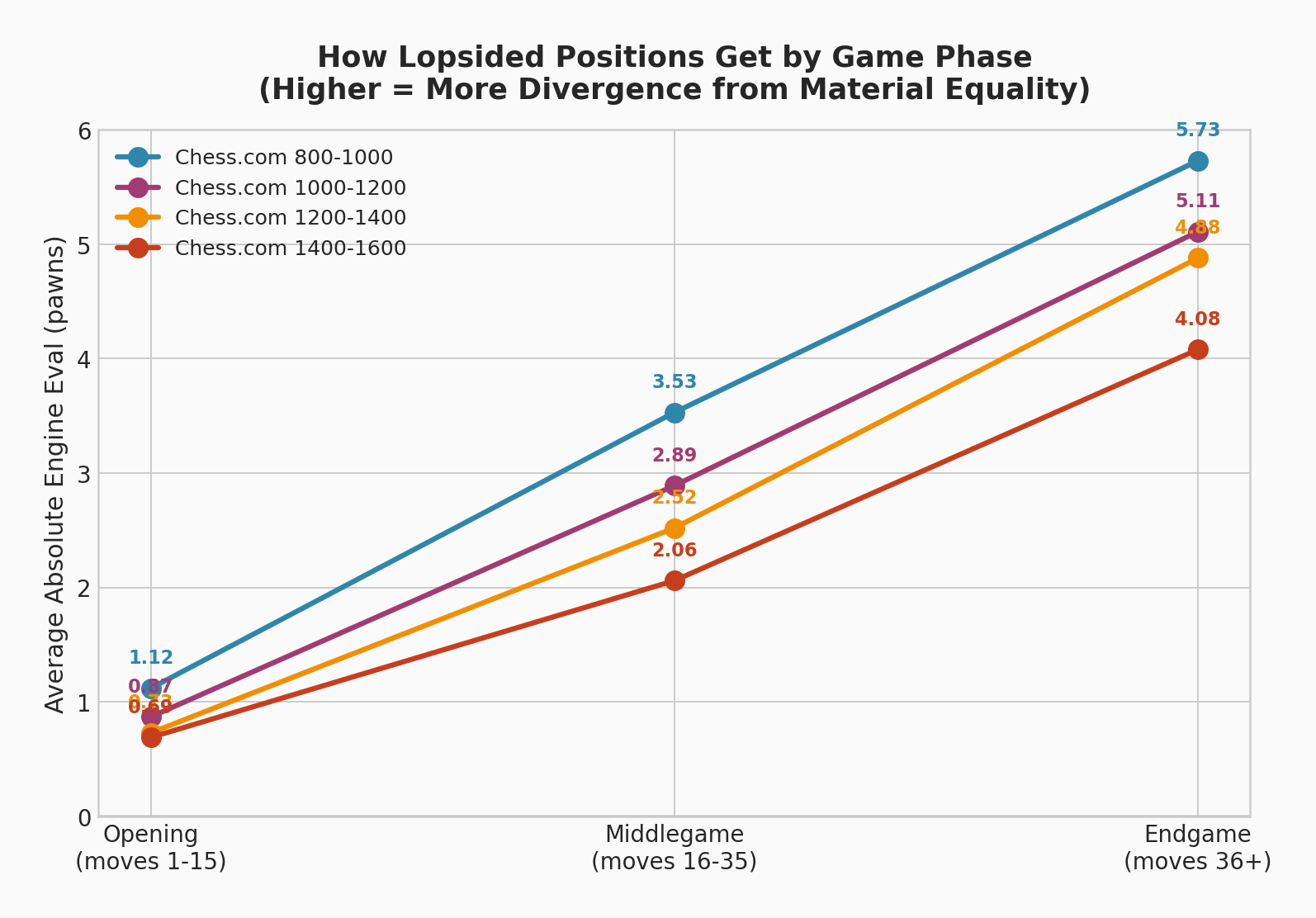
The data shows that engine evaluations diverge significantly from material equality, especially in the endgame. For players in the 500-700 Chess.com range, the average absolute evaluation in the endgame is a staggering 6.39 pawns. This means that by the time these games reach the endgame, one side is typically completely winning, regardless of the actual material on the board.
As ratings increase, the average evaluation divergence decreases, indicating that higher-rated players maintain equality longer and play more balanced games. However, even at the 1500-1700 Chess.com level, the average endgame evaluation is still 4.30 pawns, showing that decisive advantages are the norm rather than the exception.
The Anatomy of a Blunder
If games are not decided purely by material, they are often decided by blunders. But when and where do these blunders occur? The blunder taxonomy data provides fascinating insights into the psychology of amateur mistakes.
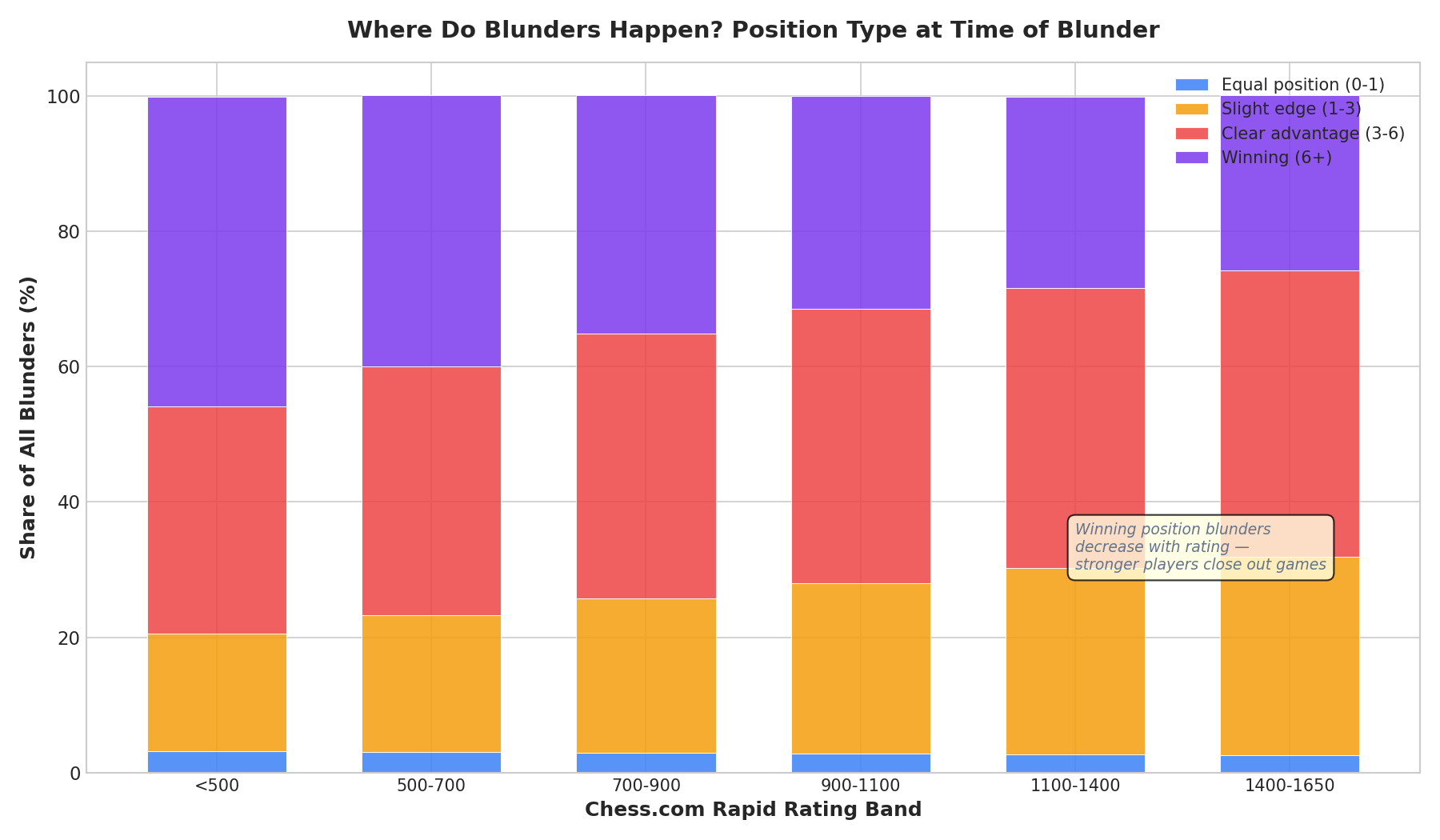
Counterintuitively, players do not blunder most often when the position is equal. Instead, the highest percentage of blunders occurs when a player is already winning or has a clear advantage.
For players rated 500-700 Chess.com, 45.8% of all blunders happen in positions where they are already winning (evaluation +6 or higher). This suggests a psychological component: players relax when they have a large advantage, lose focus, and make catastrophic errors that throw the game away. As players improve to the 1500-1700 range, blunders in winning positions decrease to 28.2%, but blunders in "clear advantage" positions (eval +3 to +6) increase to 41.5%.
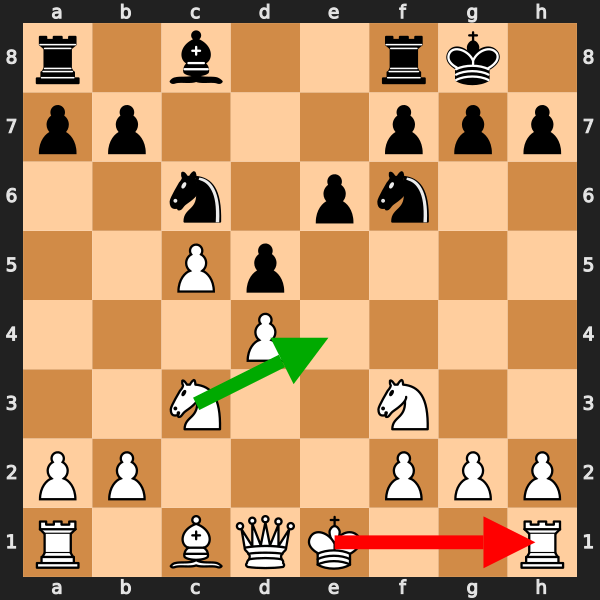
In this example, White is up a pawn but has passive pieces. Instead of actively centralizing the knight with Ne4 (green arrow), White plays the passive Kh1 (red arrow). This lack of active play allows Black to seize the initiative and generate a strong attack, demonstrating how a material advantage can quickly evaporate if not supported by active piece play.
The Endgame: Where Material Goes to Die
The data clearly shows that the endgame is the most dangerous phase for amateur players. This is where material advantages are most frequently squandered due to poor technique and high blunder rates.
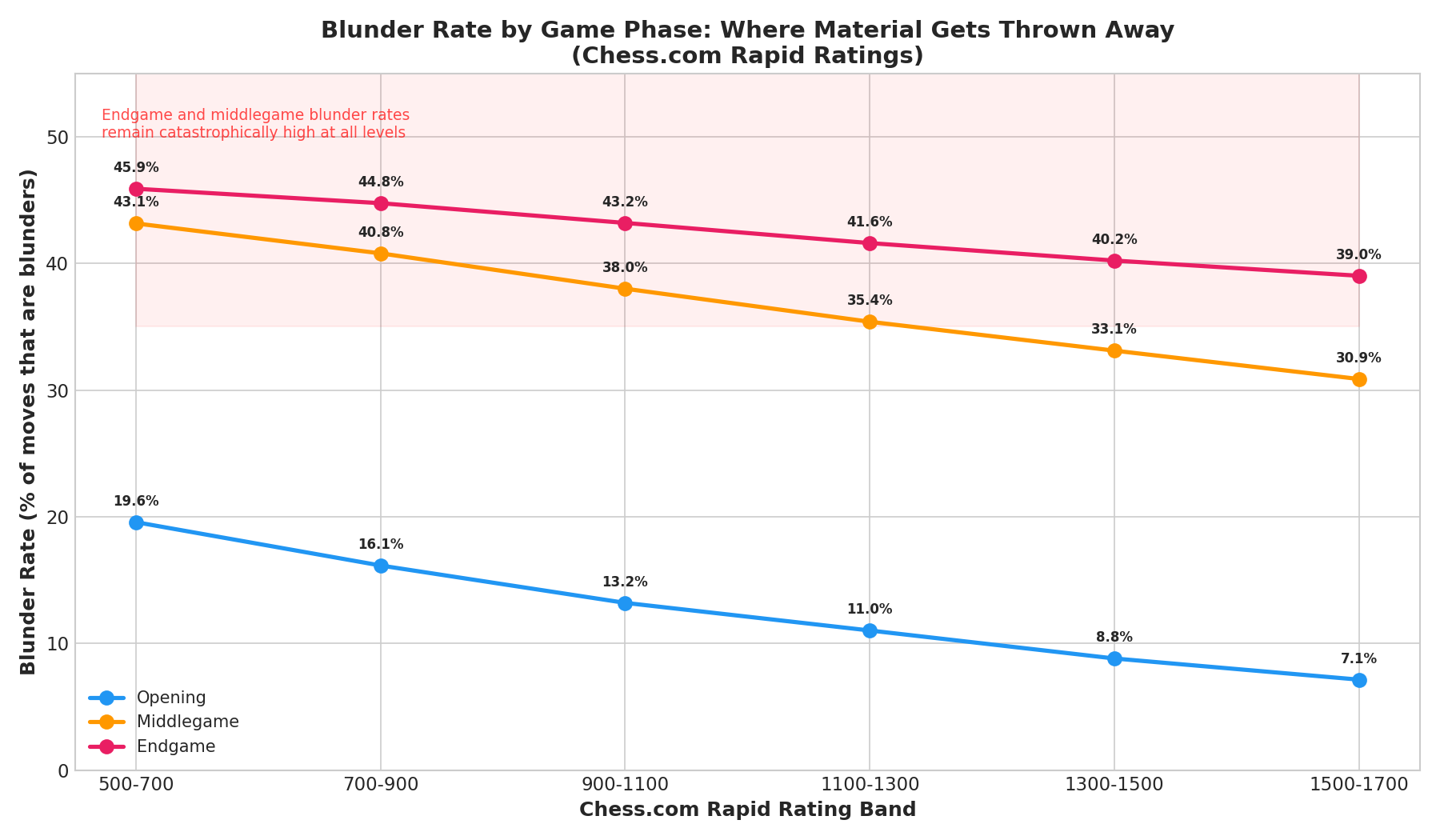
Across all rating bands, the blunder rate (the percentage of moves that are classified as blunders) is highest in the endgame. For 500-700 Chess.com players, nearly 46% of all endgame moves are blunders. Even at the 1500-1700 level, the endgame blunder rate remains above 40%.
This high blunder rate explains why material advantages often fail to convert. A player may enter the endgame up a full piece, but if they blunder 40% of their moves, the opponent will inevitably find opportunities to equalize or win.
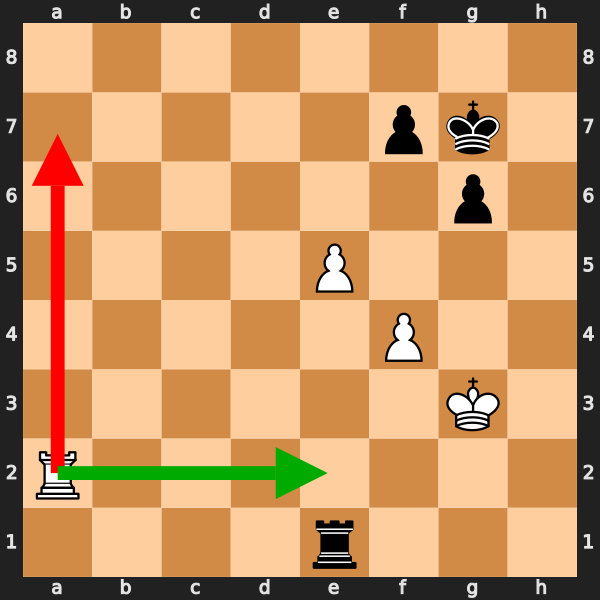
Here, White is a full rook up in the endgame. The winning technique is to force a trade of rooks with Re2 (green arrow), transitioning into an easily won pawn endgame. Instead, White plays the passive check Ra7 (red arrow), allowing Black's king to remain active and complicating the win. Poor endgame technique is a primary reason why material advantages fail to convert.
Actionable Advice by Rating Band
Based on the data analysis, here is a roadmap for improvement tailored to specific Chess.com rating bands.
800 - 1000 Chess.com (The Tactical Foundation)
At this level, games are chaotic and material swings wildly. The data shows that a +1 pawn advantage only wins 54.9% of the time, and players lose 33% of games even when up a minor piece.
Actionable Advice:
- Stop Pawn Grabbing: Do not waste time in the opening trying to win a single pawn if it compromises your development or king safety. The data proves that a one-pawn advantage is statistically meaningless at this level.
- Focus on Blunder Prevention: Your primary goal should be to stop giving away full pieces. Before every move, perform a "blunder check" to ensure you are not leaving a piece undefended or walking into a simple tactic.
- Stay Alert When Winning: The data shows you are most likely to blunder when you have a clear advantage. When you win material, do not relax. Double your focus and prioritize trading pieces (not pawns) to simplify the position.
1000 - 1300 Chess.com (The Coordination Phase)
Players at this level blunder less frequently but still struggle to convert advantages. The loss rate when up a minor piece drops slightly to 32%, but endgame blunder rates remain above 43%.
Actionable Advice:
- Prioritize Piece Activity: A passive extra piece is often worse than an active enemy piece. If you win material, immediately focus on activating your remaining pieces and coordinating them effectively.
- Learn Basic Endgame Technique: You are reaching the endgame more often now. Learn how to convert simple advantages, such as King and Rook vs. King, or how to win a King and Pawn endgame when up a pawn.
- Understand the Exchange Sacrifice: Start looking for opportunities where sacrificing the exchange (a rook for a minor piece) yields long-term positional compensation, such as a dominant knight outpost or a shattered enemy pawn structure.
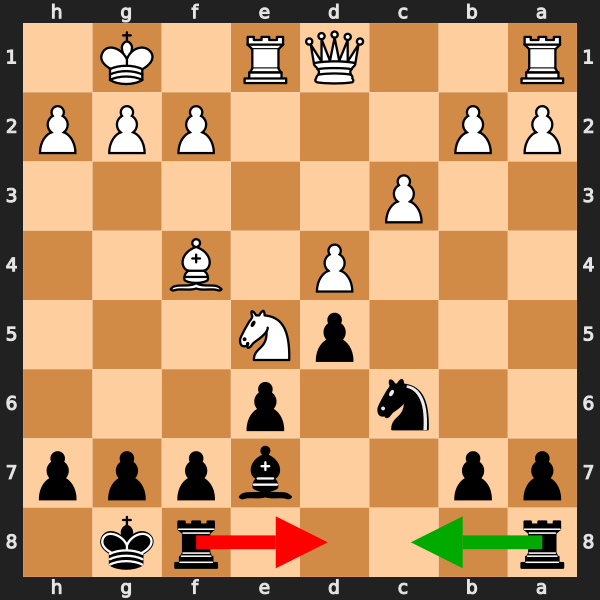
In this position, Black can sacrifice the exchange by playing Rac8 (green arrow) instead of the passive Rfd8 (red arrow). This active play creates immense pressure and demonstrates that piece activity can be more valuable than raw material.
1300 - 1500 Chess.com (The Conversion Mastery)
At this level, players are better at holding onto material, but the conversion rate for a pawn advantage is still only 55.8%. The focus must shift to precise calculation and technical conversion.
Actionable Advice:
- Master the Transition: Learn when to transition from the middlegame to the endgame. If you are up material, actively seek piece trades to simplify the position and reduce your opponent's counterplay.
- Improve Endgame Accuracy: Your endgame blunder rate is still around 40%. Dedicate serious study time to endgame principles, such as opposition, triangulation, and rook endgame theory.
- Evaluate Compensation: Before grabbing material, accurately evaluate the compensation you are giving your opponent. If winning a pawn gives your opponent a strong attack or a dominant center, it is often better to decline the material and maintain positional equality.
Data and Methodology
This analysis is based on a dataset of over 150,000 Rapid games played on Lichess in March 2025. The games were analyzed using Stockfish 17 to extract centipawn loss (CPL), blunder rates, and evaluation trajectories.
Because the raw data originates from Lichess, all rating labels in the charts and analysis have been adjusted to approximate Chess.com Rapid ratings using a standard conversion formula (Lichess ratings are typically 200-300 points higher than Chess.com ratings in this range).
The underlying CSV data files generated for this analysis are available for download:
View full data →lichess_band chesscom_band material_bucket win_pct draw_pct loss_pct sample_positions 1100-1300 900-1100 +1-2 (pawn up) 54.9 4.6 40.6 41068 1100-1300 900-1100 +3-4 (minor piece up) 63.6 3.8 32.6 21839 1100-1300 900-1100 +5-6 (rook up) 69.6 3.8 26.6 12011 1100-1300 900-1100 +7 (decisive material) 80.0 3.0 17.0 16916 1300-1500 1100-1300 +1-2 (pawn up) 55.2 4.0 40.6 44635
View full data →lichess_band chesscom_band phase avg_eval_absolute 700-900 500-700 opening 1.35 700-900 500-700 middlegame 4.17 700-900 500-700 endgame 6.39 900-1100 700-900 opening 1.07 900-1100 700-900 middlegame 3.43
View full data →lichess_band chesscom_band position_type blunder_pct 700-900 500-700 Equal position (0-1) 3.1 700-900 500-700 Slight edge (1-3) 17.4 700-900 500-700 Clear advantage (3-6) 33.6 700-900 500-700 Winning (6+) 45.8 900-1100 700-900 Equal position (0-1) 3.0
View full data →lichess_band chesscom_band phase blunder_pct 700-900 500-700 opening 19.57 700-900 500-700 middlegame 43.15 700-900 500-700 endgame 45.89 900-1100 700-900 opening 16.15 900-1100 700-900 middlegame 40.79
Chess Coach April 15, 2026