A Data-Driven Guide to Understanding and Eliminating Your Worst Mistakes
Every chess player blunders. It is the great equalizer of the game, the universal experience that unites the beginner who just learned how the knight moves with the seasoned club player grinding toward their next milestone. However, the way we blunder evolves profoundly as we improve. A 600-rated player's mistakes look fundamentally different from those of a 1600-rated player, and understanding this evolution is the key to targeted improvement.
To map this evolution with precision, we analyzed over 416,000 Blitz games from Lichess (March 2025 dataset), with every position evaluated by Stockfish 17. We then mapped the Lichess rating bands to approximate Chess.com Blitz ratings using established conversion tables. The result is a comprehensive roadmap of chess mistakes from 600 to 1600 on Chess.com, answering three critical questions that every improving player asks:
- At what rating do players stop hanging pieces outright in one move?
- Which tactical motif (fork, pin, skewer) is most frequently missed by intermediate players?
- How often do players blunder mate-in-one when they have a completely winning position?
This article will answer all three, and much more.
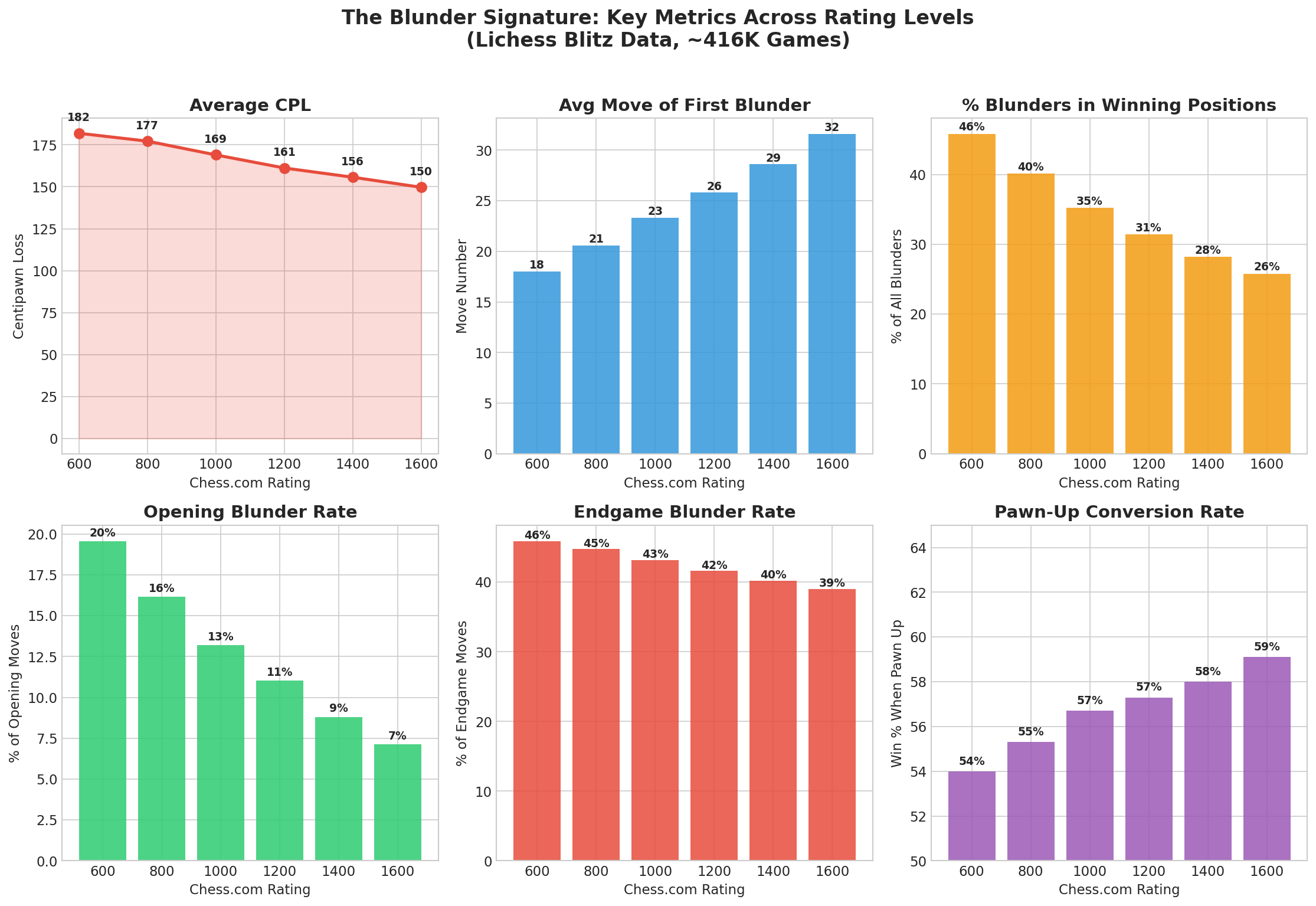
Part I: The Anatomy of a Blunder
How We Define "Blunder"
Throughout this analysis, we adopt the standard engine-based classification used by Chess.com and Lichess:
| Error Type | Centipawn Loss (CPL) | Interpretation |
|---|---|---|
| Blunder | >= 300 cp | Losing a minor piece or more in value |
| Mistake | 100 - 299 cp | A significant positional or tactical error |
| Inaccuracy | 50 - 99 cp | A suboptimal move, but not game-changing |
A centipawn loss of 300 is roughly equivalent to hanging a bishop or knight for nothing. At 500 cp, you have likely lost a rook. At 900+ cp, you have probably allowed a forced checkmate or lost your queen.
The Surprising Flatness of Blunder Frequency
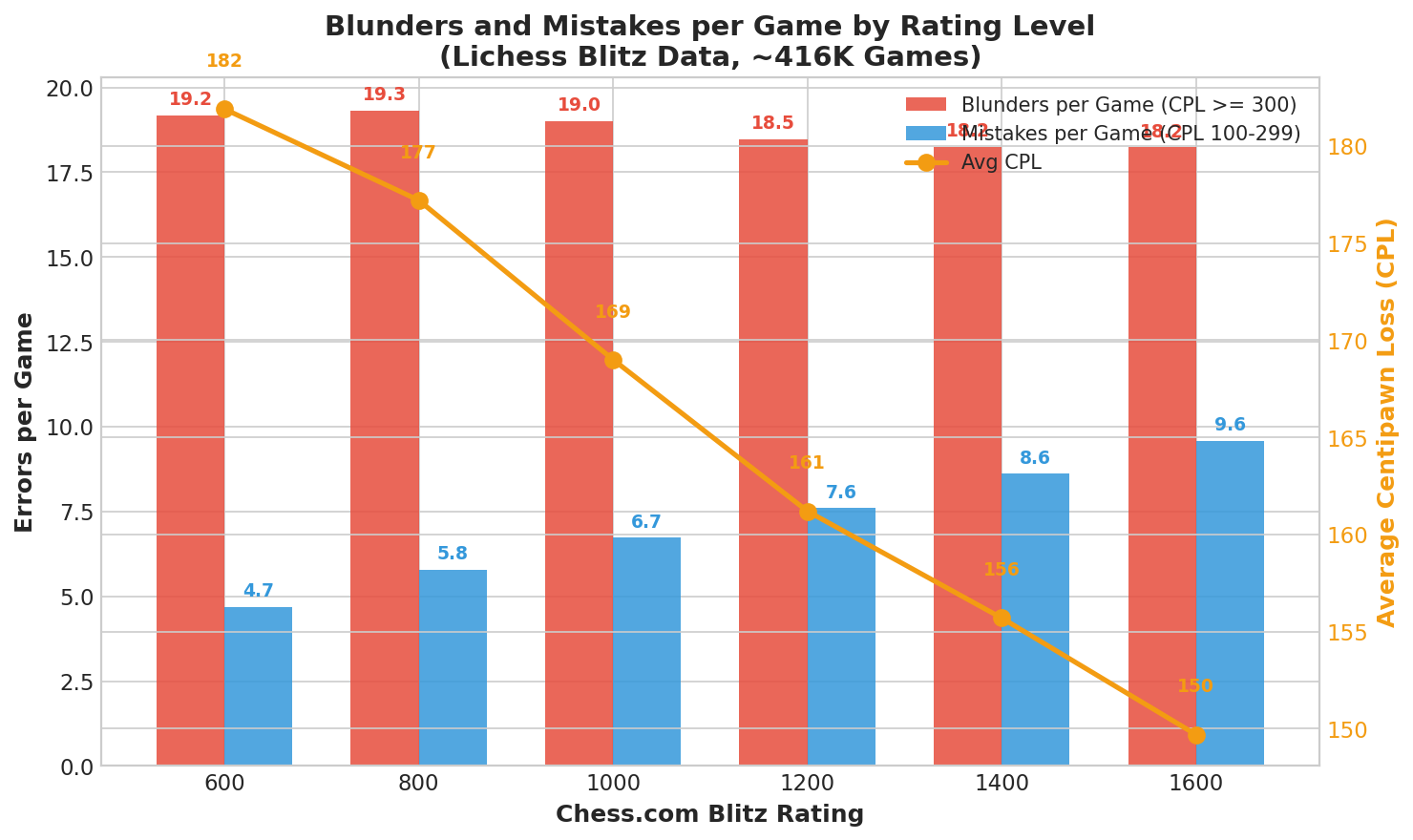
One of the most counterintuitive findings in our dataset is that the raw number of blunders per game barely changes across the entire 600-to-1600 rating spectrum. The table below summarizes the key metrics:
| Chess.com Rating | Lichess Equivalent | Avg CPL | Blunders/Game | Mistakes/Game | Inaccuracies/Game | Sample Games |
|---|---|---|---|---|---|---|
| 600 | ~1000-1100 | 181.9 | 19.2 | 4.7 | 3.1 | 68,678 |
| 800 | ~1200 | 177.2 | 19.3 | 5.8 | 3.8 | 68,203 |
| 1000 | ~1400 | 169.0 | 19.0 | 6.7 | 4.4 | 68,351 |
| 1200 | ~1565 | 161.2 | 18.5 | 7.6 | 4.9 | 69,081 |
| 1400 | ~1705 | 155.7 | 18.2 | 8.6 | 5.5 | 66,704 |
| 1600 | ~1850 | 149.7 | 18.2 | 9.6 | 6.2 | 75,412 |
At the 600 level, players average 19.2 blunders per game. By 1600, this drops only to 18.2. The difference is a mere one blunder per game across a thousand rating points. What changes dramatically, however, is the severity of these blunders, reflected in the CPL dropping from 182 to 150, and the increasing proportion of "mistakes" and "inaccuracies" relative to outright blunders. Stronger players still err, but their errors are less catastrophic.
When Does the First Blunder Happen?
The timing of the first blunder in a game is a powerful indicator of a player's opening preparation and early-game discipline. Our data reveals a clear, linear relationship between rating and the average move number of the first blunder:
| Chess.com Rating | Avg Move of First Blunder | % Games with Any Blunder |
|---|---|---|
| 600 | Move 18 | 76.6% |
| 800 | Move 21 | 76.8% |
| 1000 | Move 23 | 76.3% |
| 1200 | Move 26 | 75.8% |
| 1400 | Move 29 | 74.4% |
| 1600 | Move 32 | 73.6% |
A 600-rated player's first blunder arrives, on average, at move 18, deep in the transition from the opening to the middlegame. A 1600-rated player delays their first blunder until move 32, well into the middlegame or even the endgame. The percentage of games containing at least one blunder is remarkably stable across all levels, hovering around 75%. The difference is not whether you blunder, but when.

The heatmap below provides a more granular view, showing the distribution of first-blunder timing across move ranges:
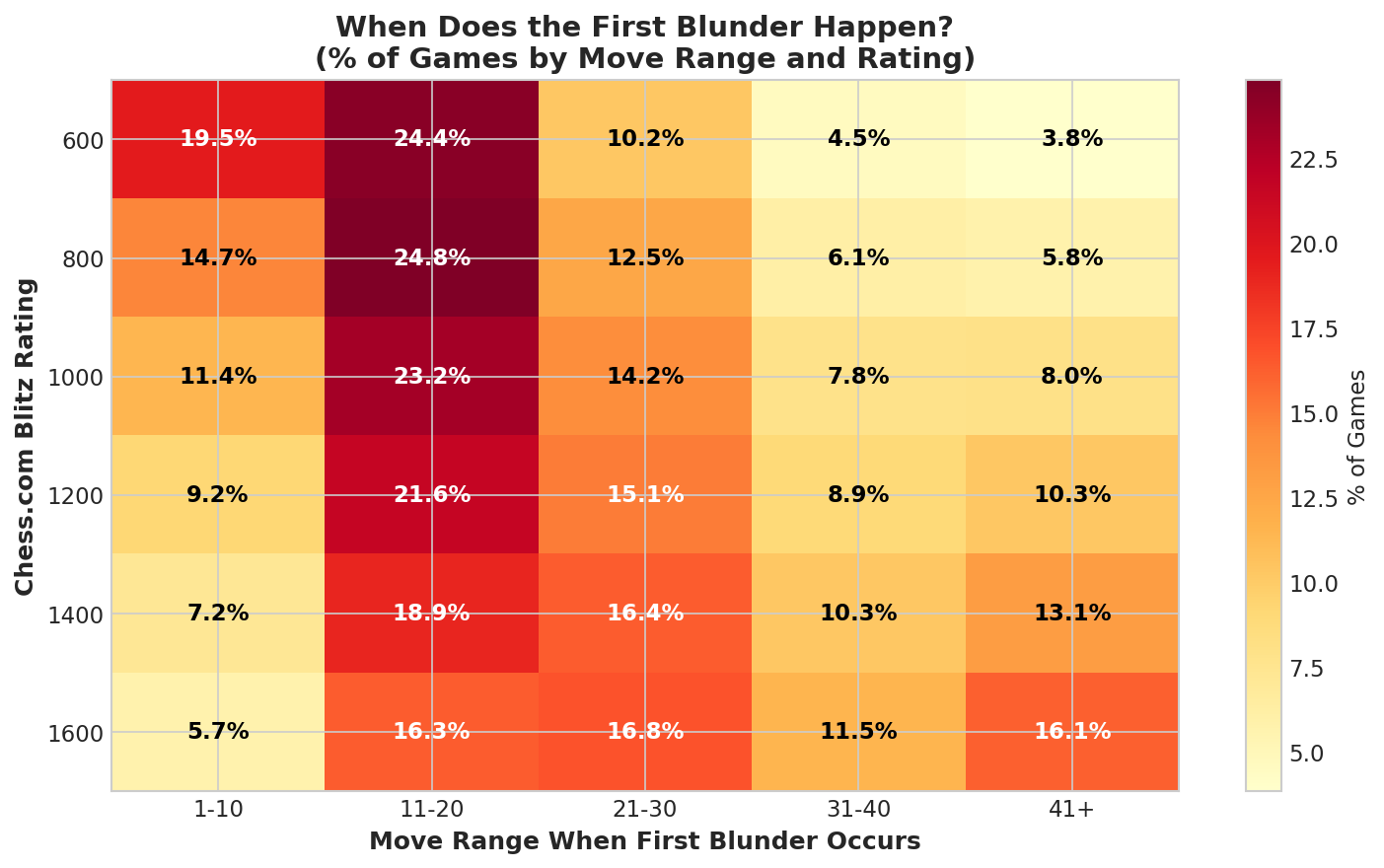
At the 600 level, nearly 20% of games see their first blunder in the first 10 moves. By 1600, this drops to just 5.7%, while the proportion of games where the first blunder occurs after move 41 rises from 3.8% to 16.1%. This shift from opening catastrophes to late-game inaccuracies is one of the clearest markers of improvement.
Where Do Blunders Happen? The Phase Breakdown
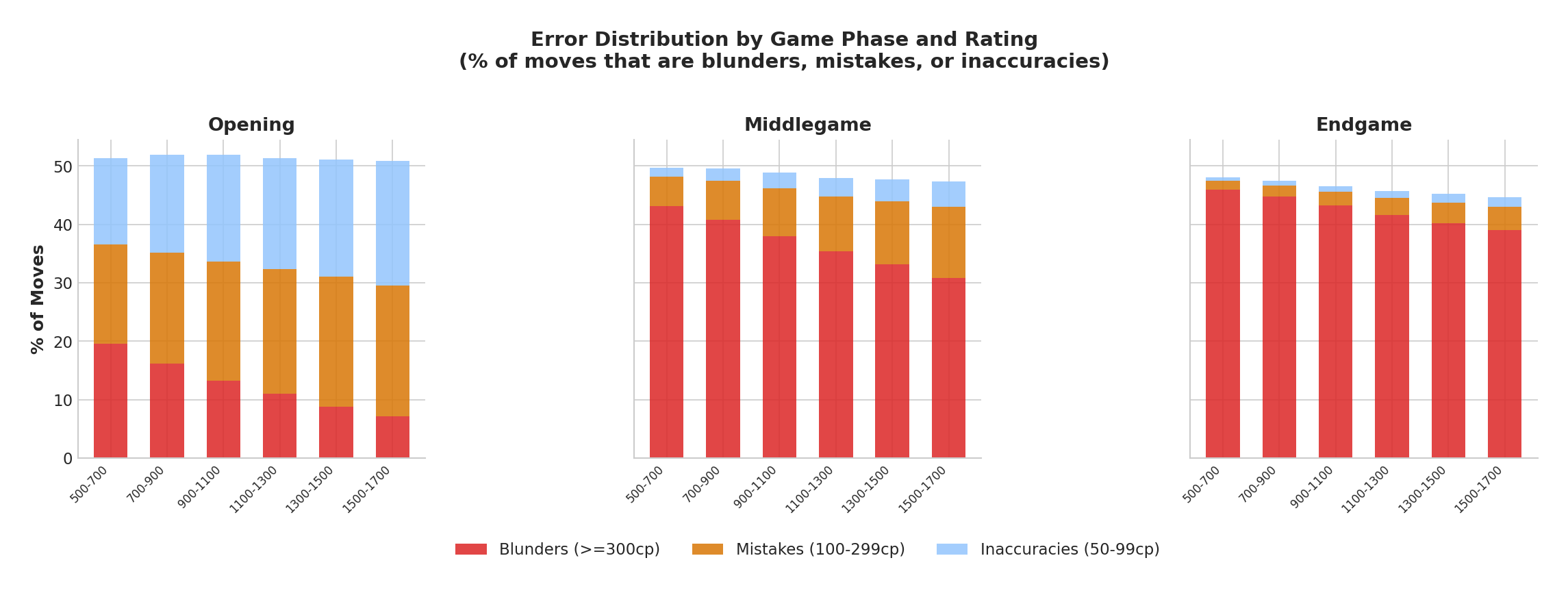
Across all rating levels, the endgame is the most error-prone phase of the game. This finding may surprise players who assume that the complex middlegame is where most mistakes occur. In reality, the endgame's reduced material creates positions where a single inaccuracy is magnified, and many players simply lack the theoretical knowledge to navigate these positions correctly.
| Chess.com Rating | Opening Blunder % | Middlegame Blunder % | Endgame Blunder % |
|---|---|---|---|
| 600 | 19.6% | 43.1% | 45.9% |
| 800 | 16.1% | 40.8% | 44.8% |
| 1000 | 13.2% | 38.0% | 43.2% |
| 1200 | 11.0% | 35.4% | 41.6% |
| 1400 | 8.8% | 33.1% | 40.2% |
| 1600 | 7.1% | 30.9% | 39.0% |
The opening blunder rate drops by nearly two-thirds from 600 to 1600 (19.6% to 7.1%), reflecting improved opening knowledge. The middlegame blunder rate drops by about 30%. But the endgame blunder rate remains stubbornly high, declining only from 45.9% to 39.0%. This is the phase where the most rating points are left on the table at every level.
The Psychology of Blundering: Position Type Matters
Perhaps the most surprising finding in our entire dataset concerns when players blunder relative to the position's evaluation. The chart below classifies every blunder by the engine evaluation at the moment it occurred:
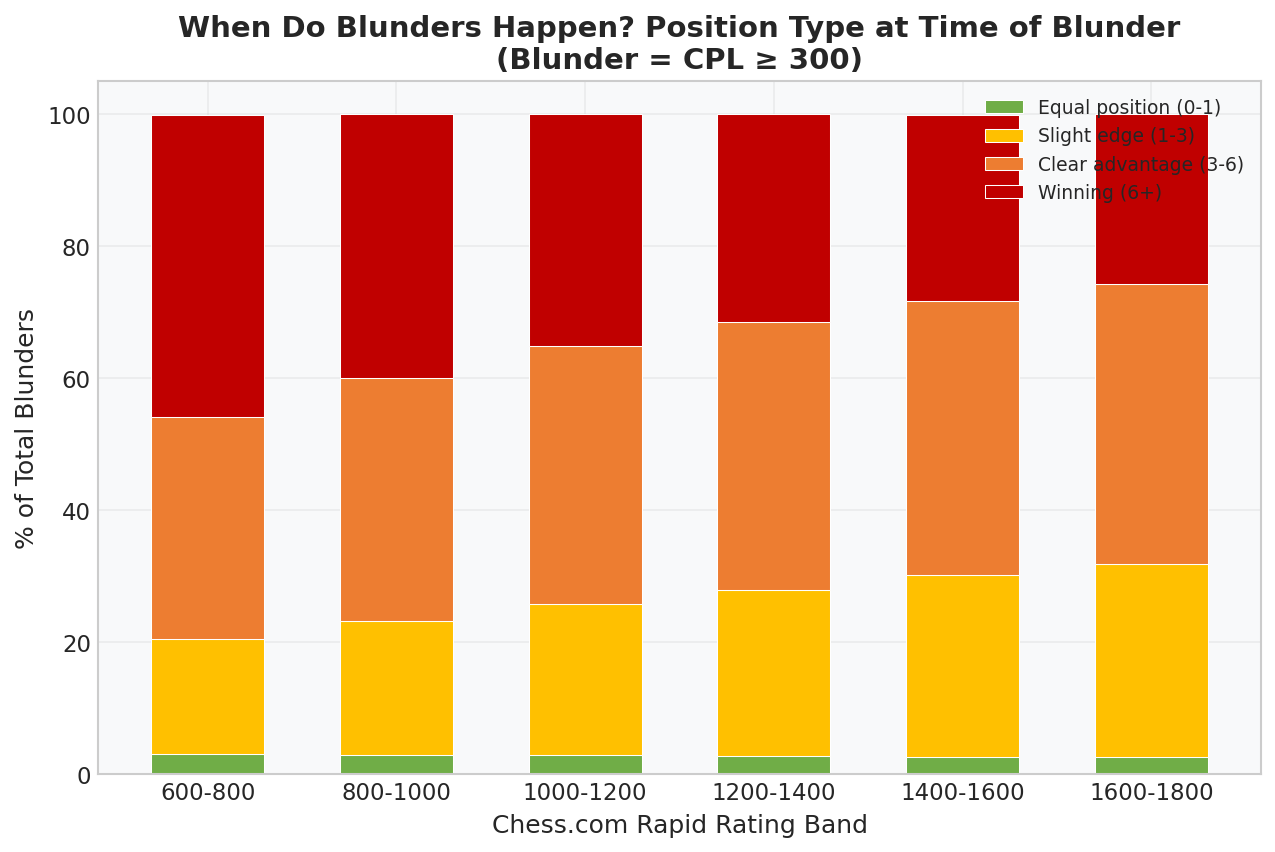
| Chess.com Rating | Equal (0-1) | Slight Edge (1-3) | Clear Advantage (3-6) | Winning (6+) |
|---|---|---|---|---|
| 600 | 3.1% | 17.4% | 33.6% | 45.8% |
| 800 | 3.0% | 20.3% | 36.7% | 40.1% |
| 1000 | 2.9% | 22.9% | 39.1% | 35.2% |
| 1200 | 2.8% | 25.2% | 40.6% | 31.4% |
| 1400 | 2.7% | 27.5% | 41.5% | 28.2% |
| 1600 | 2.6% | 29.3% | 42.4% | 25.8% |
At the 600 level, a staggering 45.8% of all blunders occur when the player is already completely winning (evaluation > +6). They have achieved a decisive advantage and then throw it away. This is the "relaxation blunder," and it is the single most defining characteristic of beginner chess. As players improve, this percentage steadily declines, replaced by blunders in positions with a "clear advantage" (+3 to +6), which are more complex and require sustained concentration.
Key Insight: The transition from blundering in winning positions to blundering in complex positions is the fundamental shift that occurs between 600 and 1600. Beginners lose games they have already won. Intermediates lose games that are still being fought.
Part II: The #1 Blunder at Each Rating Level
The 600 Level: The One-Move Hang
Chess.com Blitz: ~600 | Lichess Blitz: ~1075
At the 600 level, chess is primarily a game of board vision. The most common blunder is simply leaving a piece undefended where it can be captured on the very next move. Our analysis of Lichess puzzle themes at the beginner level (puzzles rated 400-1000) confirms this: "Mate in 1" and "One-Move" captures account for nearly 30% of all tactical motifs. Players at this stage are still developing the cognitive habit of scanning the entire board before committing to a move.
The typical 600-rated game follows a predictable pattern. Both players develop their pieces with varying degrees of logic, and then one player simply leaves a piece hanging. The opponent captures it, gains a material advantage, and the game spirals. The average CPL of 182 means that, on average, every single move loses nearly two pawns' worth of value.
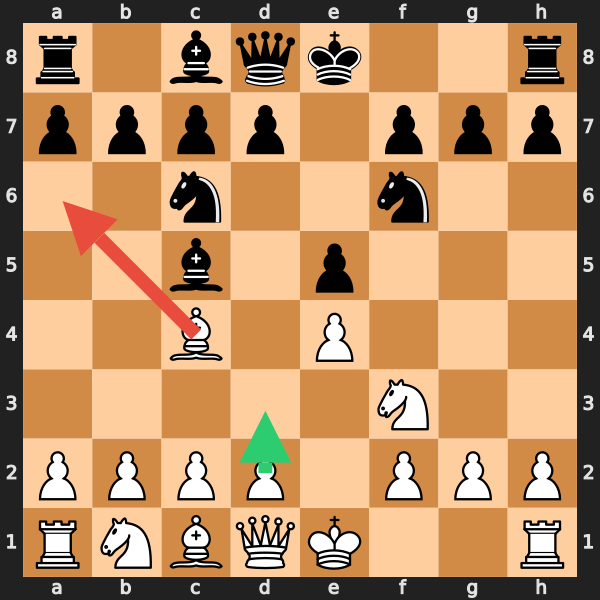
In this position, White plays Ba6?? (red arrow), moving the bishop to a square where it is immediately captured. The engine recommends d3 (green arrow), a solid developing move that protects the center. This type of one-move oversight is the defining blunder of the 600 level.
Furthermore, 46% of blunders at this level occur when the player is already completely winning. The phenomenon of "relaxing" when ahead is most pronounced here. A 600-rated player might win their opponent's queen, feel the game is over, and then blunder their own queen on the very next move.
Actionable Advice for 600-Rated Players:
Before every single move, ask yourself two questions: "What is my opponent threatening?" and "Is the square I am moving to safe?" Do not worry about deep strategic plans or opening theory. Simply focus on not giving away your pieces for free. Practice basic "Mate in 1" puzzles daily on Chess.com or Lichess to improve your board vision. The single most impactful habit you can develop is checking every opponent move for threats before playing your own.
The 800 Level: The Missed Fork and Greedy Captures
Chess.com Blitz: ~800 | Lichess Blitz: ~1200
As players reach the 800 level, they stop hanging pieces quite as often in simple one-move scenarios. However, they remain highly vulnerable to basic two-move tactics, particularly forks and pins. Our puzzle theme analysis shows that "fork" is the single most common tactical theme in puzzles rated 1000-1500 on Lichess, appearing in 12.9% of all puzzles at that level.
The first blunder in a game typically occurs around move 21 at this level, slightly later than at 600. Players have learned basic opening principles (control the center, develop pieces, castle), but once the position becomes complicated in the middlegame, tactical oversights become frequent. The hallmark blunder of the 800 level is the "greedy capture," where a player takes a seemingly free pawn or piece without calculating their opponent's response.
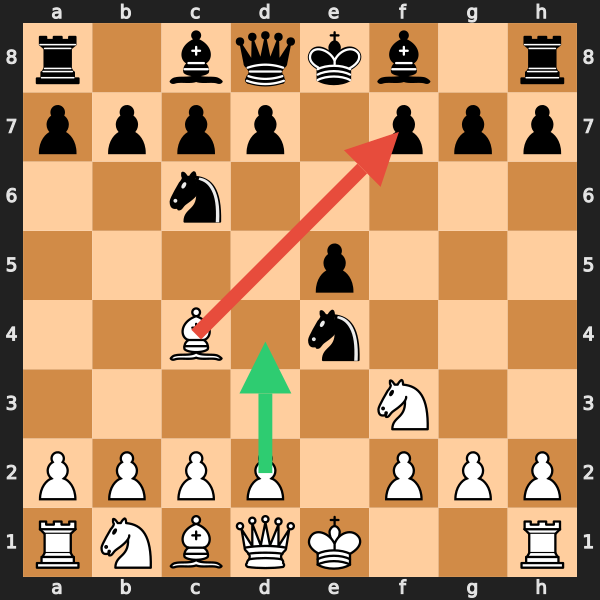
In this position, White is tempted by Bxf7+?? (red arrow), a greedy capture that wins a pawn but exposes the bishop to danger and ignores Black's central counterplay. The engine recommends d4 (green arrow), which fights for the center and develops naturally.
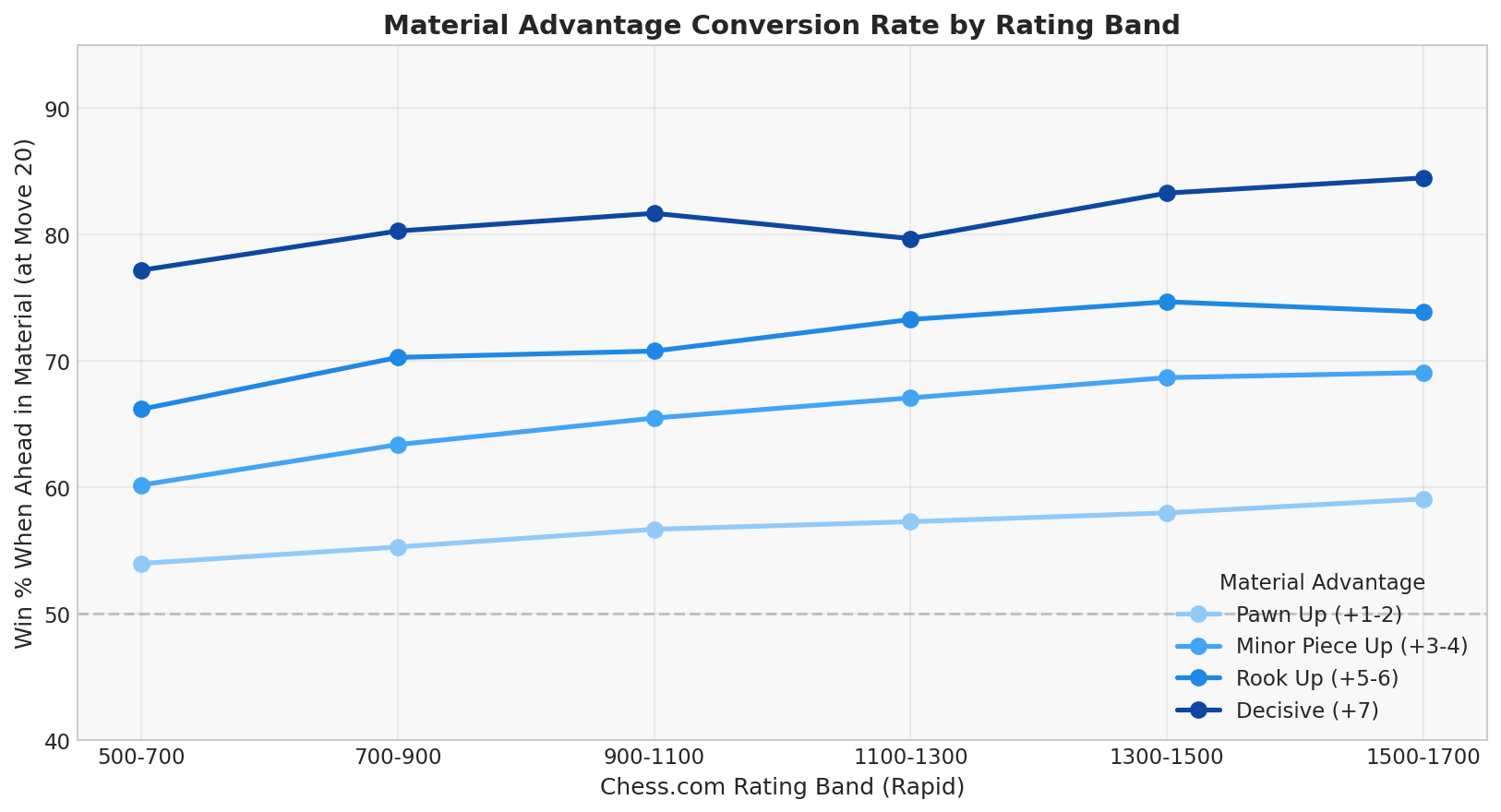
The data on material conversion at this level is telling. When a player at the 800 level achieves a one-pawn advantage by move 20, they convert it into a win only 55.3% of the time. This means that nearly 45% of the time, a pawn advantage is squandered through subsequent blunders.
Actionable Advice for 800-Rated Players:
Start incorporating basic tactical patterns into your daily practice. Focus heavily on forks, pins, and skewers. When you see a "free" piece or pawn, pause and calculate at least two moves ahead: "If I take, what does my opponent do?" Train yourself to look for knight forks in particular, as they are the most commonly missed tactic at this level. Aim for 10-15 tactical puzzles per day on Chess.com's Puzzle Rush or Lichess Puzzle Storm.
The 1000 Level: Back Rank Blindness
Chess.com Blitz: ~1000 | Lichess Blitz: ~1420
At the 1000 level, players have a reasonable grasp of basic tactics. They spot simple forks and generally avoid hanging their queens. However, they often struggle with board-wide awareness, particularly concerning king safety. The "Back Rank Mate" is a pervasive theme at this rating. Players will launch aggressive attacks on the queenside or in the center, completely forgetting to create "luft" (a flight square) for their castled king.
Our puzzle data shows that "backRankMate" appears in 3.4% of all beginner-level puzzles (rated 400-1000), making it one of the most common mating patterns that players at this level need to learn. The problem is not that 1000-rated players do not know what a back-rank mate is; it is that they fail to recognize the threat in the heat of a game.
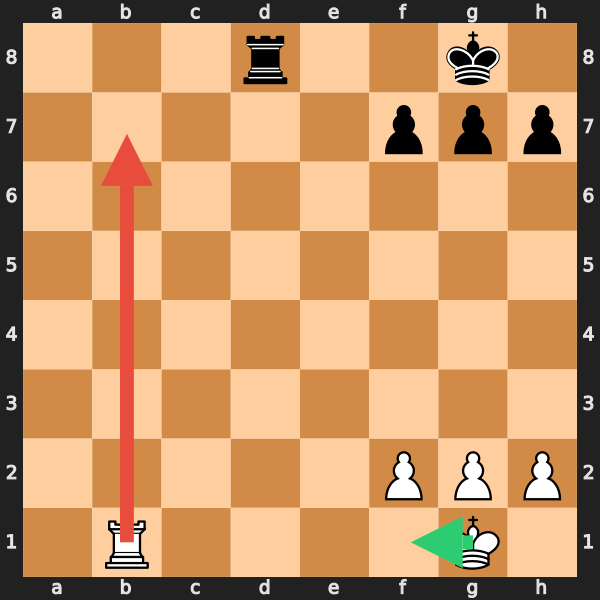
White plays Rb7?? (red arrow), greedily attacking Black's pawns while completely ignoring the back-rank vulnerability. The engine recommends Kf1 (green arrow), which gives the king an escape square and prevents the devastating Rd1#.
The blunder timing histogram reveals that at the 1000 level, 23.2% of first blunders occur between moves 11 and 20, the critical transition from the opening to the middlegame. This is the phase where players have finished developing but have not yet established a clear plan, making them vulnerable to tactical oversights.
Actionable Advice for 1000-Rated Players:
Make king safety a non-negotiable priority in every game. After castling, ask yourself: "Does my king have an escape square?" If not, consider playing h3 or g3 (or h6/g6 as Black) before launching any attack. Develop a habit of scanning the entire board after every opponent move, not just the quadrant where the immediate action is taking place. Practice back-rank mate puzzles specifically until the pattern becomes second nature.
The 1200 Level: The Deadly Pin and Calculation Depth
Chess.com Blitz: ~1200 | Lichess Blitz: ~1565
Reaching 1200 marks a transition into intermediate chess. Players here rarely hang pieces outright and are generally aware of back-rank threats. The blunders at this level become more sophisticated, often involving miscalculated exchanges or failing to recognize the power of a pin. Our puzzle theme analysis shows that "pin" becomes a dominant theme at the 1500-2000 puzzle rating range, appearing in 6% of all puzzles.
The critical weakness at 1200 is calculation depth. Players can see one or two moves ahead with reasonable accuracy, but they consistently fail to calculate the third or fourth move in a sequence. This leads to situations where they enter a seemingly favorable exchange, only to discover that their opponent has a hidden resource at the end of the line.
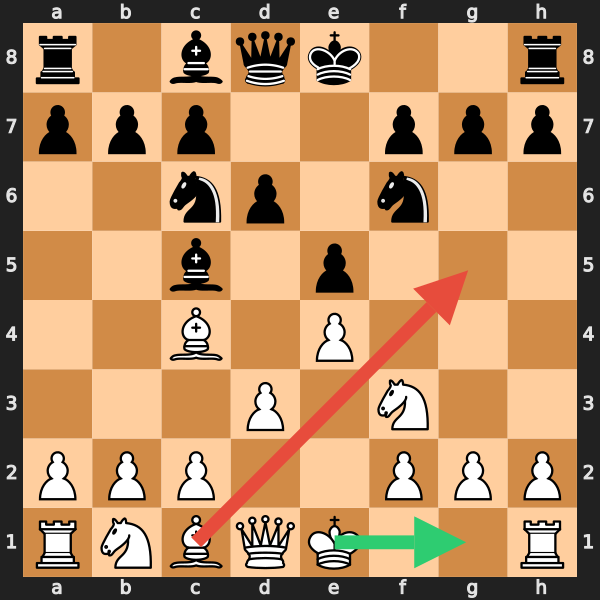
In this position, White plays Bg5 (red arrow), which pins the knight on f6 to the queen. While this is actually a reasonable move in many contexts, 1200-rated players often mishandle the resulting tension. The engine might recommend O-O (green arrow) as a safer alternative, completing development before initiating tactical complications.
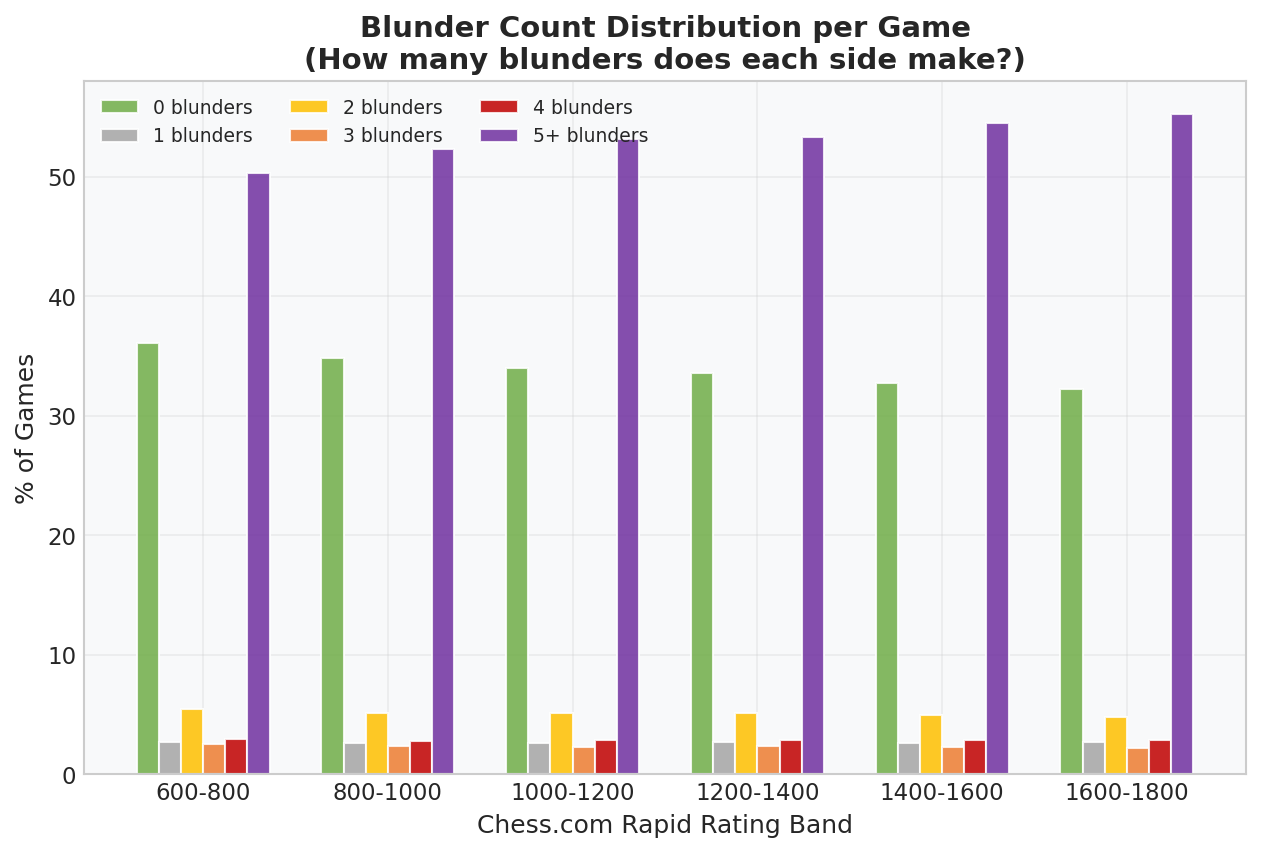
The blunder distribution data reveals an important pattern at this level. Approximately 34% of games at the 1200 level are completely blunder-free (no moves with CPL >= 300). This means that in roughly one-third of their games, 1200-rated players play "clean" chess. The challenge is consistency: the other two-thirds of games contain at least one significant error.
Actionable Advice for 1200-Rated Players:
When calculating exchanges, always go one move deeper than you think is necessary. If you see a three-move sequence that looks good, force yourself to check what happens on move four. Pay special attention to pins, both exploiting your opponent's pinned pieces and avoiding putting your own pieces in absolute pins. Consider studying basic positional concepts (weak squares, outposts, pawn structure) to reduce the number of complex positions where calculation errors are most likely.
The 1400 Level: Relaxing in a Won Position
Chess.com Blitz: ~1400 | Lichess Blitz: ~1705
At 1400, players possess solid tactical foundations and developing positional understanding. The most common blunder here is psychological rather than purely technical. It is the blunder of complacency.
The data reveals that 1400s still blunder in winning positions 28% of the time. They do the hard work of outplaying their opponent, building a +4 or +5 advantage, and then they relax. They stop calculating deeply, assuming the game will win itself. This is compounded by the time pressure inherent in Blitz chess, where players often speed up their moves when they feel they are winning.
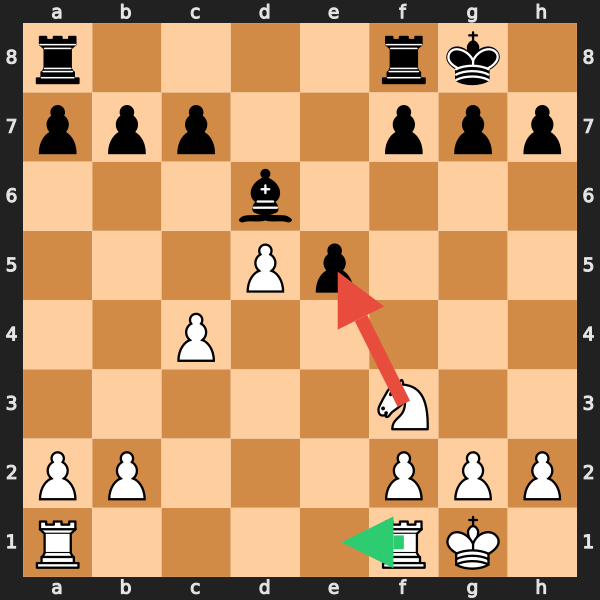
White has a clear advantage with the passed d-pawn and better piece activity. However, Nxe5?? (red arrow) is a careless capture that allows Black to activate their bishop and generate counterplay. The engine recommends Re1 (green arrow), a calm move that maintains pressure without taking unnecessary risks.
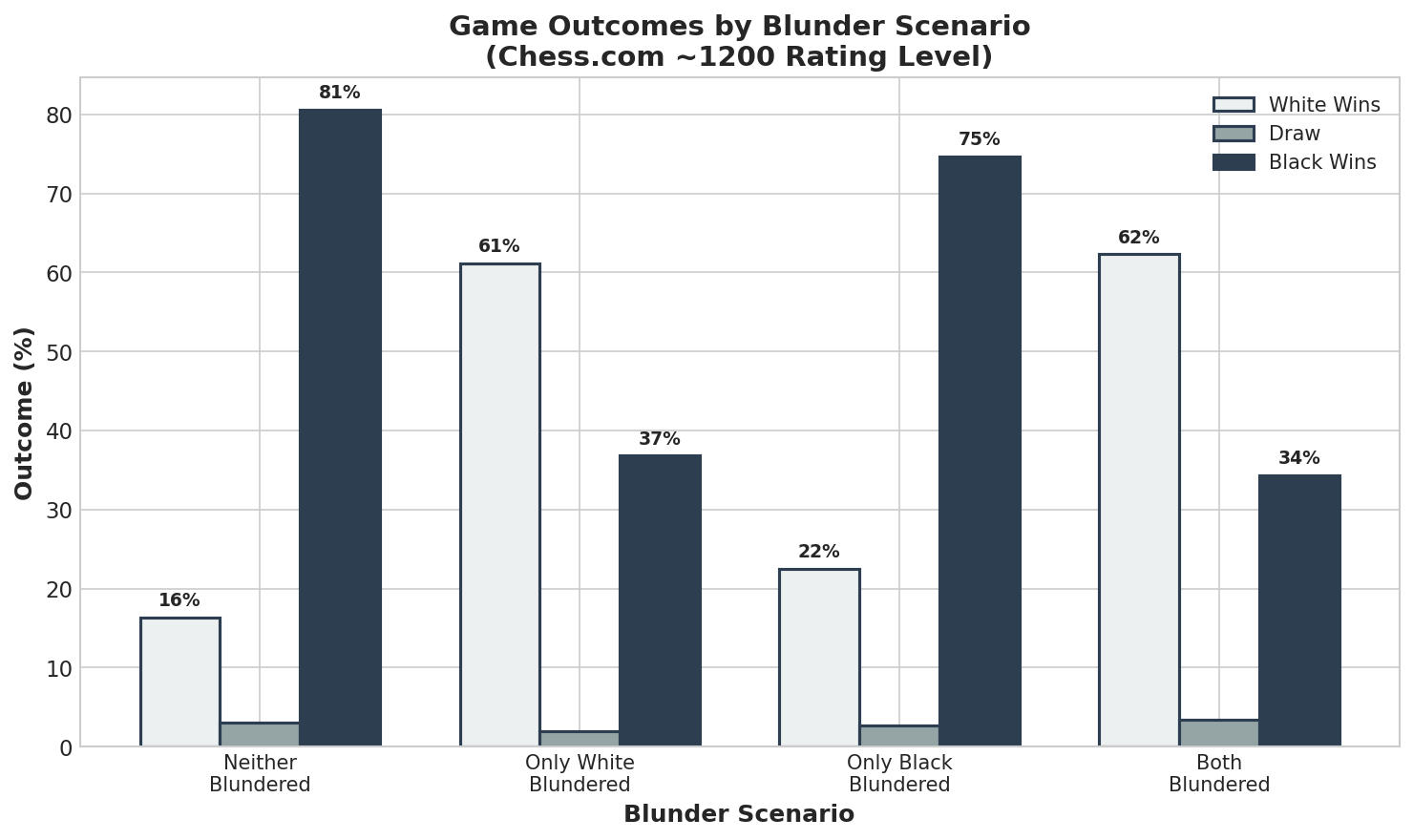
The blunder recovery data provides additional context. When only one side blunders at the 1400 level, the non-blundering side wins approximately 75% of the time. However, in the most common scenario (both sides blunder), White wins 62.7% and Black wins 33.6%. This means that the ability to capitalize on your opponent's blunders is almost as important as avoiding your own.
Actionable Advice for 1400-Rated Players:
The hardest game to win is a won game. When you achieve a significant advantage, do not relax. In fact, you should concentrate harder. Your opponent will start playing tricky, desperate moves. Focus on consolidation: trade pieces to simplify, restrict counterplay, and convert your advantage methodically. In Blitz, resist the urge to play faster when you are winning. Maintain your calculation discipline until the very last move.
The 1600 Level: Endgame Inaccuracies
Chess.com Blitz: ~1600 | Lichess Blitz: ~1850
By the time a player reaches 1600, opening blunders are rare (only 7% of opening moves), and middlegame tactics are generally sharp. The battleground shifts decisively to the endgame.
Our analysis shows that the endgame remains the most error-prone phase even at 1600, with 39% of endgame moves classified as blunders. The blunders here are often subtle: a king move to the wrong square, a miscalculated pawn race, or failing to grasp the concept of opposition. These are not the dramatic queen-hangs of the 600 level; they are precise, technical errors that turn wins into draws and draws into losses.
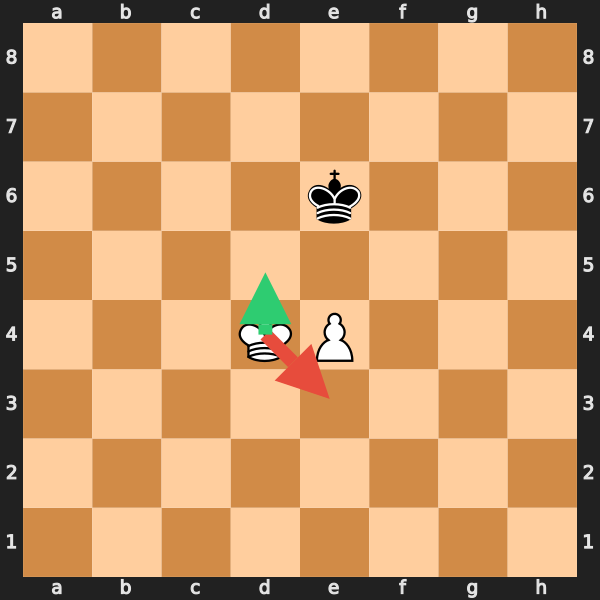
In this seemingly simple king and pawn endgame, the outcome hinges on a single move. Ke3?? (red arrow) loses the opposition and allows the black king to block the pawn's advance. Kd5! (green arrow) seizes the opposition and ensures the pawn promotes. This type of endgame precision is what separates the 1600 from the 1800.
The material conversion data underscores this point. At the 1600 level, a player who is a full pawn up by move 20 converts the advantage into a win only 59.1% of the time. While this is the highest conversion rate in our dataset, it still means that 41% of pawn-up positions are not converted. Much of this leakage occurs in the endgame.
Actionable Advice for 1600-Rated Players:
Your tactical and opening skills are solid; it is time to invest seriously in endgame study. Focus on the theoretical foundations: king and pawn opposition, the Lucena and Philidor positions in rook endgames, and the principles of minor piece endgames (bishop vs. knight, same-colored bishops). Consider working through a structured endgame course or book such as Silman's Complete Endgame Course. Precision in the final phase of the game is what separates the 1600 from the expert.
Part III: The Big Picture
Tactical Themes That Matter at Each Level
Our analysis of Lichess's 5.8 million puzzle database reveals how the dominant tactical themes shift as players improve:
| Tactical Theme | Beginner (400-1000) | Intermediate (1000-1500) | Advanced (1500-2000) |
|---|---|---|---|
| Mate in 1 | 14.5% | - | - |
| One-Move Capture | 14.6% | - | - |
| Back Rank Mate | 3.4% | - | - |
| Fork | - | 12.9% | - |
| Hanging Piece | - | 3.7% | - |
| Pin | - | - | 6.0% |
| Discovered Attack | - | - | 5.1% |
| Sacrifice | - | - | 7.5% |
| Deflection | - | - | 4.3% |
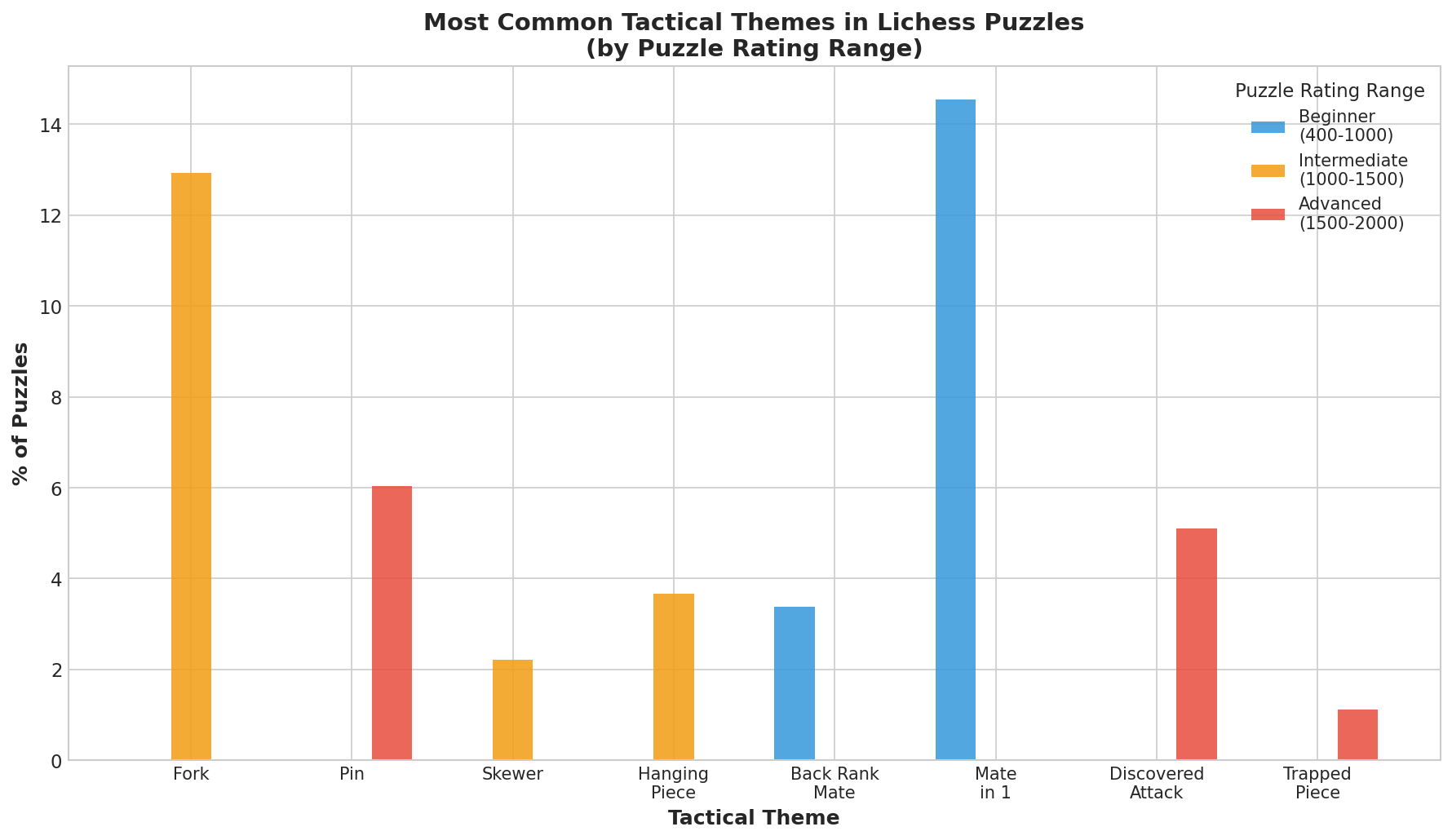
This progression tells a clear story. Beginners need to master basic board vision (seeing one-move threats). Intermediates need to master two-to-three-move tactical patterns (forks, pins). Advanced players need to handle complex multi-move combinations involving sacrifices, deflections, and discovered attacks.
Answering the Three Key Questions
1. At what rating do players stop hanging pieces outright in one move?
Based on our data, the opening blunder rate (which correlates most strongly with one-move hangs) drops below 10% at approximately Chess.com 1300-1400 (Lichess 1600-1700). However, one-move hangs never fully disappear. Even at the 1600 level, 7% of opening moves are still classified as blunders. The honest answer is that players never completely stop hanging pieces; they simply do it less frequently and in less obvious positions.
2. Which tactical motif is most frequently missed by intermediate players?
The fork is the most commonly missed tactic for players rated 1000-1500 on Chess.com. It appears in 12.9% of all puzzles at the corresponding Lichess puzzle rating range (1000-1500). Pins are the second most important theme, becoming dominant at the 1500+ level. Skewers, while less frequent, are particularly dangerous because they are less commonly practiced.
3. How often do players blunder mate-in-one when they have a completely winning position?
While our dataset does not isolate mate-in-one blunders specifically, the blunder taxonomy data shows that 45.8% of all blunders at the 600 level occur in positions where the player is already completely winning (evaluation > +6). Many of these are indeed missed mates or simple one-move oversights. By the 1600 level, this figure drops to 25.8%, but it never reaches zero. Even strong players occasionally miss a forced mate when they are focused on a different plan.
Data and Methodology
Dataset
This analysis was conducted using data from the grandmaster-guide analytics platform, which maintains a database of approximately 847,000 Lichess games from March 2025. For this article, we focused on Blitz games (3-10 minute time controls), yielding approximately 416,000 games with Stockfish 17 engine evaluations across six rating bands.
Rating Conversion
All Lichess ratings were converted to approximate Chess.com Blitz ratings using the following mapping, derived from cross-platform rating comparison studies:
| Chess.com Blitz | Lichess Blitz Equivalent |
|---|---|
| 600 | ~1075 |
| 800 | ~1200 |
| 1000 | ~1420 |
| 1200 | ~1565 |
| 1400 | ~1705 |
| 1600 | ~1850 |
Definitions
A blunder is defined as a move resulting in a centipawn loss (CPL) of 300 or greater. A mistake is a move with CPL between 100 and 299. An inaccuracy is a move with CPL between 50 and 99. Game phases are defined as: opening (plies 1-15), middlegame (plies 16-35), and endgame (plies 36+).
Underlying Data Files
The following CSV data files were generated during this analysis and are attached for reference:
cpl_summary.csv— Average CPL and error rates by rating bandblunder_taxonomy_summary.csv— Blunder classification by position typephase_blunder_rates.csv— Blunder rates by game phase and ratingfirst_blunder_timing.csv— When the first blunder occurs by ratingblunder_distribution.csv— Distribution of blunders per gameblunder_timing_histogram.csv— First blunder timing by move rangeblunder_recovery.csv— Game outcomes by blunder scenariomaterial_conversion.csv— Material advantage conversion ratesblunder_examples.csv— Specific blunder examples from sample games
Chess Coach April 15, 2026