A data-driven roadmap for Chess.com players rated 800 to 1500
Bullet chess (1+0) is a chaotic, adrenaline-fueled variant where instincts reign supreme and the clock is as deadly as any opponent's queen. In this environment, blunders are inevitable. But a fascinating question arises: When we make a game-losing blunder in bullet, how much time did we spend thinking about it?
Do we blunder because we move too fast, or do we blunder because we freeze, panic, and then make a terrible decision under pressure?
To answer this, we analyzed over 1,300 bullet games (comprising more than 63,000 individual moves and 18,000 blunders) played on Lichess, mapping the data to approximate Chess.com rating bands from 500 to 1900. By tracking the exact clock times before and after every move, we isolated the "critical blunders"—the single worst move a player made in a game, defined as an evaluation drop of at least 3.0 pawns (300 centipawns).
What the data reveals is a compelling story about how our relationship with time and mistakes evolves as we climb the rating ladder.
The Core Finding: We Don't Think Longer About Our Worst Moves
The most striking revelation from the data is that, across almost all rating bands, players spend roughly the same amount of time on their critical blunders as they do on their average moves.
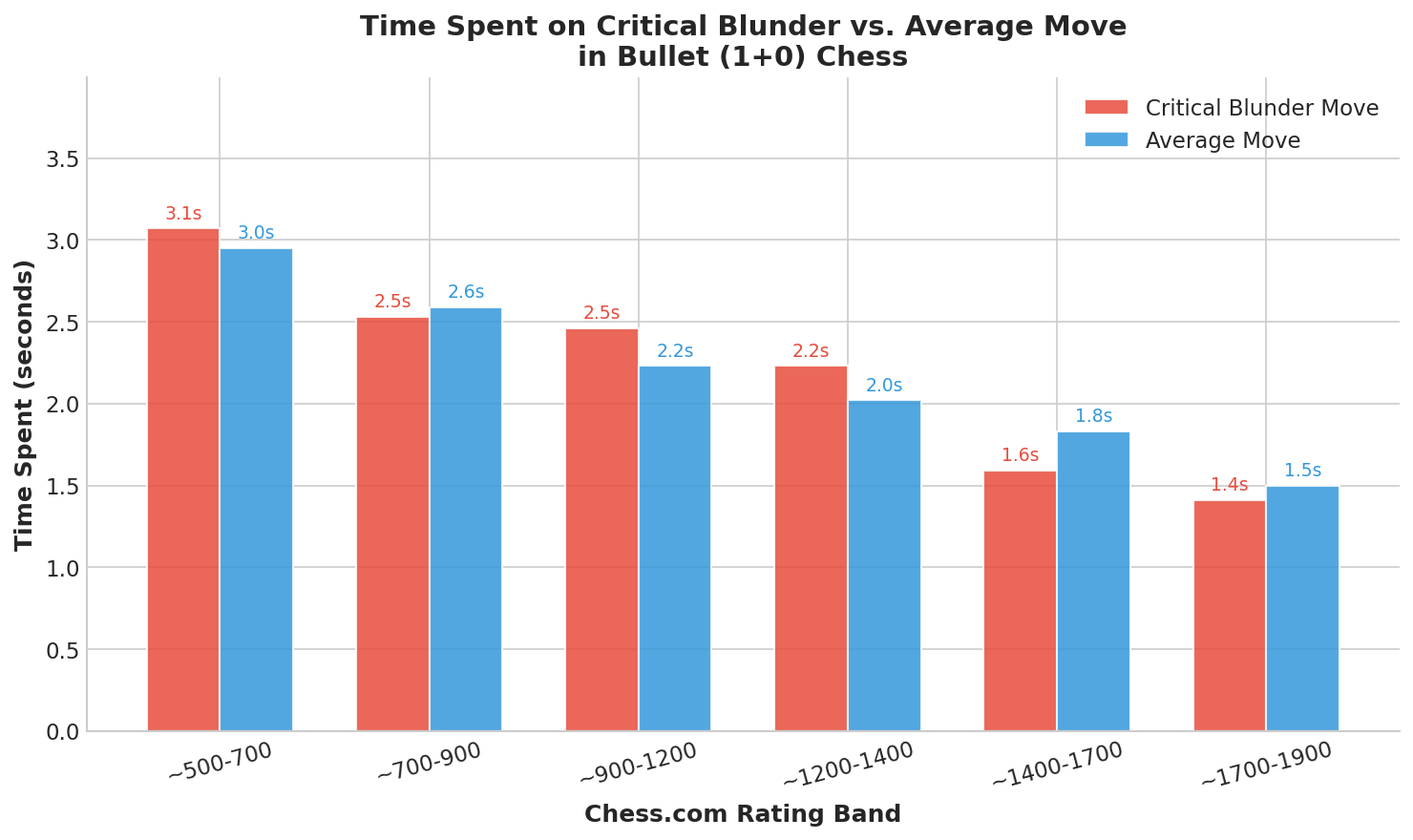
For a player rated ~800 on Chess.com, the average move takes about 2.6 seconds. When that same player makes a game-losing blunder, they spend 2.5 seconds on it. They aren't rushing significantly more than usual, nor are they engaging in deep, flawed calculations. The blunder is simply a regular move where their intuition failed them.
As players improve, the game speeds up. A ~1500 Chess.com player averages 1.8 seconds per move, and their critical blunders take 1.6 seconds. The gap widens slightly at higher ratings, suggesting that better players do occasionally rush their blunders compared to their baseline speed, but the difference remains fractions of a second.
The "Speed Blunder" Phenomenon
If blunders take about the same time as normal moves, what happens when players move extremely fast? We categorized moves taking less than 1 second as "speed moves."
Counterintuitively, moving in under 1 second is actually less likely to result in a blunder than taking 1-3 seconds.
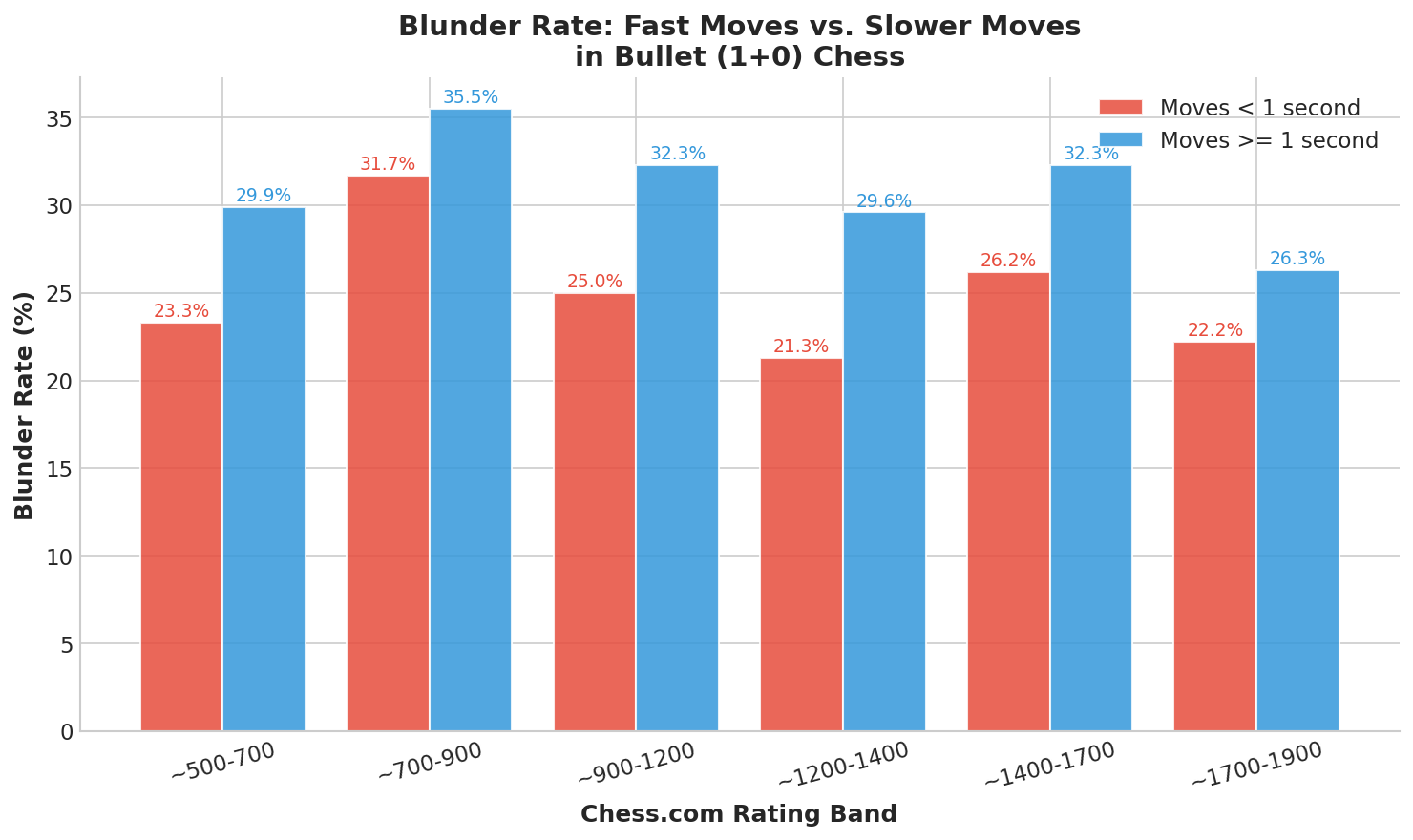
Across all rating bands, the blunder rate for moves taking <1s is lower than the blunder rate for moves taking ≥1s. For a ~1300 Chess.com player, a sub-second move has a 21.3% chance of being a blunder, while a slower move has a 29.6% chance.
Why? Because sub-second moves are almost exclusively recaptures, obvious opening book moves, or forced responses. When a player takes 2-3 seconds in bullet, it means they are facing a decision point. Decision points are where mistakes happen.
Roadmap to Improvement: Rating by Rating
Based on the data, here is a roadmap for how blunders manifest at different rating levels, complete with actionable advice for climbing to the next tier.
The Beginner Tier: Chess.com 800 - 1000
(Lichess equivalent: ~1000 - 1200)
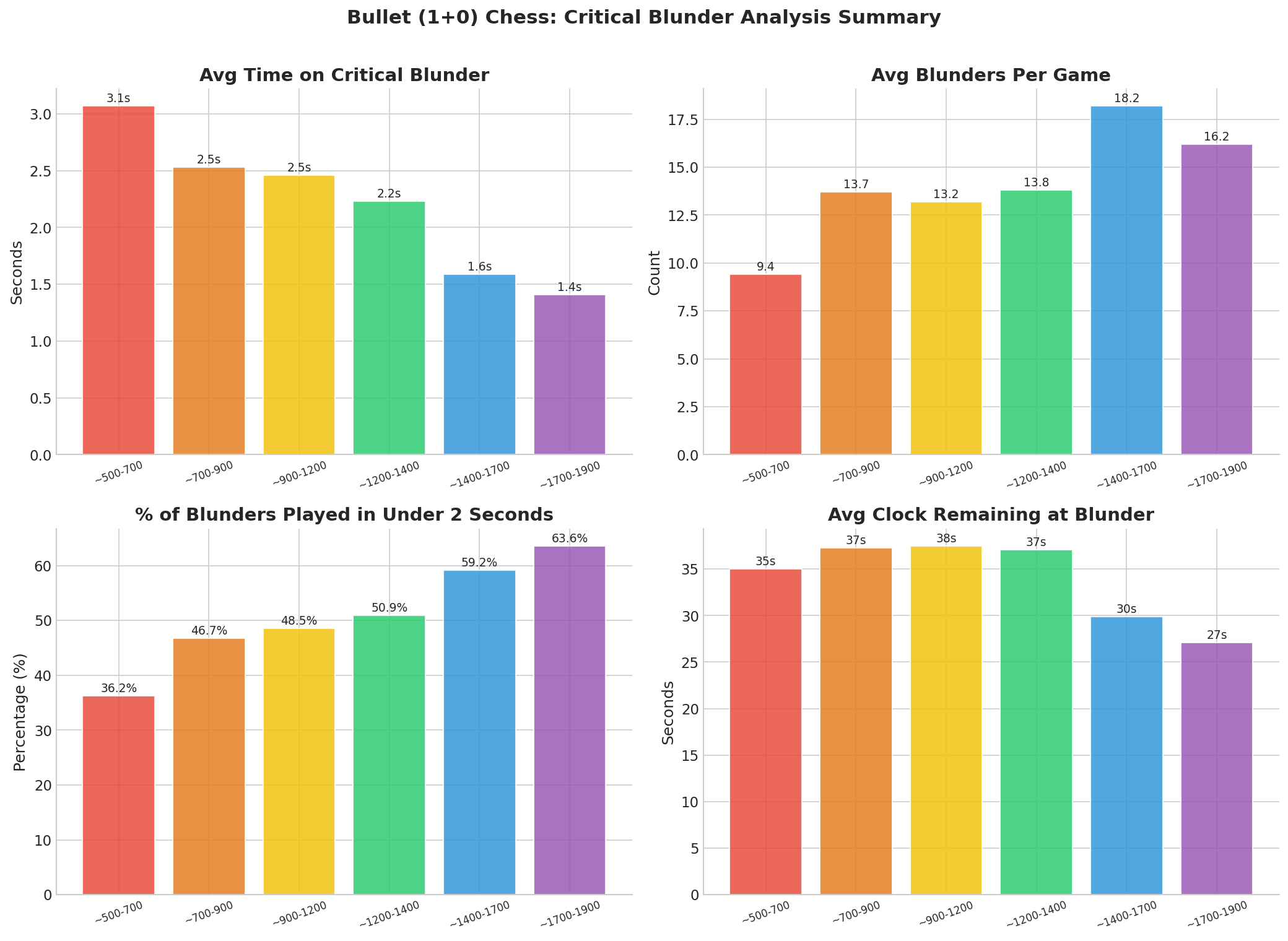
At this level, the game is heavily decided by one-move tactical oversights. The data shows that players in this band spend an average of 2.5 seconds on their critical blunders, and nearly half (48.5%) of these blunders are played in under 2 seconds.
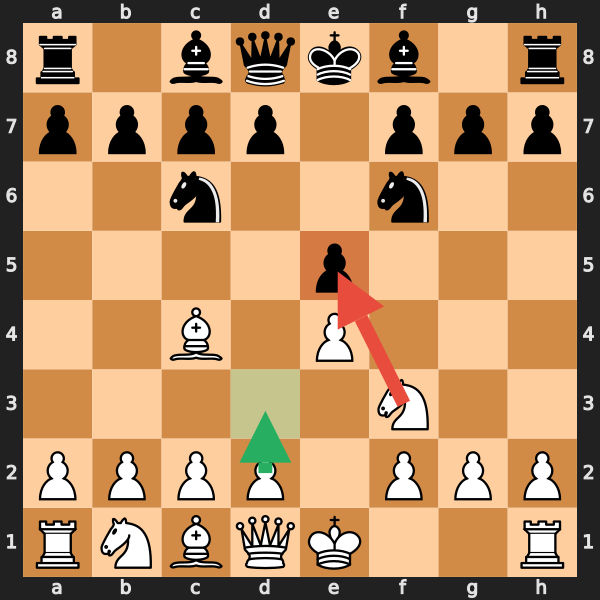 Typical ~800 rating blunder: White plays Nxe5?? (taking a seemingly free pawn) instead of developing with d3, completely missing the immediate Nxe4 fork. This move typically takes 2-3 seconds—just long enough to see the "free" pawn, but not long enough to check what the opponent's piece is attacking.
The Data Profile:
- Average time on critical blunder: 2.5 seconds
- Blunders per game: 13.2
- Most dangerous phase: Middlegame (11-25 moves)
Actionable Advice: At this rating, you are losing games because you are playing "hope chess" at 2.5 seconds per move. You see a threat or a capture and execute it without a basic safety check.
- The Fix: Implement a strict "1-second safety pause." Before you make a capture or a seemingly aggressive move, take exactly one second to ask: "Does this piece have a defender?" and "What is my opponent's most obvious check or capture?" In bullet, 2.5 seconds is plenty of time to do a basic blunder-check if you train the habit.
The Intermediate Tier: Chess.com 1000 - 1300
(Lichess equivalent: ~1200 - 1500)
As you cross the 1000 threshold, your opening play solidifies, and you stop hanging pieces in one move quite as often. However, the data shows a distinct shift: the time spent on blunders drops to 2.2 seconds, and the blunders become slightly more complex.
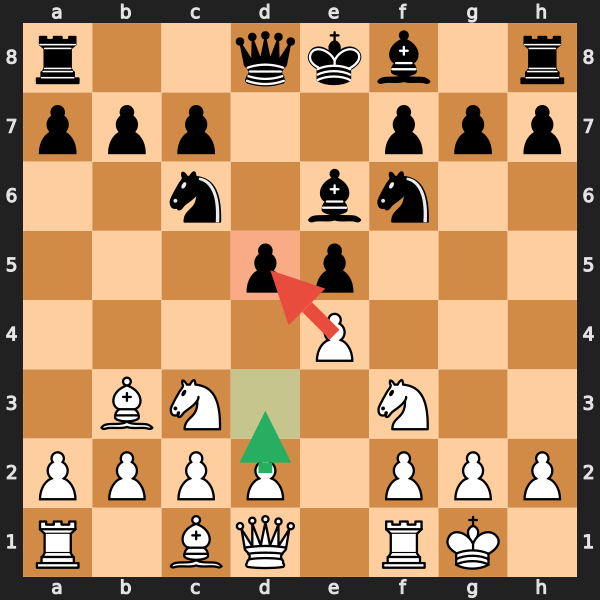 Typical ~1100 rating blunder: White plays exd5??, releasing the central tension and allowing Black's knight to dominate the center. This is a structural and tactical misunderstanding rather than a simple dropped piece.
The Data Profile:
- Average time on critical blunder: 2.2 seconds
- Blunders per game: 13.8
- Most dangerous phase: The transition from middlegame to endgame.
Actionable Advice: You are now playing faster (2.0s average move time), but your blunders are occurring when the position requires a plan rather than a reaction.
- The Fix: Stop releasing tension automatically. At this level, players often capture (like exd5 above) simply because they don't know what else to do, and doing something feels safer than letting the clock run. Practice maintaining tension. If a capture doesn't win material or drastically improve your position, leave it alone and improve your worst-placed piece instead.
The Advanced-Intermediate Tier: Chess.com 1300 - 1500
(Lichess equivalent: ~1500 - 1800)
Here, the game becomes significantly faster. The average move takes just 1.8 seconds, and critical blunders are executed in a blistering 1.6 seconds. A massive 59.2% of all critical blunders at this level are played in under 2 seconds.
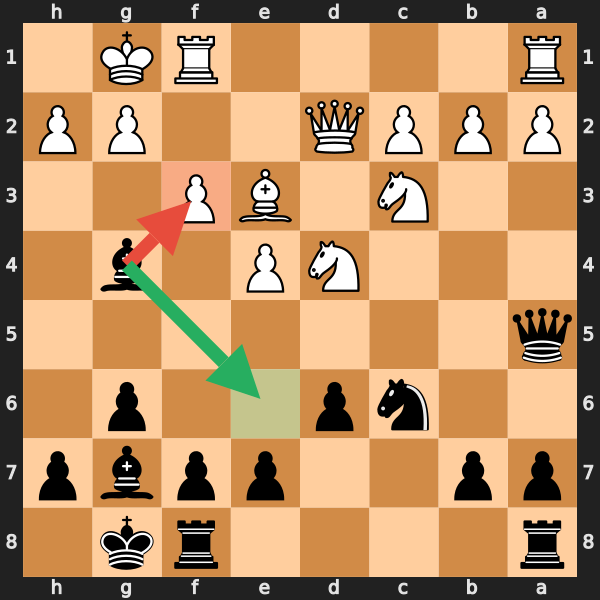 Typical ~1400 rating blunder: In a time scramble, Black plays Bxf3?? in 0.4 seconds, blundering the bishop for a pawn. This is often a "mouse slip" or a pre-move gone wrong, where the player anticipated a different recapture.
The Data Profile:
- Average time on critical blunder: 1.6 seconds
- Blunders per game: 18.2 (Notice the spike! Faster play leads to more total blunders, though they are often less severe in centipawn loss).
- Most dangerous phase: The endgame and time scrambles.
Actionable Advice: At 1300-1500, you are losing games to "auto-piloting" and failed pre-moves. You are trying to play like a master, moving in 1.6 seconds, but your intuition isn't quite there yet.
- The Fix: Manage your clock better in the opening so you don't have to play the endgame at 1.0 seconds per move. Furthermore, be extremely careful with pre-moves that involve your major pieces. Pre-moving a recapture is fine; pre-moving a queen retreat is how you lose on the spot.
The Clock Pressure Cooker
When do these blunders actually happen? We mapped the blunder rate against the time remaining on the player's clock.
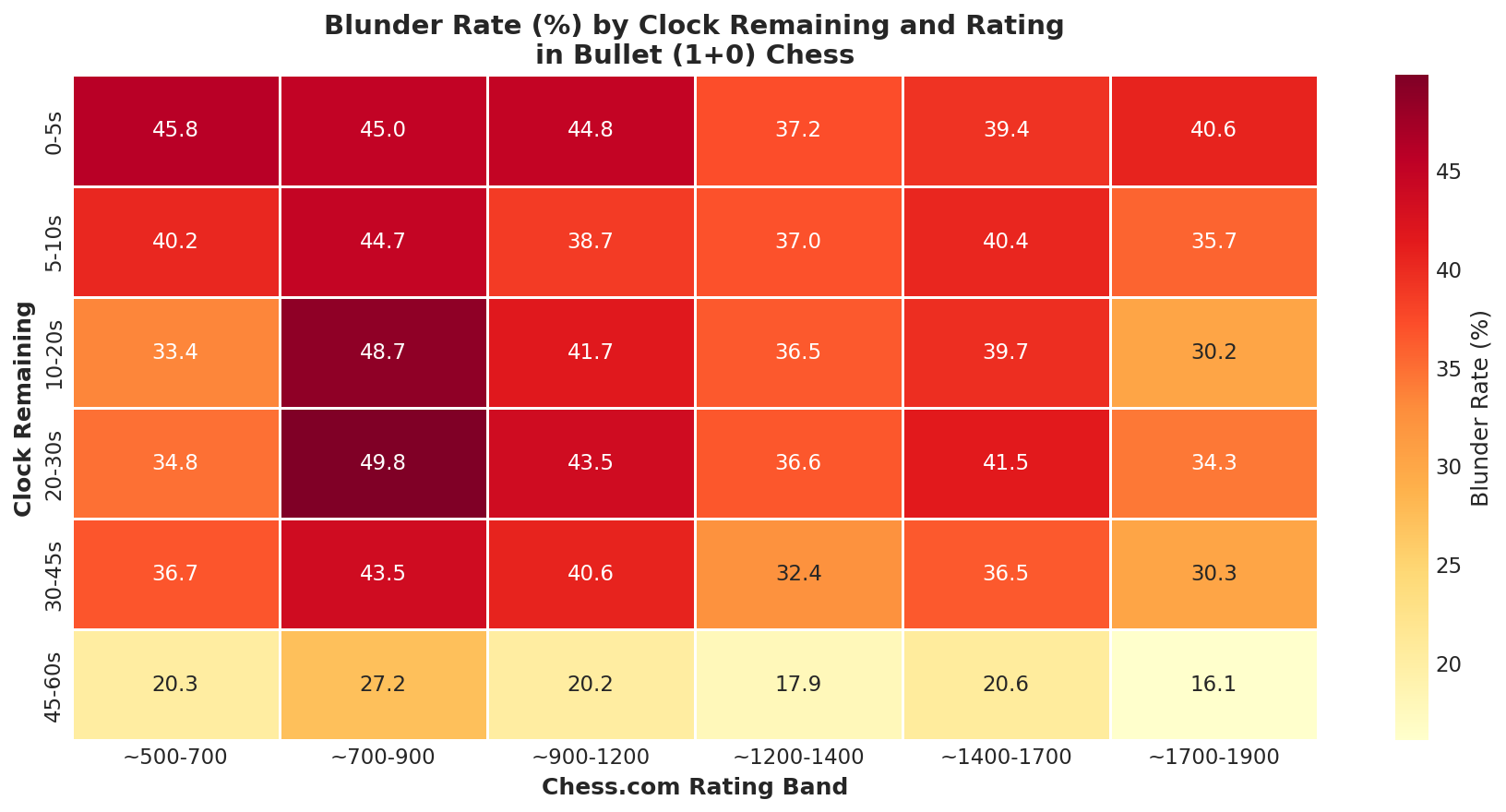
The heatmap reveals a universal truth of bullet chess: The danger zone is not when you have 5 seconds left; the danger zone is when you have 10 to 30 seconds left.
When players have 45-60 seconds, the blunder rate is relatively low (16-27%). When the clock drops below 30 seconds, panic sets in. The blunder rate spikes dramatically across all rating bands, often exceeding 40%.
Interestingly, when the clock drops below 5 seconds, the blunder rate sometimes decreases slightly for higher-rated players. Why? Because at <5 seconds, players stop trying to play "good" chess and switch entirely to safe, pre-movable, non-committal moves just to flag the opponent.
Conclusion: The Bullet Paradox
The data presents a fascinating paradox for the improving bullet player. To get better, you must play faster. But when you play faster, you rely entirely on your intuition—and if your intuition is flawed, you will execute game-losing blunders in 1.5 seconds instead of 2.5 seconds.
Your Action Plan:
- 800-1000: You have 2.5 seconds per move. Use 1.5 seconds to find your move, and 1.0 second to verify you aren't hanging your queen.
- 1000-1300: Stop capturing just to relieve the mental pressure of a complex position.
- 1300-1500: Your speed is improving, but your pre-moves are killing you. Save your pre-moves for forced recaptures only.
Bullet chess isn't about thinking faster; it's about building an intuition so robust that your 1.5-second reactions are fundamentally sound.
Data and Methodology
This analysis was conducted using a dataset of 1,315 bullet (1+0) games played on Lichess, comprising 63,905 individual moves. Games were segmented into rating bands and mapped to approximate Chess.com ratings.
A "critical blunder" was defined as the move in a game that resulted in the largest negative shift in Stockfish evaluation, with a minimum threshold of 3.0 pawns (300 centipawns). Time spent per move was calculated by measuring the difference in the player's clock before and after the move.
Raw Data Files:
View full data →game_id white_elo black_elo avg_rating rating_band time_control result termination total_moves total_blunders avg_time_per_move zfO14jjq 800 812 806 700-900 60+0 1-0 Normal 5 1 1.22 e8SlXb6M 821 890 856 700-900 60+0 0-1 Normal 8 0 3.43 OfPbWTYb 647 761 704 700-900 60+0 0-1 Time forfeit 15 0 2.68 eAZ0oD8k 818 806 812 700-900 60+0 1-0 Time forfeit 23 15 2.47 F5GPLzj1 845 820 833 700-900 60+0 1-0 Time forfeit 16 0 3.32
View full data →game_id avg_rating rating_band move_num color move cpl eval_before eval_after time_spent clock_remaining avg_time_per_move time_ratio is_critical zfO14jjq 806 700-900 5 black Bg7 95.39 4.61 100.0 1 57 1.22 0.82 True eAZ0oD8k 812 700-900 10 black Bc5 3.06 -0.34 2.72 5 21 2.47 2.03 False eAZ0oD8k 812 700-900 11 white Bg5 4.4 2.72 -1.68 2 33 2.47 0.81 False eAZ0oD8k 812 700-900 11 black Nc6 3.31 -1.68 1.63 2 19 2.47 0.81 False eAZ0oD8k 812 700-900 18 black Bc5 5.9 -0.87 5.03 1 4 2.47 0.41 False
View full data →game_id avg_rating rating_band ply move_num color move time_spent clock_remaining eval is_blunder zfO14jjq 806 700-900 3 2 white Nf3 0 60 -0.4 False zfO14jjq 806 700-900 4 2 black Nc6 1 59 0.44 False zfO14jjq 806 700-900 5 3 white Bc4 1 59 -0.09 False zfO14jjq 806 700-900 6 3 black g6 0 59 0.33 False zfO14jjq 806 700-900 7 4 white Ng5 1 58 0.48 False
Chess Coach, April 14, 2026